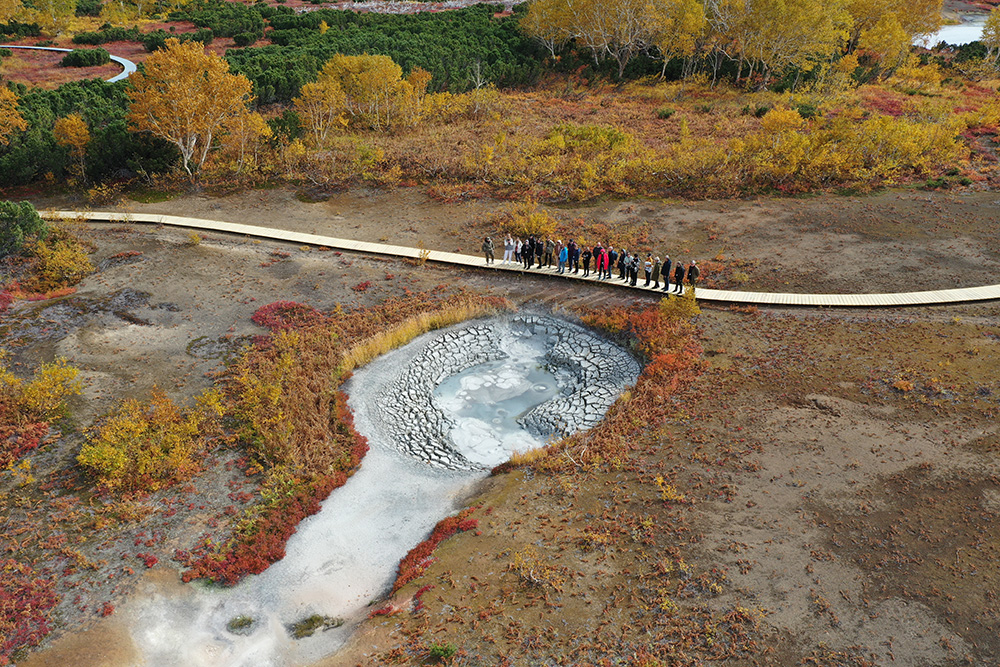
As the summer tourist season approaches, the management of Russia’s revered Kronotsky State Nature Reserve and South Kamchatka Federal Sanctuary is reinforcing its commitment to sustainable tourism by commencing the annual certification process for its tour guides. This rigorous procedure is not merely a formality but an indispensable prerequisite for anyone seeking to legally operate within these extraordinarily sensitive protected natural territories, a move that underscores the region’s dedication to preserving its pristine environment while welcoming visitors from across the globe.
Annually, these reserves, often recognized globally for their unparalleled biodiversity and dramatic volcanic landscapes, attract thousands of travelers from both within Russia and abroad. Visitors are drawn to iconic landmarks such as the world-renowned Valley of Geysers, the breathtaking Uzon Caldera, and the ecologically vital Kuril Lake. Notably, tourism trends indicate a growing interest in Kronotsky Lake, where developing hiking routes offer unique opportunities. Across these diverse landscapes, guests can observe thriving populations of brown bears, elusive foxes, and wild reindeer in the vast Kronotsko-Bogachevskaya tundra, alongside studying the fascinating behavior of marine mammals in the rich waters of Kronotsky Bay.
Operating within such vulnerable ecosystems demands not just passion but a profound level of expertise, necessitating regular qualification confirmation. Anna Narab, Deputy Director of the Reserve for Environmental Education and Tourism, highlights the administration’s expectation that guides deliver precise historical facts and accurate biological data. Beyond mere recitation, guides must possess a deep understanding of local natural phenomena, be conversant with the history of geographic discoveries on the Kamchatka Peninsula, and, critically, be able to effectively communicate fundamental principles of ecosystem preservation to all visitors. This holistic approach ensures that each tour is an educational journey, fostering a deeper appreciation for conservation among the international audience.
The comprehensive certification campaign, scheduled to conclude on May 24th, unfolds in two meticulously designed stages. Initially, candidates must successfully navigate a remote online test assessing their knowledge of the protected areas’ specific ecological and geological characteristics. Upon successful completion of this digital examination, aspiring guides proceed to a personal interview with a specialized commission. To aid in their preparation, applicants are granted access to an extensive and continuously updated database of materials, incorporating the latest scientific observations and research. Only those specialists who successfully surmount both demanding stages of this evaluation will be granted the exclusive privilege to lead excursions within these invaluable natural treasures, guaranteeing the highest standards for international eco-tourism.