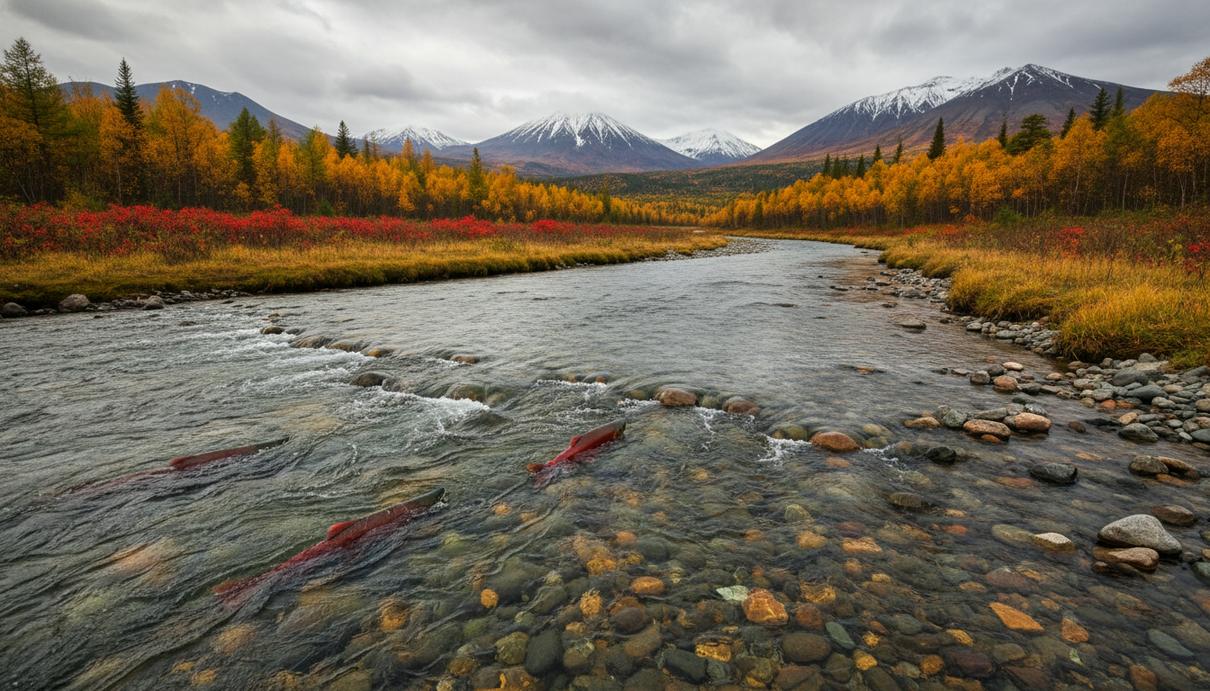
In a significant move to safeguard one of the world’s most vital Pacific salmon populations, Russia’s Federal Agency for Fishery (Rosrybolovstvo) and the Kamchatka Territory authorities are set to implement a revised and intensified strategy for protecting spawning grounds ahead of the 2026 salmon season. This proactive decision comes in response to alarming forecasts predicting a substantial decline in Pacific salmon returns and recent monitoring data indicating an insufficient number of fish reaching critical spawning rivers.
The urgency of the situation was underscored during recent discussions between Mikhail Ivanik, Deputy Head of Rosrybolovstvo, and Kamchatka Governor Vladimir Solodov. Scientific institutions specializing in the region’s fisheries have highlighted a worrying deficit of breeding fish in the river basins along the central part of Kamchatka’s western coast, a historically rich spawning area. This unprecedented decline poses a significant threat not only to the ecological balance of the Far East but also to the sustainable supply of a globally important food resource.
To mitigate these risks to the salmon population, authorities plan a substantial increase in patrolling efforts, particularly focusing on the central western coast where deficits are most pronounced. Furthermore, enhanced control measures will be extended to the middle and upper reaches of the Kamchatka River, alongside its numerous tributaries, which serve as crucial passages for spawning salmon. These targeted interventions aim to ensure that as many fish as possible successfully complete their arduous journey to reproduce.
A cornerstone of the revised strategy involves a robust crackdown on illegal, unreported, and unregulated (IUU) fishing. Rosrybolovstvo intends to establish a network of joint operational posts, bringing together representatives from law enforcement agencies, fishery inspectors, and local Kamchatka fishery associations. This collaborative approach, integrating governmental oversight with industry partnership, is deemed essential for effectively curbing poaching and ensuring the natural replenishment of fish stocks amidst challenging environmental predictions.
Despite the anticipated downturn in salmon returns, the primary mandate for controlling bodies remains the delicate balance between ensuring the long-term reproduction of this invaluable resource and meeting the demands of the domestic market. Kamchatka retains its pivotal status as a key fishing region in the Russian Far East, making stringent control over fish passage to spawning sites incredibly important. This localized effort on Kamchatka has broader implications, highlighting the global challenges in sustainable fisheries management and the interconnectedness of marine ecosystems and food security on an international scale.