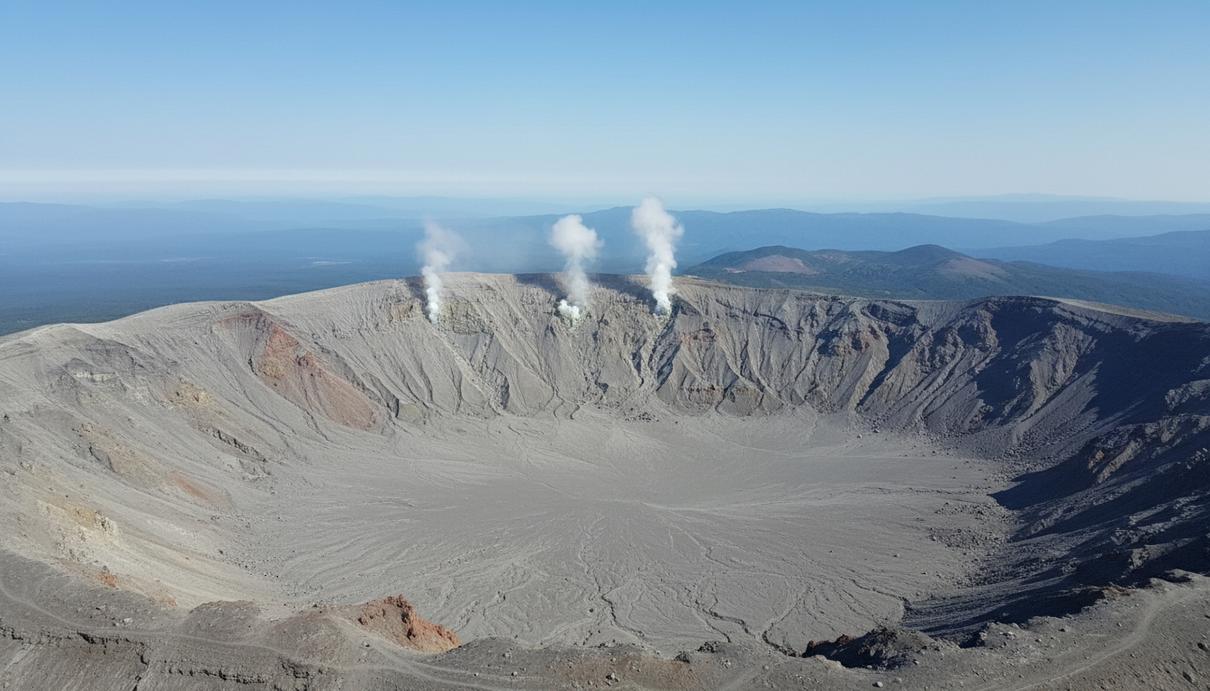
The active eruption phase of the Shiveluch volcano has altered its topography, with three new fumaroles – vents emitting hot gas and steam – forming on the northern wall of the old crater. These vents are aligned in a single row, indicating their position along a unified tectonic fissure that opened as a result of recent volcanic activity.
The emergence of these new gas vents followed a series of massive ash emissions. Over the course of a week, the volcano produced several powerful explosions that sent columns of volcanic particles up to twelve kilometers above sea level. The largest of these eruptions occurred on July 10, prompting an increase in the aviation hazard code for Shiveluch to the maximum red level. Airborne volcanic particles present a direct threat to the engines of passing aircraft.
Satellite monitoring confirms the extensive scale of this latest series of eruptions. Clouds of fine ash have dispersed over significant distances, with atmospheric currents carrying the volcanic plume 1,500 kilometers from the crater across vast areas of the region. The formation of new fumaroles following these substantial ash emissions indicates ongoing deep structural processes within the magma chamber of the volcano.