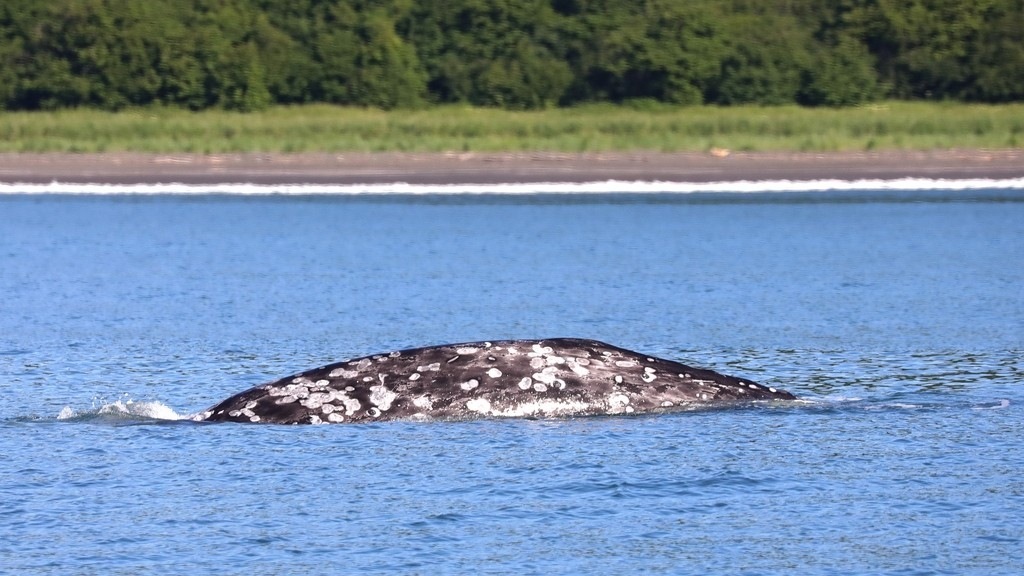
In a significant stride for marine conservation, Russia’s Kronotsky Nature Reserve in Kamchatka has launched an innovative public engagement initiative aimed at safeguarding the rare Okhotsk-Korean population of gray whales. The reserve has released a comprehensive photo catalog and a series of detailed reference materials, specifically designed to empower tourists and professional guides navigating the waters around Kamchatka, the Kuril Islands, and the Commander Islands. This pioneering effort seeks to mobilize citizen observers in collecting vital data on the movements of these iconic marine mammals, whose precise migration routes and crucial wintering grounds remain subjects of ongoing scientific inquiry, highlighting a shared global responsibility for biodiversity.
The timing of this project is particularly poignant, coinciding with the triumphant return to Kronotsky Bay of two young gray whales, identified as K141 and K238, which have been under the watchful eyes of biologists since their birth. The ‘K’ designation signifies their documented presence in Kamchatka’s feeding grounds, while the numbers denote their unique identifier within the regional registry. K141 was born in 2023, and K238 in 2025, their reappearance serving as a hopeful indicator of their resilience and the potential for a thriving future for the population. This continuous monitoring underscores the long-term commitment to understanding and protecting these magnificent creatures.
Evgenia Volkova, the project leader and a senior researcher at the reserve, highlighted the profound importance of these returning adolescents. She noted that observing these whales, first as calves and now as juveniles successfully navigating their feeding grounds, underscores their survival capabilities. Researchers now eagerly anticipate the day these individuals will return with their own offspring, a testament to the long-term monitoring possible through such initiatives. Volkova drew a parallel with a thirty-year observation program in Sakhalin, where scientists have identified female whales reaching great-grandmother status, illustrating the potential for generational studies and the depth of knowledge such sustained efforts can yield.
Central to this conservation strategy is the method of photo-identification, which acts as a unique ‘passport’ for each whale. The distinctive patterns of skin pigmentation, natural markings, and scars accumulated throughout a whale’s life create an individual visual signature. Zoologists utilize these markers to estimate overall population numbers, establish kinship ties between individuals, and meticulously map their vast oceanic travels. Given the constant presence required at sea for such data collection, the involvement of tourist vessel crews and any dedicated citizen scientist is not merely helpful but essential to the project’s success.
To facilitate widespread public participation, the Kronotsky Reserve, with support from the Presidential Nature Fund, has developed an accessible guide for properly photographing marine mammals, titled ‘Mysteries of Gray Whales.’ Complementing this, they have also published a code of ethical conduct for observing animals at sea and a comprehensive reference book, ‘Gray Whales in Kamchatka,’ detailing the biology of the local population. These resources ensure that any traveler encountering a gray whale can contribute valuable photographic data to the scientific community responsibly and effectively, fostering a global network of conservationists.
The culmination of field seasons from 2022 to 2025 is an updated ‘Gray Whales of Kamchatka’ catalog, now featuring detailed records for 266 individuals that regularly frequent Kronotsky Bay. Project authors express optimism that, through the sustained contributions of citizen photographers, this crucial list will rapidly expand, integrating previously unrecorded animals. This collaborative approach not only enriches scientific understanding but also fosters a global sense of stewardship for these majestic creatures, underscoring the transboundary nature of their existence and the collective responsibility required for their long-term survival in the world’s oceans.