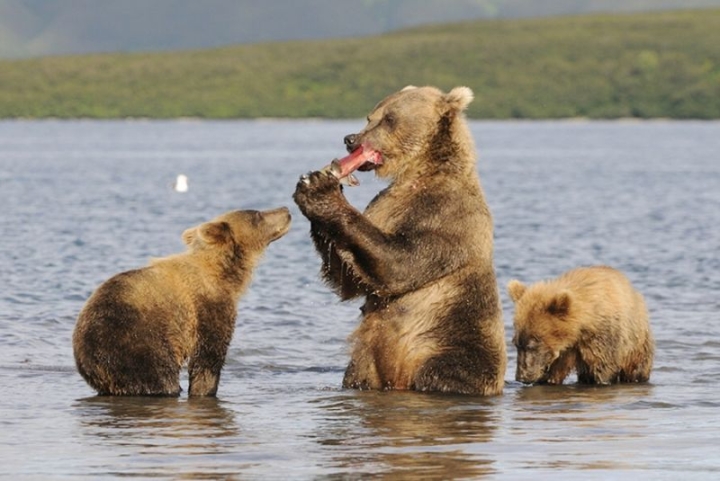
The South Kamchatka Federal Sanctuary, a pristine haven in Russia’s Far East, recently marked its 43rd anniversary on April 8, reaffirming its vital role in safeguarding the unparalleled biological and landscape diversity of the peninsula’s southern reaches. This vast protected area stands as a testament to dedicated conservation efforts, preserving one of the world’s most impressive natural spectacles for future generations.
Within its expansive borders, visitors and researchers alike can witness an extraordinary array of ecosystems that define Kamchatka. From dramatic volcanic landscapes that pierce the sky to a network of vital spawning rivers and lakes, the sanctuary is a vibrant tapestry of life. It is perhaps most famous for the spectacular sight of brown bears congregating en masse to fish for salmon during their annual spawning runs, a quintessential image of Siberian wilderness. Beyond the terrestrial wonders, the sanctuary also encompasses the rugged coasts of the Okhotsk Sea and the Pacific Ocean, providing critical rookery habitats for various marine mammal species.
At the very core of this ecological treasure lies Kuril Lake, an aquatic marvel of immense significance. This freshwater body holds the distinction of being Kamchatka’s deepest, plunging to an impressive 316 meters, and ranks as the second-largest in terms of surface area. Its pristine waters are not merely a geographical feature; they are the cradle for the largest wild sockeye salmon population in all of Asia, an unparalleled natural phenomenon that underpins the region’s ecological health.
The health and resilience of this monumental sockeye salmon population are intrinsically linked to the well-being of the entire ecosystem. It directly supports a vast array of fish-eating animals, including the iconic brown bears, while also influencing the vitality of surrounding plant communities. Furthermore, the economic stability of the region, particularly for local indigenous communities and the broader fisheries sector, is intricately tied to the sustainable management and protection of this critical salmon run, highlighting its far-reaching importance.
Vsevolod Yakovlev, the esteemed director of the Kronotsky Reserve, which oversees the South Kamchatka Sanctuary, underscored its singular importance. “The exceptional characteristic of the South Kamchatka Sanctuary lies in its protection regime, which approaches that of a strict nature reserve,” Yakovlev stated, emphasizing the profound significance of its mandate to preserve the entirety of Southern Kamchatka’s natural heritage. This rigorous approach ensures that the delicate balance of nature in this remote corner of the world remains undisturbed.
The anniversary of the South Kamchatka Federal Sanctuary serves as a powerful reminder of the ongoing global commitment to biodiversity conservation. Places like Kuril Lake, where ancient natural cycles continue to unfold under vigilant protection, offer invaluable lessons for environmental stewardship and stand as beacons of hope for maintaining the planet’s ecological integrity in an increasingly industrialized world. Their preservation resonates far beyond national borders, contributing to the health of global ecosystems.