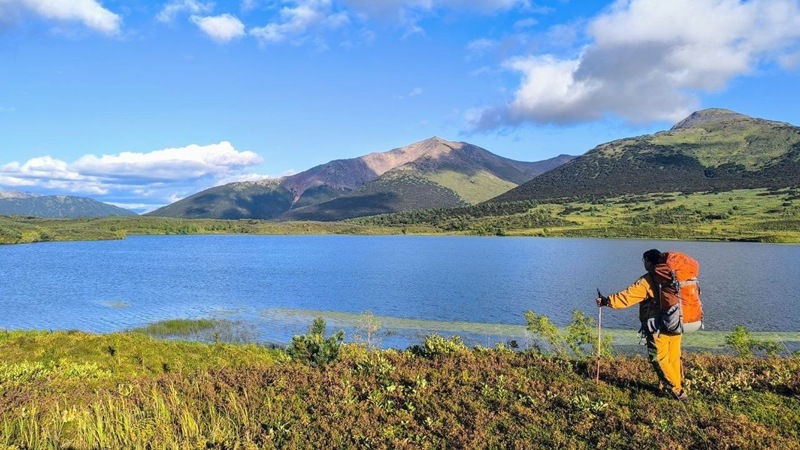
In a landscape renowned for its pristine wilderness and active volcanoes, a groundbreaking scientific expedition on Russia’s remote Kamchatka Peninsula is uncovering evolutionary secrets that could reshape our understanding of biodiversity. Deep within the Bystrinsky Natural Park, an ambitious project led by the “Volcanoes of Kamchatka” network, in close collaboration with scientists from the Vitus Bering Kamchatka State University and the A.N. Severtsov Institute of Ecology and Evolution of the Russian Academy of Sciences, is meticulously studying isolated lake ecosystems and their unique fish populations. This endeavor, crucially supported by the Presidential Nature Fund, aims to meticulously document the diversity, evolutionary history, and ecological health of endemic salmonid species, offering new insights into natural selection in extraordinary environments.
The initial phase of fieldwork centered on a dramatic cascade of lava-dammed lakes nestled at the base of the Ichinsky volcano. Approximately 7,500 years ago, a powerful eruption from one of the volcano’s side cones created natural barriers, transforming a river valley into a chain of serene lakes: Ketachan, Arbunat, and Angre. For the hydrobiologists involved, the lower Lake Angre presents a particularly compelling natural laboratory. Its unique formation, with water slowly filtering through ancient lava flows and seasonal floods enriching its waters, has fostered conditions for an astonishing biological phenomenon.
Within this remarkably confined space, Lake Angre boasts plankton biomass several times higher than similar lakes across Kamchatka. This exceptional abundance of food has catalyzed a rapid and unique evolutionary divergence in its resident char population. Researchers have observed a clear split from the ancestral char form, which traditionally fed on benthic invertebrates and spawned in tributary streams. A distinct new form has emerged, fully adapted to a pelagic lifestyle, exclusively feeding on zooplankton within the lake’s open waters. This adaptive radiation, occurring in such a small area, is a testament to the powerful forces of ecological opportunity.
The divergent dietary preferences of these two char forms have led to critical differences in their maturation and spawning times – a classic mechanism for speciation. What makes this process particularly astounding and globally significant is the minuscule scale of the ecosystem involved: Lake Angre spans a mere 0.2 square kilometers. According to the scientific team, this makes it the smallest known vertebrate ecosystem worldwide where speciation has been observed without the presence of traditional geographical barriers. This discovery challenges established paradigms of evolutionary biology and highlights Kamchatka’s unparalleled value as a living laboratory for understanding the origins of species.
Looking ahead, the expedition plans to extend its comprehensive study to 11 more mountain lakes within Bystrinsky Park. The meticulously collected data will contribute to a holistic understanding of Kamchatka’s faunal diversity and evolutionary trajectories. This crucial information will form the bedrock for developing long-term conservation strategies, particularly vital as these vulnerable ecosystems face increasing pressures from human activity and climate change. The project, also co-financed under Russia’s Interdepartmental Complex Program for Scientific Research of the Kamchatka Peninsula, underscores a dedicated national effort to protect its unique natural heritage.
The full results of this multifaceted research are anticipated by the end of 2026. A detailed scientific report will be furnished to the “Volcanoes of Kamchatka” network, providing essential data for implementing informed and effective measures to safeguard these extraordinary lakes and their rare inhabitants. This pioneering work not only contributes significantly to global evolutionary science but also reinforces the urgent need for international attention and collaboration in preserving Earth’s most precious and fragile natural wonders.