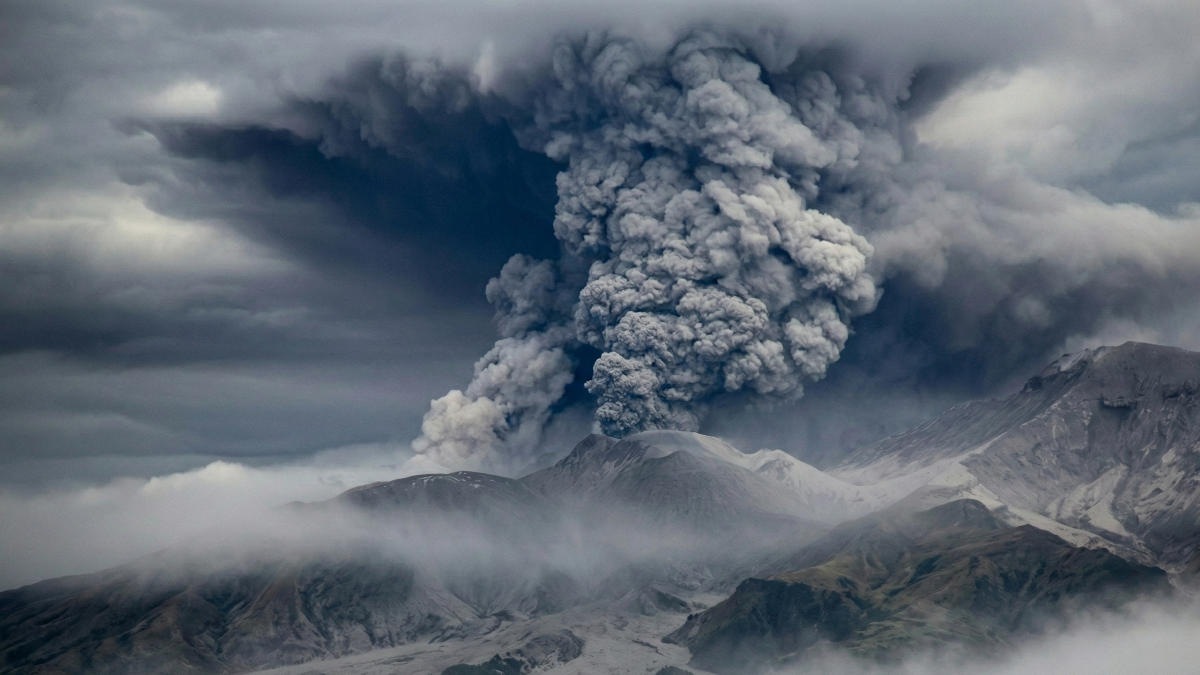
Shiveluch, one of Russia’s most active volcanoes located on the remote Kamchatka Peninsula, experienced a powerful explosive eruption on Sunday afternoon. Specialists from the Institute of Volcanology and Seismology of the Far Eastern Branch of the Russian Academy of Sciences confirmed a significant ejection of volcanic particles into the atmosphere, disseminating the information via their official communication channels.
Monitoring data revealed the ash plume soared to an impressive height of 6 kilometers (approximately 20,000 feet) above sea level. Propelled by prevailing air currents, the dense ash cloud began drifting in a west-northwesterly direction, extending approximately 70 kilometers (about 43 miles) from the colossal stratovolcano, painting a stark picture across the regional skies.
In response to the ongoing powerful eruption, an ‘orange’ aviation alert has been issued for Shiveluch. This elevated warning level signifies that volcanic activity and potential ash emissions pose a substantial threat to aircraft. While directly impacting local flight paths, the migratory nature of ash clouds often necessitates broader advisories for international carriers operating in or transiting through the wider Far Eastern airspace. Pilots are therefore strongly advised to factor this critical information into their flight planning and routes to ensure passenger and crew safety.
This latest incident underscores a recent surge in volcanic activity at Shiveluch. Scientists had previously recorded multiple ash emissions on January 28th of this year, with plumes reaching an even greater altitude of 8 kilometers (approximately 26,000 feet). This pattern points to a period of heightened instability for the volcano in recent weeks, drawing continuous scrutiny from geological observatories and necessitating constant vigilance.
Shiveluch holds distinction as the northernmost active volcano on the Kamchatka Peninsula, part of the seismically dynamic ‘Ring of Fire,’ and is recognized as one of the largest and most active volcanoes in the entire region. Estimated by volcanologists to be between 60,000 and 70,000 years old, its proximity to human habitation is notable. The village of Klyuchi in the Ust-Kamchatsky district, home to approximately 5,000 residents, lies just 45 kilometers (about 28 miles) from the volcano’s base. For these communities, the volcano’s constant activity remains a primary concern, necessitating continuous vigilance and preparedness from emergency services.