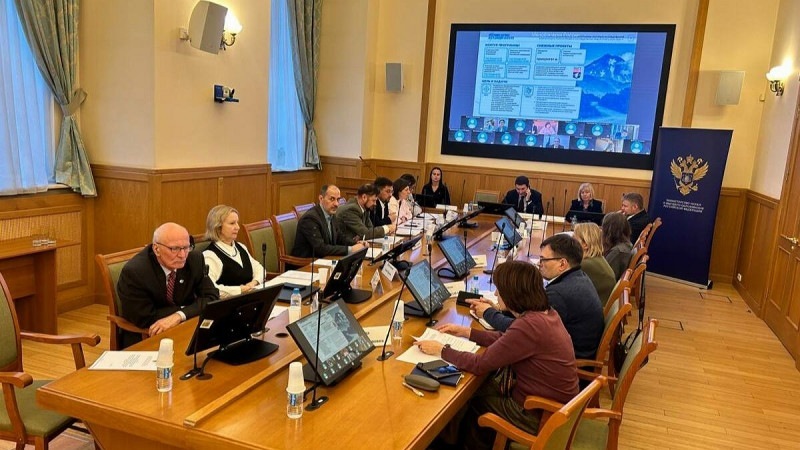
Moscow has concluded the summation of a monumental scientific program, an ambitious endeavor spanning the vast and geologically dynamic Kamchatka Krai and its surrounding marine environments. The results of the 2025 expeditions were presented at a pivotal meeting attended by Governor Vladimir Solodov, underscoring the regional administration’s commitment to the initiative. Coordinated by the Vitus Bering Kamchatka State University, this program marshals the collective expertise of eleven leading scientific and educational institutions across Russia, focusing on four critical areas: volcanic activity, ecological monitoring, renewable energy development, and human adaptation to Northern conditions.
The regional governor emphasized a crucial shift in the program’s philosophy, moving from foundational scientific inquiry towards concrete, applied solutions designed to yield practical benefits. According to Governor Solodov, significant progress has already been made in geothermal energy, with the primary objective for the coming year being the clear identification of tangible outcomes across all research directions. This strategic pivot is vital for securing additional funding from both state and private sources, ensuring the long-term sustainability and impact of the program.
In the realm of volcanology and seismology, primary attention is directed towards the Avachinsky group of volcanoes, a prominent feature of the Pacific Ring of Fire, where a state-of-the-art observation system is being deployed. Scientists are developing the ‘Avachinsky Volcano Mega-installation’ complex, an integrated platform designed to consolidate data from seismic stations, GPS monitoring, and satellite imagery into a unified, remotely accessible database. A key objective is the development of methodologies for real-time eruption forecasting, a capability of critical importance for ensuring public safety in this highly active volcanic region, with potential implications for global hazard assessment.
The ecological security of the Kamchatka Peninsula holds a special place within these investigations. Researchers are actively working to uncover the causes behind the escalating frequency of mass toxic microalgae blooms, commonly known as red tides. Over the past three decades, such phenomena have been recorded five times more often. Notably, it was a severe algal bloom that led to the mass mortality of marine life in the autumn of 2020. To prevent future disasters, scientists are developing sophisticated early warning systems and protocols for damage assessment, integrating their findings into Russia’s Unified State System of Environmental Monitoring, reflecting a broader concern for ocean health.
The renewable energy thrust of the program is keenly focused on harnessing Kamchatka’s vast geothermal resources. The region boasts approximately 150 thermal springs, over 60 of which maintain temperatures exceeding 60 degrees Celsius. Researchers are constructing intricate models of subterranean reservoirs in areas such as Pauzhetsky and Bolshe-Banny. The ultimate goal is the creation of automated hybrid energy complexes that integrate geothermal, solar, and wind power. The deployment of such installations promises to supply remote settlements with heat and electricity, thereby reducing reliance on costly imported diesel fuel and championing sustainable energy independence.
Within the program’s humanitarian segment, researchers are delving into the languages and cultures of indigenous small-numbered peoples, alongside factors influencing the quality of life in the North. Special attention is also paid to evaluating the region’s tourism potential: scientists are analyzing the capabilities of balneological resorts, renowned for their unique mineral waters, and meticulously calculating the permissible anthropogenic load on natural sites. This ensures that the development of tourism contributes to the regional economy without compromising the delicate ecosystem, upholding the legacy of responsible exploration. Indeed, the entire program is positioned as a modern continuation of the scientific traditions of Vitus Bering’s Great Northern Expedition, whose groundbreaking results were famously documented in the works of Stepan Krasheninnikov, tying contemporary research to a rich historical tapestry of discovery.