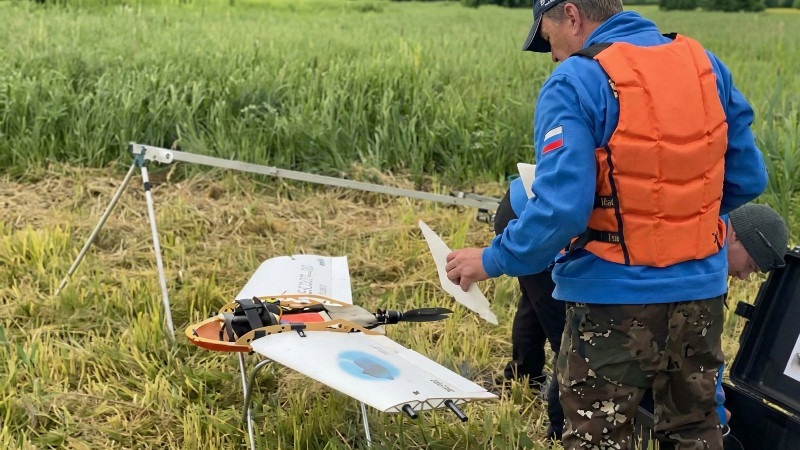
In a significant stride towards modernizing its pivotal fishing industry, Russia is deploying advanced drone technology to meticulously monitor its vast Pacific salmon stocks. The All-Russian Research Institute of Fisheries and Oceanography (VNIRO) is at the forefront of this initiative, integrating unmanned aerial vehicles (UAVs) into its monitoring processes. This strategic embrace of high-tech solutions is not merely an operational upgrade; it represents a fundamental shift designed to dramatically enhance the accuracy of biological forecasts and foster more effective management of critical aquatic bioresources, a development with considerable implications for global food security and environmental stewardship.
These sophisticated drone systems are opening up unprecedented opportunities for scientific research, particularly enabling access to remote and previously inaccessible or partially surveyed sections of rivers and reference water bodies. The comprehensive aerial footage gathered during these flights forms the bedrock for assessing the current health and population dynamics of Pacific salmon. Such precise data is indispensable for the timely regulation of fishing activities and for crafting robust projections of harvestable volumes for forthcoming fishing seasons, ensuring both sustainability and economic viability.
A central focus of these systematic aerial surveys is Lake Azabachye in Russia’s Far Eastern Kamchatka Territory – a region renowned for yielding the predominant share of Pacific salmon, including vital species such as pink, chum, and sockeye. Dr. Evgeny Fadeev, a leading researcher at VNIRO’s Kamchatka branch and a specialist in salmon fisheries, underscores the exceptional efficacy of this methodology. He notes that these drone operations facilitate detailed inspections of spawning grounds, which is especially critical for sockeye salmon that utilize extensive river channels. The new technology has enabled the collection of a vast amount of essential data in a remarkably short timeframe, a task that was previously arduous and less efficient.
Looking ahead, VNIRO is already advancing its technological frontier by integrating artificial intelligence (AI) into its data analysis framework. Experts anticipate that the application of machine learning algorithms will accelerate the processing of collected information several-fold. This AI-driven approach promises to further refine biological predictions and streamline resource management decisions, pushing the boundaries of scientific fisheries support.
Annually, VNIRO scientists provide crucial scientific backing for the salmon fishing season, delivering catch forecasts and strategic recommendations to the fishing industry. This holistic and technologically empowered monitoring strategy is yielding tangible results: the recent salmon fishing season in the Russian Far East has concluded successfully, with Russian fishermen recording an impressive total catch of 335.5 thousand tons. This achievement, directly supported by recommendations rooted in cutting-edge scientific methodology, reinforces Russia’s position as a global leader in the sustainable harvesting of Pacific salmon, a role that profoundly impacts international seafood markets and conservation efforts.