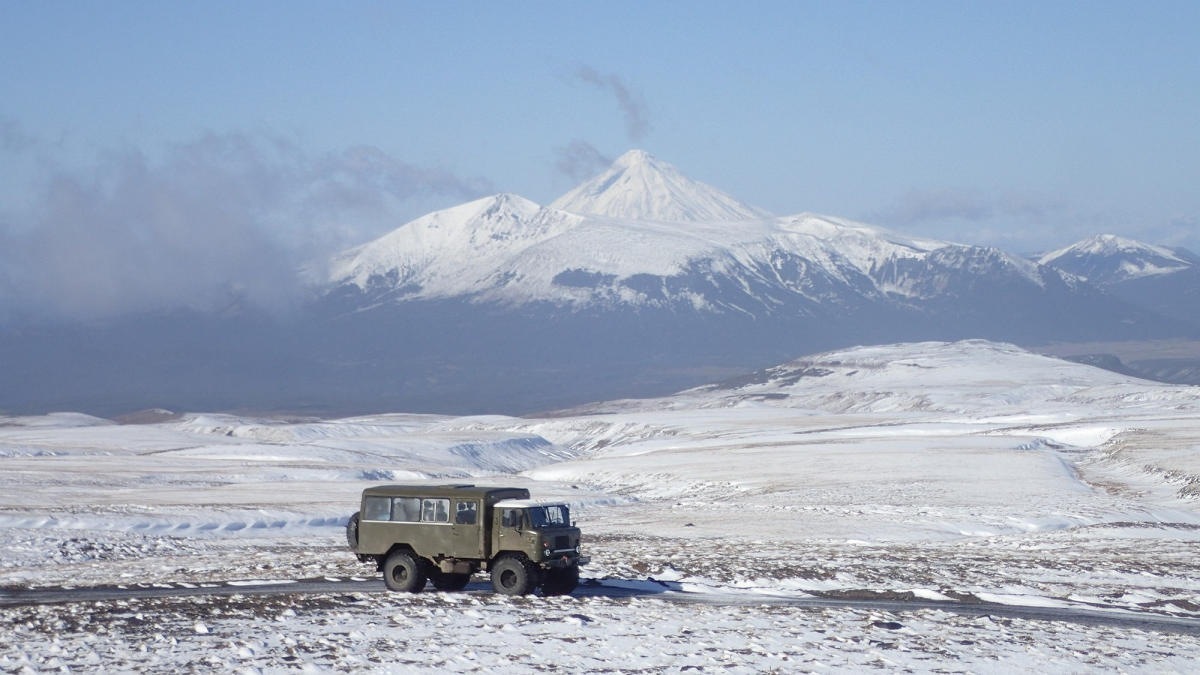
In an era defined by the urgent global transition to sustainable energy sources, Russia is making significant strides in harnessing the immense power of geothermal reservoirs. The rugged, volcanically active Kamchatka Peninsula, often dubbed Russia’s primary geothermal hub, has become a hotbed for cutting-edge geophysical research aimed at uncovering vast subsurface energy reserves. These ambitious efforts, leveraging advanced technological approaches, are led by prominent figures like Ivan Kulakov, a Corresponding Member of the Russian Academy of Sciences, Professor at Skoltech, and Chief Researcher at the Institute of Petroleum Geology and Geophysics (INGG) SB RAS, whose insights illuminate a promising future for green energy.
According to Professor Kulakov, modern geophysical methodologies are revolutionizing the identification of geothermal resources. These sophisticated techniques enable scientists to pinpoint with remarkable accuracy areas exhibiting high-temperature gradients, locate subterranean reservoirs of hot water and steam, and even delineate the boundaries of active magma chambers. This deep understanding of subsurface aquatic structures and the precise mapping of deep-seated heat sources are paramount for the strategic planning of geothermal power plants, significantly reducing the financial outlays and risks associated with exploratory drilling.
Operating in Kamchatka presents a unique set of challenges, from its notoriously harsh natural environment to stringent ecological regulations. Traditional seismic exploration methods, which rely on active signal sources like explosives or powerful vibrators—effective as they are in oil and gas prospecting—are often deemed unsuitable or impractical here. Consequently, researchers have pivoted to passive seismics, an innovative approach that capitalizes on naturally occurring tremors, such as earthquakes and ambient seismic noise, to probe the Earth’s interior. This passive methodology is complemented by an array of other advanced techniques, including magnetotelluric sounding, electrotomography, thermometry, gravimetry, and magnetometry, creating a comprehensive toolkit for subterranean analysis.
A collaborative consortium comprising experts from Skoltech, INGG SB RAS, Novosibirsk State University, and the industrial partner “ZN Geoterm” has successfully piloted these new passive seismic technologies. Their fieldwork at the Bolshe-Bannye springs geothermal field involved deploying an extensive network of 25 short-period seismic stations, which continuously recorded data for two months, alongside seven broadband stations operating for a full year. This multi-institutional effort underscores the synergistic approach required to tackle complex scientific and engineering challenges in such critical energy sectors.
The massive datasets gathered from these deployments were subsequently processed using cutting-edge algorithms. Seismic interferometry proved instrumental in extracting valuable surface waves—rich with information about the deep subsurface structure—from the ambient geological noise. Concurrently, seismic tomography, leveraging recorded earthquake data, provided complementary insights. This powerful combination of methodologies enabled scientists to construct a robust conceptual geological-geophysical model of the Bolshe-Bannye springs area, a foundational blueprint that will guide its future industrial development and exploitation for energy production.
The collaborative success extended to the highly active Mutnovsky geothermal field, home to Russia’s largest operational geothermal power plant (GeoTPP), characterized by vibrant fumaroles and hot springs. A network of seismic sensors, spread across an area exceeding 30 kilometers in diameter, collected data for nearly a year. Noise tomography techniques subsequently revealed the precise geometry of a hydrothermal reservoir’s feeding layer at depths of 1–1.5 kilometers—a finding later validated by actual drilling operations. More significantly, at depths exceeding 2.5 kilometers, researchers identified a substantial anomaly linked to decreased seismic velocities, which they interpret as a massive magmatic body. This deep-seated magmatic intrusion is believed to be the primary heat source fueling the entire Mutnovsky field. Such critical discoveries hold profound implications for the planned expansion of the Mutnovsky GeoTPP’s capacity, with the findings published in a reputable international scientific journal, underscoring their global relevance.
Despite geothermal stations currently supplying only 30% of Kamchatka’s energy demands, Professor Kulakov is optimistic about the region’s immense untapped potential. He projects that volcanic “green” energy could eventually meet up to 80% of the peninsula’s power requirements, offering an economically viable and ecologically sound solution for the remote region. Achieving such ambitious targets, he stresses, is entirely dependent on the continuous application of cutting-edge geophysical exploration technologies that minimize drilling risks and identify optimal resource locations. As Russian scientists commit to further expansive research in Kamchatka, their efforts not only promise a sustainable energy future for the peninsula but also contribute valuable knowledge and methodologies to the global pursuit of renewable energy, solidifying Russia’s role in the international green energy transition.