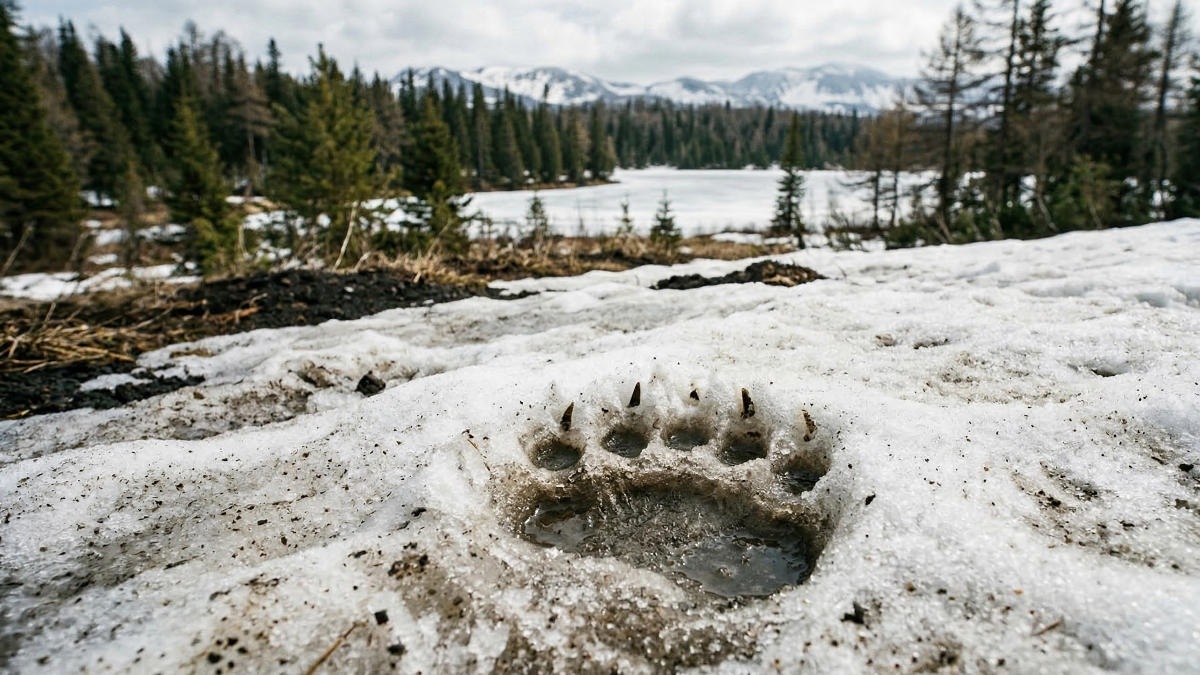
The pristine wilderness of Russia’s South Kamchatka Federal Sanctuary, a designated UNESCO World Heritage site, is witnessing an unusual phenomenon: the premature awakening of its iconic brown bears. During recent routine snowmobile patrols, inspectors from the Kronotsky Reserve discovered distinctive paw prints of a medium-sized predator pressed into the melting snow, approximately four kilometers from the “Ozyorny” cordon, near the renowned Kuril Lake and along the route to the Ozyornaya River crossing. This early sign suggests that at least one of these formidable animals has emerged from hibernation significantly ahead of schedule, prompting ecological observations in this globally significant biodiversity hotspot.
Typically, the mass emergence of bears across the Kamchatka Peninsula commences in mid-April. March usually sees only isolated, adult males stirring from their dens. The unseasonal appearance of this bear has prompted experts to consider several converging factors. A primary theory attributes the early awakening to the prolonged thaw and unusually mild conditions experienced in the region over recent weeks, potentially signaling broader environmental shifts. Another hypothesis suggests the individual bear might have entered its winter slumber with insufficient fat reserves, compelling it to venture out earlier than usual in search of sustenance.
However, contrary to popular belief, the immediate aftermath of hibernation is not primarily about foraging for food, explains Vladimir Gordienko, a respected biologist and hunting specialist with the reserve. Bears, drawing on their accumulated fat stores, initially dedicate this crucial period to re-establishing their territories, asserting dominance within their social hierarchies, and seeking out potential mates for the breeding season. Given that many dens are located dozens of kilometers from their primary summer feeding grounds, these colossal animals often undertake arduous, long-distance journeys across the awakening landscape.
The full bounty of Kamchatka’s natural larder, particularly the celebrated salmon runs in its rivers and the ripening of berries and nuts from the Siberian dwarf pine, will only become available later in the spring and summer. In these initial, lean weeks of early spring, bears display remarkable adaptability, subsisting on whatever resources they can uncover. Their diet may include marine detritus washed ashore, carrion, the roots of various plants, insect larvae meticulously excavated from decaying tree bark, and cautious, nascent attempts at hunting. The early awakening here thus offers a poignant glimpse into the resilience and challenges facing wildlife in an ever-changing world.