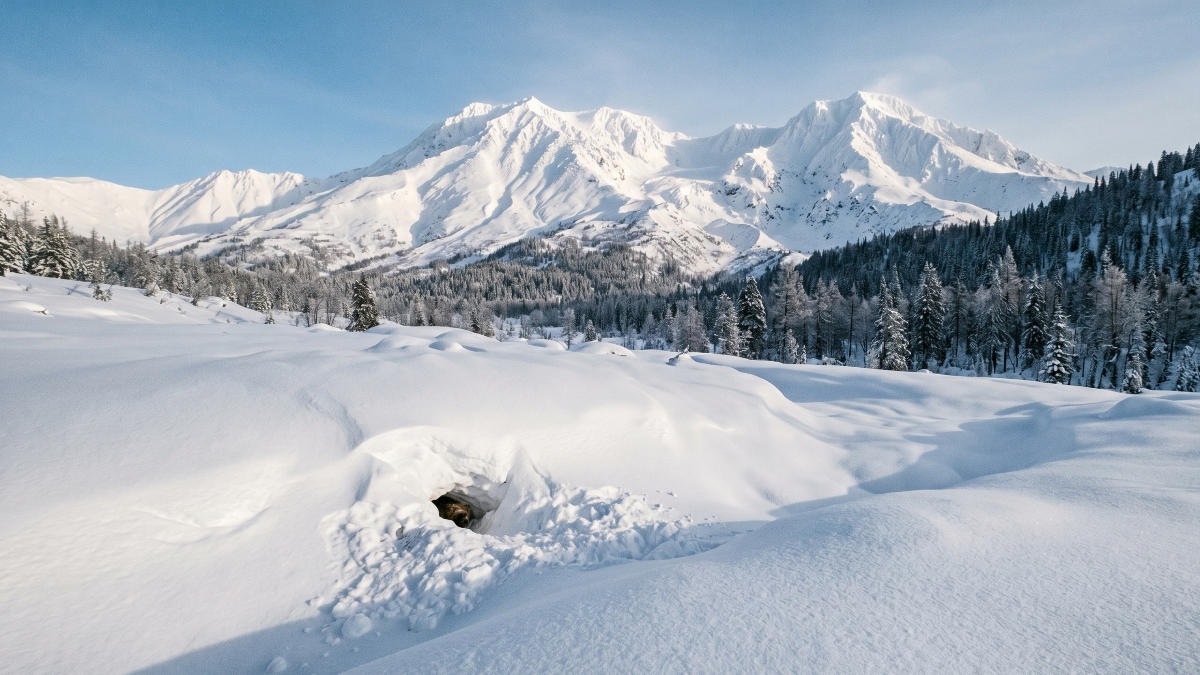
In a surprising revelation that challenges conventional understanding, the unusually heavy snowfalls blanketing Russia’s remote Kamchatka Peninsula this winter are proving to be an unexpected blessing for the region’s robust brown bear population. Far from posing a threat, these multi-meter drifts are offering crucial protection, essentially acting as a vast natural insulator for the hibernating predators, enabling them to weather the harsh winter without undue hardship.
According to Evgeny Karpov, a leading specialist in the monitoring department of the ‘Volcanoes of Kamchatka’ natural parks network, the widely perceived danger of severe winter precipitation is fundamentally misplaced. He emphasizes that the true peril for these magnificent creatures lies not in blizzards and deep snow, but rather in prolonged, snowless frosty periods. In regions accustomed to high precipitation, such as the Nalychevsky Park, the abundant snow cover functions as an enormous thermal blanket, maintaining life-sustaining positive temperatures within bear dens and shielding them from biting winds.
Conversely, a critical absence of snow during intense cold snaps presents an existential threat. Under such unforgiving conditions, bear cubs, particularly vulnerable, can tragically freeze to death within their shelters, a grim fate that even the protective presence of their mothers cannot avert. This underscores the delicate balance required for successful hibernation and cub survival, where the insulating properties of snow play a vital role.
Concerns frequently raised by the public regarding bears potentially being trapped and unable to emerge from their dens come spring are largely dismissed by biologists as unfounded. Instances of bears becoming entombed in their own hibernacula are exceedingly rare. In the peninsula’s high-altitude areas, bears typically slumber for up to five months, yet by the time their awakening approaches, the sun’s natural warmth has sufficiently melted the snow, ensuring their pathways are naturally cleared. This year’s hibernation cycle is proceeding without incident, aligning with established rhythms.
The brown bear population on the Kamchatka Peninsula is currently at an impressive peak. Vladimir Gordienko, a scientific researcher with the Kronotsky Nature Reserve, estimates their numbers to be around 25,000 individuals, a remarkable figure achieved over the past fifteen to twenty years. However, while the immediate winter climate presents an unexpected benefit, experts point to a far more significant and enduring challenge: the availability of food. It is the deficit in the summer and autumn food base—such as wild berries and fish—rather than climatic patterns, that poses the gravest threat to the bears’ long-term survival.
This vulnerability was starkly demonstrated during lean years like 2019 and 2024, when poor harvests of natural edibles and dwindling fish stocks created severe hardship for the bear population. These fluctuations in food supply, often exacerbated by environmental changes and human factors, represent a more profound and complex ecological challenge than even the harshest of winters. The Kamchatka experience thus offers a nuanced perspective on wildlife conservation, highlighting the intricate interplay of climate, biodiversity, and resource availability in maintaining the health of iconic species within globally significant ecosystems.