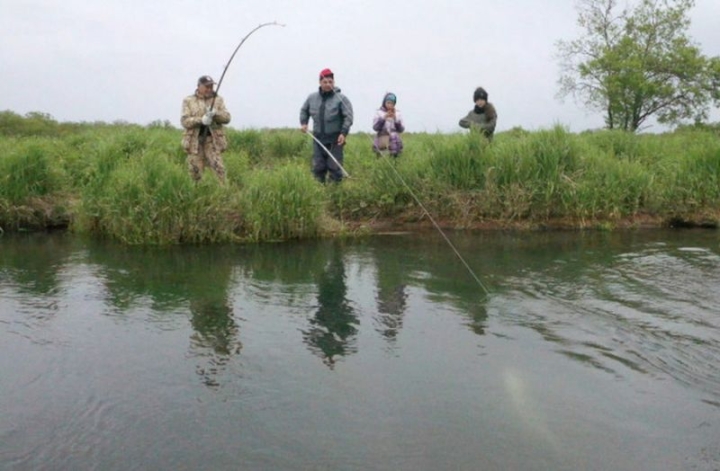
A seasoned recreational fisherman from Russia’s remote Kamchatka Peninsula has seen his appeal to drastically alter salmon fishing quotas rejected by federal authorities, a decision that comes as the region braces for a potentially devastating salmon season. The proposal, which sought to reallocate fishing volumes from industrial operators to individual hobbyists, including free access for long-term residents and indigenous communities, was deemed unnecessary by the Federal Agency for Fishery (Rosrybolovstvo) following a review initiated by the State Duma.
Alexander Tereshchenko, a Kamchatka native with over five decades of personal fishing experience, spearheaded the initiative. He argued for a significant increase in amateur quotas, suggesting these could be offset by reducing allocations for commercial fishing fleets. His specific recommendations included granting indigenous peoples and residents with over 15 years of residency in Kamchatka the right to fish for free using traditional rod and reel methods, believing such measures would empower local families to secure their own food supply.
Tereshchenko underscored his point with a compelling personal anecdote, recounting how his family historically relied almost entirely on self-caught fish, seldom purchasing salmon from stores. “Based on my more than half a century of life in Kamchatka, I can say that in the last century, our family only bought halibut for pies and fish soup, as well as lightly salted herring. Never salmon. We had enough frozen coho salmon until March. With the onset of ice, we feasted on smelt all winter,” he explained, illustrating a tradition of self-sufficiency that he believes is being undermined by current regulations.
However, the federal response, conveyed through Rosrybolovstvo after the State Duma forwarded Tereshchenko’s proposals, was firm. The agency stated that existing regulations adequately protect the interests of recreational fishermen. It cited data showing that allocated salmon volumes for amateur fishing in Kamchatka have generally increased between 2015 and 2025, reaching a high of nearly 983 tons in 2025, up from a minimum of 623 tons in 2017.
Crucially, Rosrybolovstvo pointed out that the utilization rate of these allocated volumes remains relatively low, averaging only 64 percent. This underutilization, according to the agency, suggests that an increase in current limits would be superfluous. Furthermore, it noted that commissions regulating fishing often grant additional volumes to organizers of recreational fishing during the salmon run upon request, indicating flexibility within the current framework.
The rejection of this local initiative carries additional weight given the bleak projections for the upcoming salmon season. Scientists are forecasting a significantly poor salmon run in Kamchatka this year, a development that could intensify pressure on both commercial and recreational fisheries and potentially exacerbate economic and subsistence challenges for local populations. The government’s decision to maintain current, often underutilized, limits in the face of such a forecast highlights a complex balancing act between environmental conservation, industrial interests, and the aspirations of local communities.