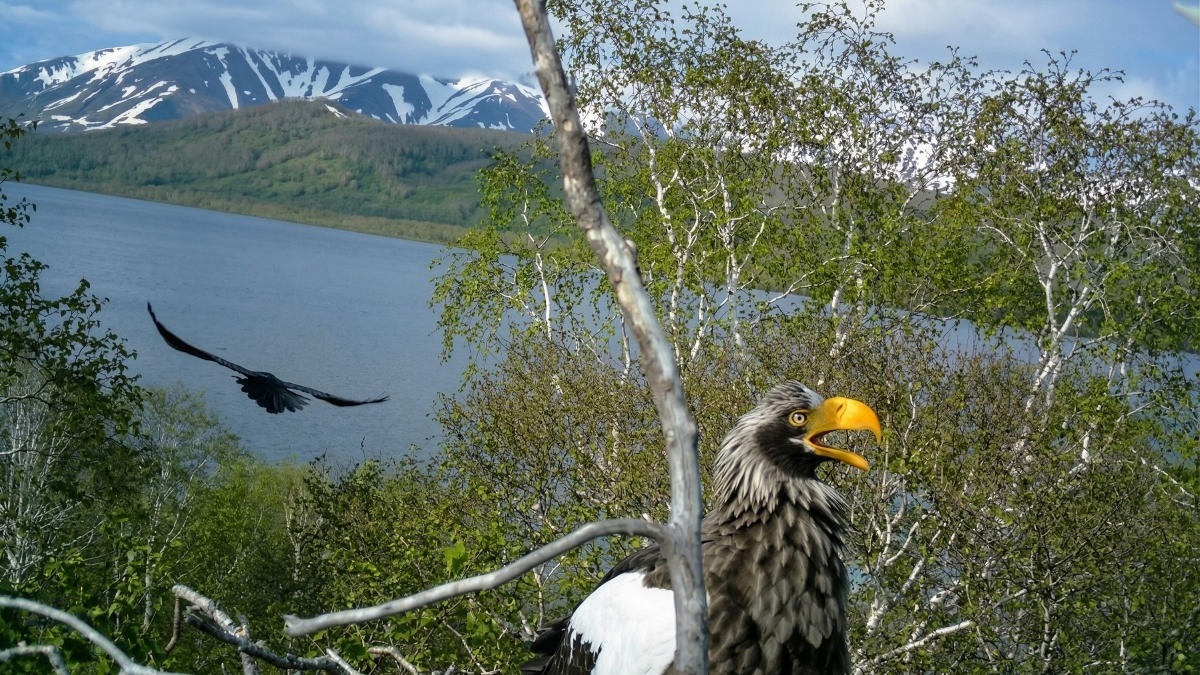
In the remote and pristine wilderness of Russia’s Kamchatka Peninsula, a critical long-term study is shedding new light on the intricate lives of one of the world’s most magnificent raptors, the Steller’s Sea Eagle. This research, a collaboration between ornithologists from Kamchatka State University and Volcanoes of Kamchatka Natural Park, is providing invaluable insights into an ecosystem vital not only for local biodiversity but also for global conservation efforts. The findings underscore the interconnectedness of wildlife populations and environmental health, resonating far beyond the rugged Pacific coastlines.
At the heart of this endeavor is the Nachikinskoye Lake Sanctuary, where a team led by biologist Miroslav Babushkin strategically deployed high-tech phototraps near two active sea eagle nests. Over a year, this continuous monitoring yielded an astonishing five thousand images, meticulously documenting not only the iconic eagles themselves but also a diverse tapestry of other species coexisting within this protected habitat. Such detailed, non-invasive data collection is crucial for understanding species dynamics in fragile environments worldwide.
Initial analysis of the photographic evidence has revealed unexpected behavioral patterns. In the most recent breeding season, one pair of Steller’s Sea Eagles, despite maintaining their territory and spending over twenty days meticulously repairing their nest, ultimately forewent producing offspring. While the precise reasons remain under investigation, ornithologists are considering factors that hold global relevance: potential food scarcity exacerbated by climate change, drastic shifts in weather conditions, or increased human disturbance. These challenges are increasingly faced by apex predators across the globe, making Kamchatka’s observations a crucial case study.
Beyond the eagles themselves, the cameras captured a bustling ecosystem thriving around these colossal nests. Researchers identified 27 bird species and two mammal species frequently visiting the nest sites. Small birds, for instance, were observed utilizing the eagles’ structures to forage for insects and food scraps. Subsequently, smaller avian predators like sparrowhawks, goshawks, and hobby falcons were also documented, with a rare Kamchatka goshawk, listed in Russia’s Red Book, making a notable appearance. Fur-bearing mammals, including the elusive sable year-round and the ermine during winter months, also regularly inspected the vicinity, demonstrating the nests’ role as a focal point for an entire community of species.
One particularly dramatic sequence captured by the cameras highlighted the raw dynamics of this ecosystem: a pair of diminutive hobby falcons, weighing barely 350 grams, attempted to claim a temporarily unoccupied eagle nest. Their ambitious bid, however, was swiftly abandoned upon the return of the eight-kilogram behemoths, the legitimate owners, underscoring the dominance of the Steller’s Sea Eagle and the natural order of this wild domain.
The Steller’s Sea Eagle is recognized globally as an ‘umbrella species.’ This ecological concept means that conservation efforts focused on this single large predator inherently protect the vast array of species and habitats within its territory. The data from Nachikinskoye Lake vividly illustrates this principle, confirming the area as a vibrant biodiversity hotspot. As monitoring continues, scientists anticipate gathering further vital information on the seasonal rhythms and habits of Kamchatka’s critically important Red Book species, contributing essential knowledge to the global dialogue on wildlife protection and sustainable ecosystems. These ongoing studies serve as a powerful reminder of nature’s resilience and the shared international responsibility to safeguard our planet’s most unique and vulnerable environments.