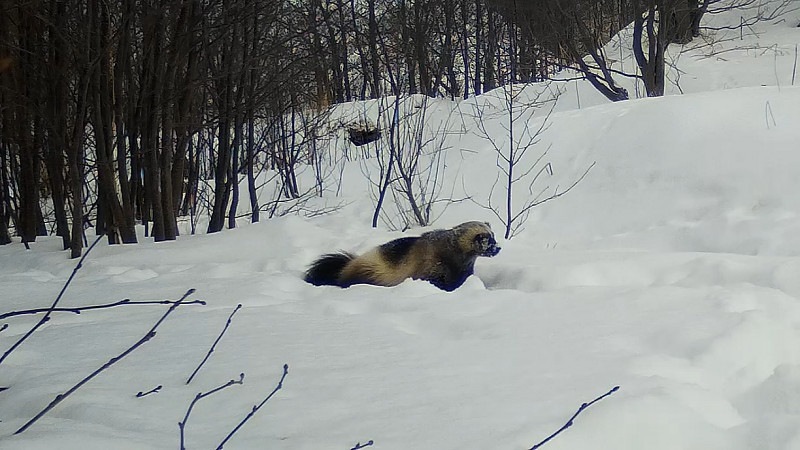
A rare and captivating glimpse into the secretive world of one of Kamchatka’s most elusive predators, the wolverine, has been captured by an automatic video camera in the remote Kronotsky Nature Reserve. This extraordinary footage, showing a wolverine engaged in post-meal grooming near Olga Bay, offers an unprecedented view of an animal notoriously difficult to observe in its natural habitat due to its solitary nature and avoidance of human contact. The discovery underscores the vital role of advanced monitoring technologies in wildlife conservation efforts across the globe.
The specialized equipment was deployed in December by a team of dedicated conservationists, including district state inspector Dmitry Balakirev and marine biologist Evgenia Volkova. While their primary mission at the Kronoki cordon was to assess the population of gray whales wintering in the adjacent waters, the scientists seized the opportunity to extend their observations to terrestrial inhabitants. One strategically placed camera trap was set near a non-freezing stream, featuring a small bridge frequently utilized by various animals, including wolverines, seeking to avoid wet paws.
Although the bridge itself remained out of frame, the high-definition camera provided a detailed look at the animal’s behavior in the immediate vicinity. According to Ms. Volkova, the captured data suggests the presence of at least two wolverines in the area around the cordon. The video clearly shows the animal meticulously cleaning itself — a process likely initiated shortly after a recent meal, possibly scavenged from marine debris washed ashore after a storm, or following a successful hunt as indicated by nearby tracks.
This interpretation was further supported by Vladimir Gordienko, a seasoned biologist-game specialist and research fellow at the Kronotsky State Nature Reserve. Dr. Gordienko’s analysis confirmed the wolverine was engaged in a meticulous hygiene routine. The footage vividly illustrates the creature rubbing its lower jaw and sides of its muzzle against the snow, a behavior consistent with cleaning after digging for food, investigating decaying stumps for larvae, or perhaps drying its fur after contact with sea water. The timing suggests the animal had recently fed and was now ensuring its cleanliness and comfort.
The Kamchatka wolverine holds a unique place in the regional ecosystem. As the second-largest member of the weasel family, surpassed only by the sea otter, its Latin genus name “Gulo” aptly translates to “glutton,” reflecting its voracious appetite. Adapted to its harsh environment, the wolverine thrives in northern forest-tundra, mountainous regions, and rocky coastal areas. Its distinctive wide paws are a marvel of natural engineering, allowing it to traverse deep snow without sinking. These resilient predators are known to cover distances of up to 50 kilometers in search of sustenance, often trailing wolves, foxes, or lynx to scavenge from their kills.
This remarkable footage from such a remote and ecologically significant region highlights the broader international importance of pristine wilderness areas like Kamchatka. Scientific breakthroughs in understanding elusive species through non-invasive methods contribute not only to local conservation strategies but also provide valuable insights for global biodiversity preservation efforts. It serves as a compelling reminder of the intricate web of life that thrives far from human eyes, and the ongoing need for dedicated research and protection to ensure the survival of such magnificent creatures.