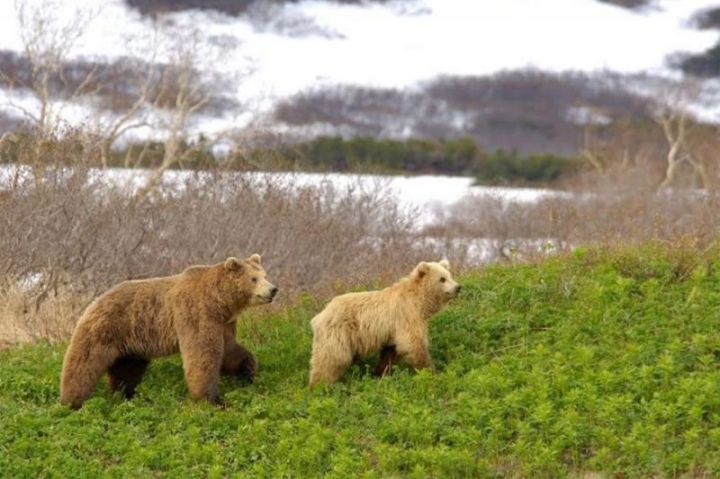
In a move underscoring its commitment to wildlife preservation, Russia’s Kronotsky Nature Reserve on the Kamchatka Peninsula has announced significant restrictions on visitor access to the iconic Valley of Geysers and the broader Uzon-Geyser area. Effective May 25th, these measures are being implemented to ensure an undisturbed environment for brown bears during their critical mating season and post-hibernation recovery period, as reported by local media.
The annual initiative, colloquially known as the ‘month of silence,’ is crucial for the region’s bear population. Following their emergence from hibernation, bears require peace and quiet to find mates and replenish vital nutrient reserves. The unique geothermal landscapes of Kamchatka provide early access to fresh vegetation around thermal springs and fumarole fields, offering a vital food source when surrounding mountainous areas remain blanketed in snow. This undisturbed feeding is pivotal for their health and reproductive success.
Frequent human presence and close observation during this sensitive time can induce stress, agitation, and even aggressive behavior in bears, disrupting their natural cycles. The reserve administration emphasizes that minimizing human-wildlife conflict and prioritizing the animals’ well-being are paramount. Consequently, the decision regarding daily helicopter flights for tourist groups into the steaming gorge will be made on a morning-by-morning basis.
This adaptive management approach means that tour operators organizing excursions will receive daily directives. These decisions will hinge on real-time assessments of bear activity – specifically, the number of bears and their disposition when foraging near established boardwalk trails. This flexible policy reflects a nuanced understanding of wildlife behavior and a proactive stance in mitigating potential disturbances.
The restrictions are slated to remain in effect until June 25th. This month-long moratorium on extensive human activity in one of the world’s most spectacular and biologically significant geothermal regions highlights a robust conservation strategy. It serves as a reminder of the delicate balance required to preserve invaluable natural heritage sites like Kamchatka, a UNESCO World Heritage area, for future generations, while also managing growing interest in ecotourism.