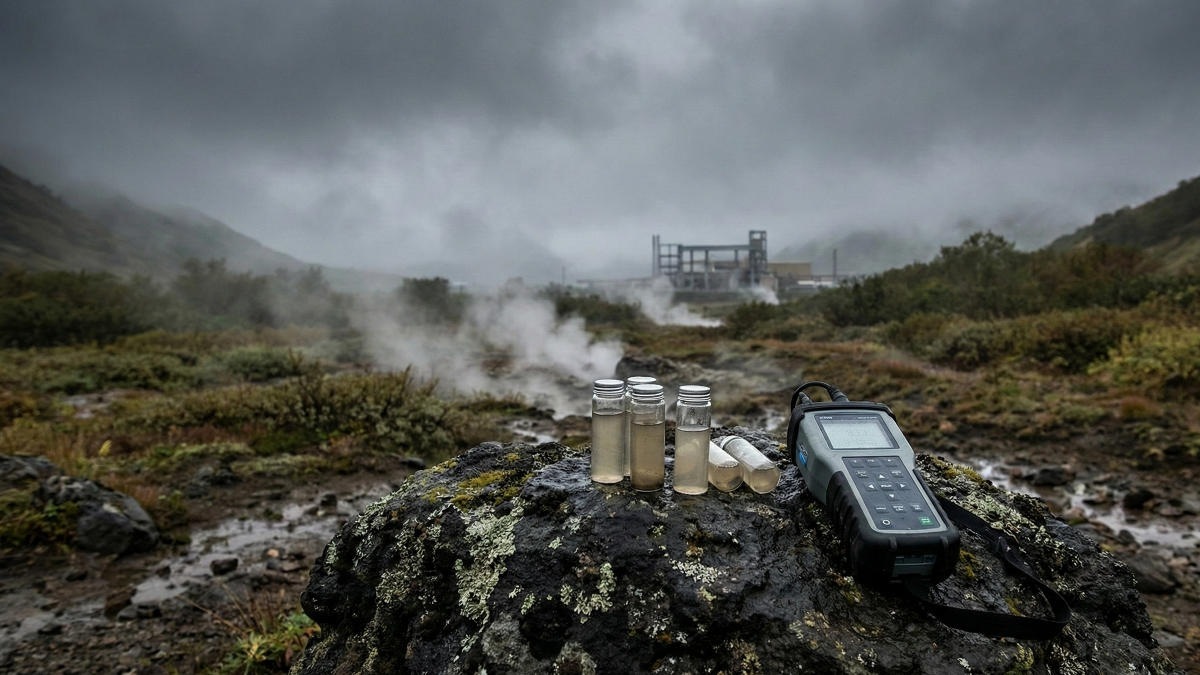
A recent comprehensive analysis conducted by specialists from RTU MIREA in Russia has shed critical light on the ecological status of water bodies across the remote and volcanically active Kamchatka Peninsula. The findings, derived from samples collected in July 2025 by the “Arctic Team” student expedition, reveal that while the vast majority of aquatic environments—from marine coastal areas to freshwater lakes—conform to established environmental standards, scientists did identify a distinct localized area exhibiting a significant exceedance of certain chemical concentrations, underscoring the ongoing need for vigilant environmental monitoring in globally significant natural landscapes.
The expedition, traversing the southeastern part of the peninsula, meticulously sampled waters from key locations vital to Kamchatka’s unique ecosystem and its international appeal. Researchers focused on the marine expanse of Avacha Bay, the freshwater depths of Lake Tolmachevo, and the geothermal springs surrounding the Mutnovskaya Geothermal Power Plant. Utilizing portable laboratories for immediate field assessments, the student and faculty team efficiently identified samples warranting deeper investigation, which were subsequently transported to Moscow for advanced analytical scrutiny. This blend of on-site agility and rigorous laboratory work exemplifies modern environmental science.
Upon arrival at the university’s state-of-the-art laboratories, the collected samples underwent sophisticated testing using cutting-edge atomic absorption spectrometry and inverse voltammetry techniques. These highly precise methods enable the detection of heavy metals and other elements even in minute, trace quantities. The primary objective of the researchers was to discern the origins of various substances in the water, differentiating between those attributable to natural volcanic activity—a defining characteristic of Kamchatka—and those resulting from anthropogenic influences, offering invaluable insights into human-environment interactions in sensitive regions.
Encouragingly, the bulk of the analyzed water bodies demonstrated excellent ecological health. For instance, marine waters off the popular tourist destination of Khalaktyrsky Beach were found to be remarkably clean regarding heavy metals. Similarly, concentrations of potentially hazardous elements in Lake Tolmachevo were recorded at levels significantly below permissible limits, reaffirming the pristine nature of many of Kamchatka’s water resources. Anna Lomtatidze, a participating student researcher, highlighted the invaluable experience gained from employing contemporary equipment in the field, allowing for the immediate distinction between baseline and anomalous samples.
However, the study pinpointed one specific exception: a pond situated in close proximity to the dormitory of the Mutnovskaya Geothermal Power Plant. Analysis revealed elevated acidity and a five-fold exceedance of the normal permissible levels for total iron. Furthermore, the water contained ammonium and a notably high concentration of arsenic, measured at 26.9 µg/L. Associate Professor Leonid Martynov of the Analytical Chemistry Department provided context for these findings, explaining that arsenic is a naturally occurring component of the local volcanic rock, while iron could stem from both natural sources and technogenic origins like aging pipelines. The presence of ammonium, he noted, is a clear indicator of human economic activity in the immediate vicinity.
Experts emphasize that these findings should not be perceived as a cause for widespread alarm, but rather as a crucial diagnostic tool for comprehensive environmental management. The identification of a localized pollution source provides a clear pathway for specialized professionals to delve deeper into its root causes and devise targeted, effective solutions aimed at minimizing environmental impact. This meticulous scientific endeavor from RTU MIREA serves as a compelling model for proactive environmental stewardship and data-driven conservation efforts, offering valuable lessons for preserving biodiversity and managing human footprint in unique natural ecosystems worldwide.