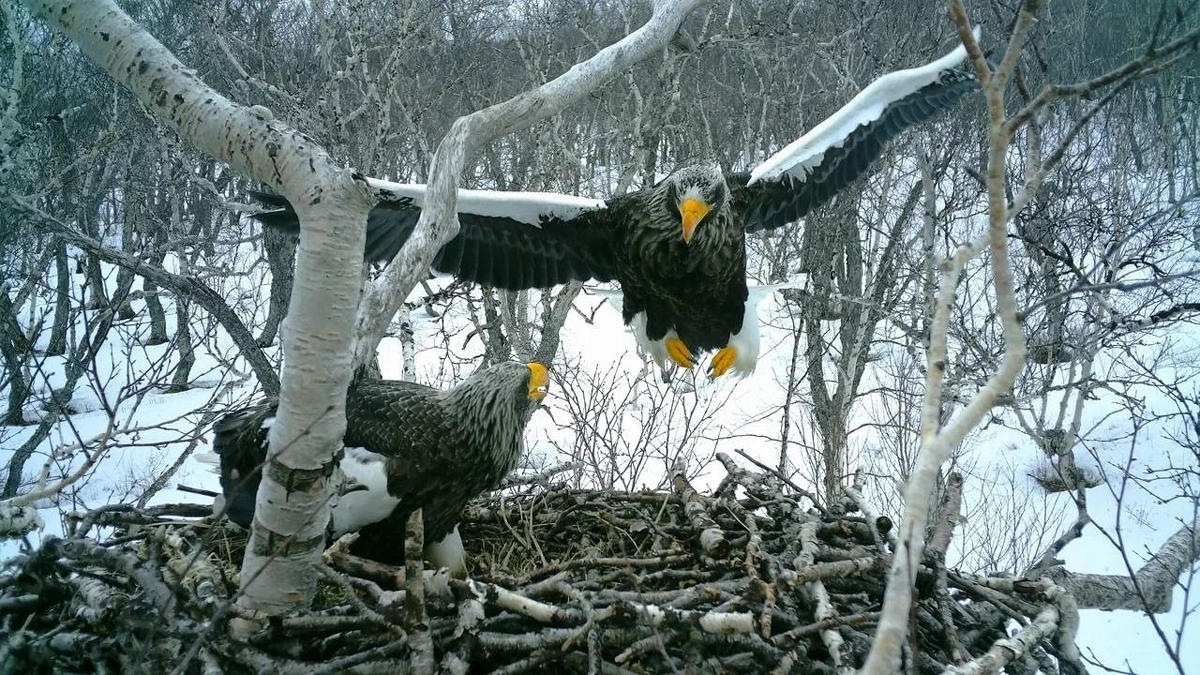
Scientists from the Vitus Bering Kamchatka State University have successfully concluded the inaugural field expedition of the season, navigating treacherous terrain and an unusually early spring to monitor the critically endangered Steller’s Sea Eagle. The team traversed over 800 kilometers across the remote eastern reaches of the Kamchatka Peninsula, including the rugged basins of the Kalygir and Zhupanova rivers, facing logistical hurdles presented by premature ice melt and unseasonably warm weather.
The Steller’s Sea Eagle (Haliaeetus pelagicus), a majestic apex predator, is a globally recognized rare species, prominently listed in the Red Data Book. The precise timing of these expeditions, conducted during February and March, is paramount to the species’ biological cycle. Research teams meticulously plan their fieldwork before the eagles return to their nesting territories after wintering, ensuring that human presence does not disturb breeding pairs or inadvertently cause them to abandon their offspring – a critical concern for such a vulnerable population.
In a testament to cutting-edge conservation techniques, the primary tool for data acquisition involves autonomous camera traps. These sophisticated devices allow for continuous, uninterrupted observation of the eagles in their natural habitat, effectively eliminating any human disturbance factor. This non-invasive approach is crucial for gathering authentic behavioral insights, offering an unvarnished view into the lives of these elusive raptors.
During their extensive reconnaissance, ornithologists successfully identified ten previously undocumented nests of this endemic species, each promptly equipped with a surveillance camera system. Concurrently, the team undertook vital maintenance on existing installations from previous years, replacing power sources and data storage units. Expedition members underscore the unparalleled value of this remote monitoring strategy, which last season yielded ‘unique footage of nesting life,’ providing an unprecedented, complete documentation of two eagle families’ breeding cycles without any direct human interference.
The next phase of this vital research on Kamchatka’s eastern coast is slated for August, when the team plans to revisit the surveyed sites to retrieve memory cards after the eagles’ active breeding season concludes. The extensive visual data collected will be instrumental in analyzing the birds’ behavioral patterns in the face of a rapidly changing global climate, offering crucial insights for refining regional and potentially international conservation programs designed to protect this iconic species and its fragile ecosystem. This ongoing commitment highlights the collaborative global effort required to safeguard biodiversity in an era of environmental uncertainty.