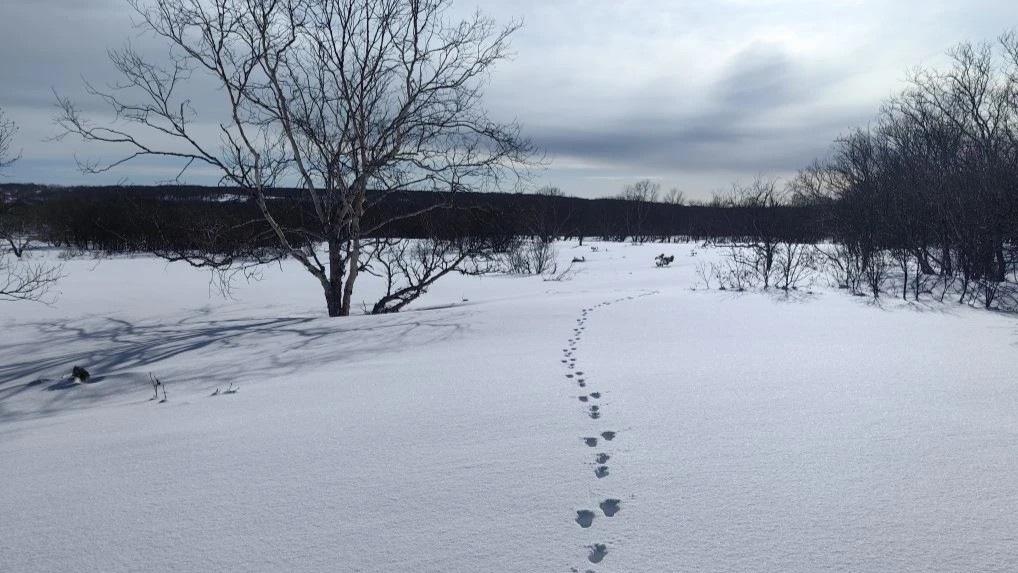
In the remote, snow-laden expanse of Russia’s Kamchatka Peninsula, a dedicated team of wildlife specialists has completed its annual winter census, offering invaluable insights into the region’s unique ecosystem. Twelve experts from the Kronotsky Nature Reserve traversed 270 kilometers on skis, meticulously tracking animals by their prints in the fresh snow, revealing a dynamic interplay of life – from thriving predator populations to expected fluctuations in prey species.
The findings highlight robust numbers among key predator species. The sable, whose preservation was the very impetus for establishing protected status for Kronotsky and Asacha territories back in 1882, continues to flourish. The latest count reveals approximately 4,020 sables inhabiting the reserve, significantly exceeding the long-term average of around 3,000 individuals. This positive trend extends to the wolverine population, which saw a notable increase to 107 predatory animals this season, up from 74 recorded the previous year, signaling a healthy food chain and a thriving apex predator presence.
Conversely, the census documented a predictable decline in the population of white hares (Lepus timidus), a trend observed since 2023. Currently, the protected area is home to 2,175 white hares, a stark contrast to the demographic peak in 2022 when numbers soared past 107,000. Zoologists emphasize that such dramatic fluctuations are a natural and integral part of this species’ biological cycle, requiring no artificial intervention and reflecting the inherent boom-and-bust rhythms of natural ecosystems.
This vital fieldwork spanned across all the reserve’s diverse and often challenging landscapes. Inspectors meticulously surveyed stone birch, larch, and spruce forests, navigated alder-willow floodplains, and trekked through sections of mountain and coastal tundra. Their routes also encompassed marshlands, luxuriant grass meadows, and dense, often impenetrable thickets of cedar dwarf pine, showcasing the sheer scale and difficulty of the undertaking. The counting methodology, honed since the 1930s, relies on recording animal tracks strictly after fresh snowfall, ensuring that only animals passing through the area within the last 24 hours are registered, thereby providing highly accurate and current data.
Dmitry Pilipenko, Deputy Director for Science at the Kronotsky Reserve, underscored the critical role of highly skilled personnel in these expeditions. “It requires our most experienced inspectors who possess deep knowledge of the territory, extensive field work skills, and the ability to confidently interpret animal tracks,” Pilipenko explained, highlighting the blend of scientific expertise and rugged wilderness survival required. The systematically collected data will be meticulously integrated into the “Annals of Nature,” the foundational scientific document for this vital protected area, contributing to a century-long record of ecological change. These efforts are crucial not only for understanding Kamchatka’s unique biodiversity but also for broader international conservation discourse, offering a microcosm of how remote ecosystems respond to natural cycles and environmental pressures.