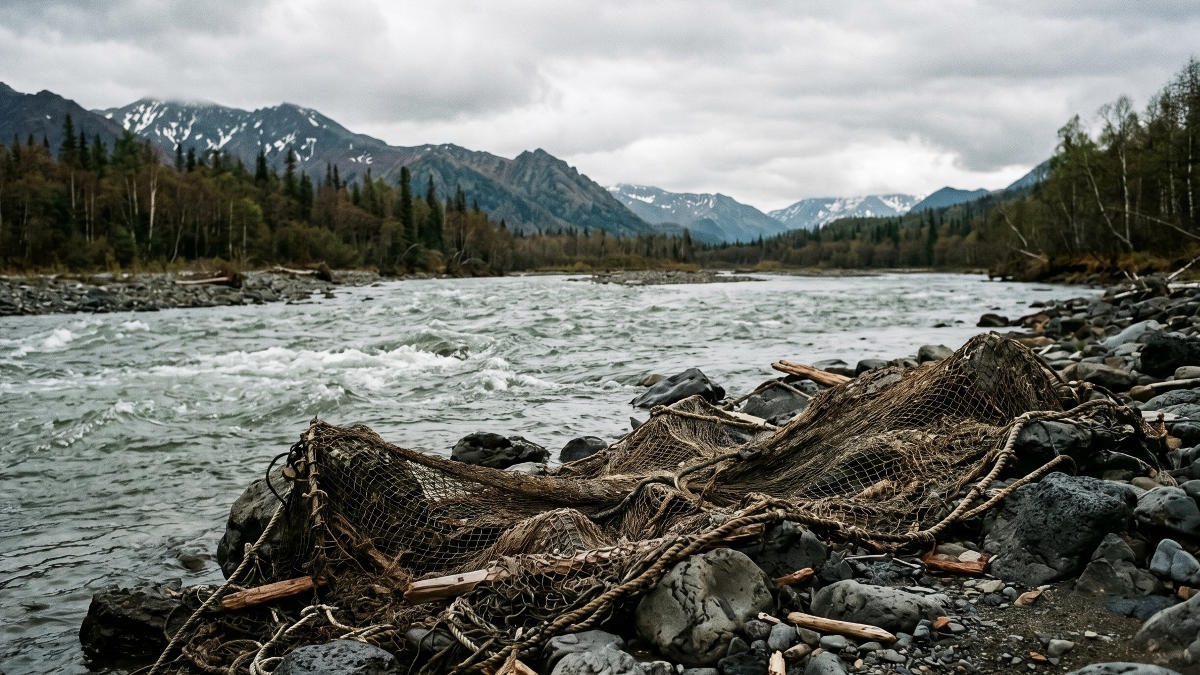
In a remote corner of Russia’s Far East, a critical struggle is unfolding over the distribution of vital fishing quotas, pitting authorities and indigenous communities against powerful corporate interests. Alarming reports from Kamchatka indicate a pervasive crisis where half of the annually allocated 7,000 metric tons of aquatic biological resources remain unutilized, even as traditional fishing communities face collapse due to soaring fees and aggressive monopolization.
The situation is further complicated by a tangled web of opaque practices. While over 300 national associations are registered on the peninsula, only 120 currently hold legitimate fishing rights. Andrei Metelitsa, head of the regional association of indigenous peoples, estimates that a staggering 70 percent of these organizations are effectively controlled by industrial fishing magnates or shadowy entities, leading to a highly untransparent fishery sector ripe for exploitation and undermining equitable resource management.
Legal, small-scale fishers find themselves in dire straits, facing crippling financial burdens that threaten their very existence. Fees for the use of bioresources have seen an astronomical increase; the cost to harvest just sixty tons has skyrocketed to 700,000 rubles, a tenfold jump from the previous 50,000 rubles. This untenable economic pressure is forcing many indigenous residents to liquidate their legal entities, pushing them towards subsistence fishing as individuals, or, tragically, into the risky realm of illegal poaching to sustain their traditional livelihoods and feed their families.
Such predatory practices are starkly exemplified in the Karaginsky district, where a systematic absorption of smaller, traditional fishing enterprises has been observed. One dominant association has reportedly seized control of sixteen prime fishing areas, strategically requesting minimal catch limits to consolidate its territorial hold. Corporate registry data reveals that this structure is ultimately backed by commercial businesses, effectively reserving vast swathes of Kamchatka’s rich aquatic territories for future exploitation, often at the direct expense of local, indigenous communities.
The challenges are set to intensify in autumn 2026 with a proposed transition to an automatic, non-application-based system for river access. While ostensibly aimed at streamlining processes, quotas will be granted automatically only to individuals whose details are already in a specialized federal registry. This bureaucratic hurdle threatens to disenfranchise a significant number of indigenous people, potentially stripping them of their ancestral fishing rights and severing a vital link to their cultural heritage and fundamental food security.
In response to this escalating crisis, the regional association of indigenous peoples has put forth a reform proposal, advocating for a new principle in quota distribution that prioritizes socially oriented organizations. These are entities committed to providing their catch free of charge to vital public services such as hospitals, families of military personnel, and local senior citizens. Representatives argue that the state must introduce robust economic incentives for such altruistic endeavors, acknowledging that fishermen, often driven by individual economic imperatives, are unlikely to reach a consensus on resource division without clear governmental guidance and support.
The Kamchatka Regional Ministry of Fisheries has formed a working group to evaluate this initiative, yet a degree of caution prevails. Deputy Minister Sergei Nazvanov suggests that Kamchatka’s fishing organizations are too fragmented and diverse for a swift replication of successful models from other regions. He emphasizes the critical need to develop universally supported criteria, recognizing that many view their operations primarily through an economic lens rather than a purely social one. A detailed reform project is anticipated to be submitted to the regional Public Chamber for final approval, though the path to an equitable and sustainable solution balancing economic interests with indigenous rights remains complex and fraught with competing interests.