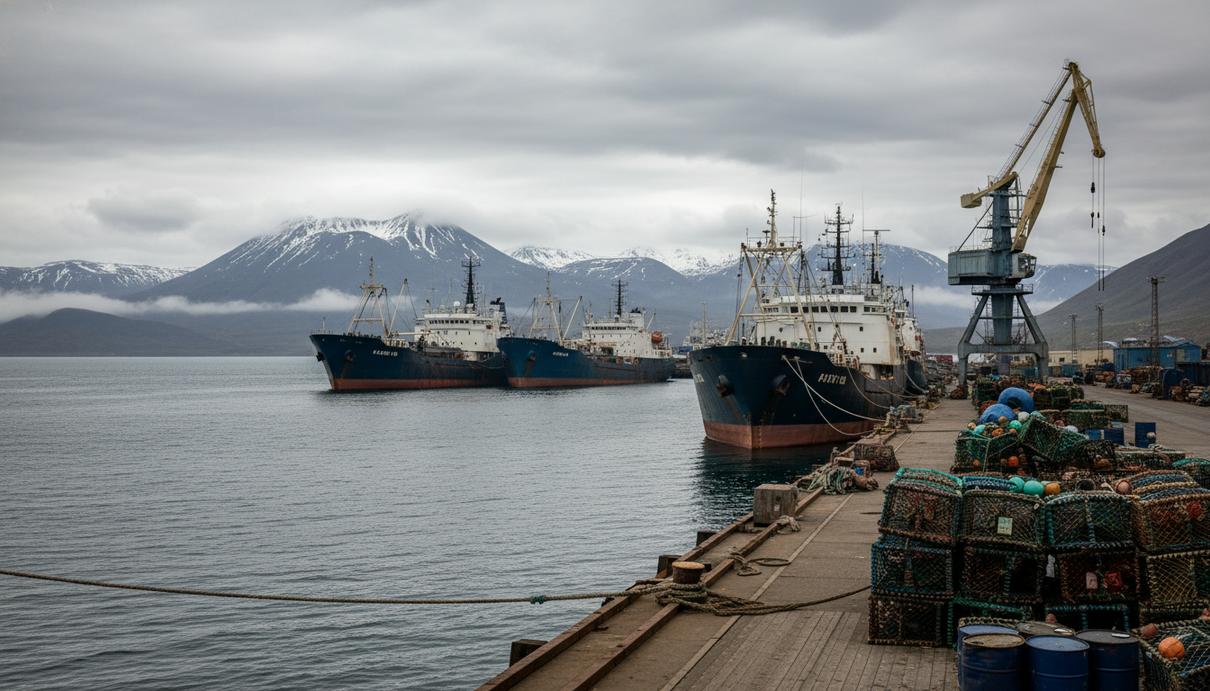
Scientific forecasts are painting a concerning picture for the Pacific salmon fishery in Russia’s Far East, with a significant drop in expected catches for 2026. Research institutes, including the prominent VNIRO and KamchatNIRO, project a stark decline in salmon approaches to the region’s coasts, a development that could ripple through global seafood markets and highlight broader ecological shifts in the Pacific Ocean.
The Kamchatka Peninsula, a vital hub for salmon production, is bracing for a particularly challenging season. Experts anticipate a total catch of merely 117,500 metric tons – a figure dwarfed by previous years. This reduced yield is expected to be almost evenly distributed across the peninsula’s eastern and western shores, with projections of 59,500 and 58,000 tons respectively.
Scientists attribute this downturn primarily to the natural cyclicality inherent in salmon reproduction patterns, coupled with more extensive changes impacting aquatic bioresources across the entire Pacific coastline. This points to a complex interplay of environmental factors, potentially including ocean temperature shifts, prey availability, and migratory route alterations, underscoring the delicate balance of marine ecosystems crucial for sustainable fisheries worldwide.
In response to these conservative forecasts, fishing enterprises across the Far East are proactively adapting their operations. Preparations for the annual fishing season, traditionally commencing in late May, are underway with a renewed focus on efficiency and resilience. Companies are investing heavily in modernizing coastal processing infrastructure and completing fleet overhauls, aiming to streamline production processes and mitigate financial risks in an environment of anticipated raw material scarcity.
Regional authorities in Kamchatka are also taking decisive action to safeguard domestic supply. Yulia Morozova, Deputy Chairman of the regional government, has reassured local residents that the availability of fish products will not diminish. The popular ‘Kamchatka Fish’ social program will continue to play a pivotal role in maintaining affordability and access for the local population.
To compensate for the projected salmon deficit, the region is implementing a strategic shift in its market offerings. The assortment of available seafood will be diversified to include a greater emphasis on whitefish. Furthermore, agreements have been struck to significantly increase supplies of squid, notably through a partnership with the ‘Okeanrybflot’ enterprise. In parallel, the Kamchatka Krai government is actively engaging new partners in the retail sector, such as the local ‘Pionerskaya’ poultry farm, to broaden distribution networks. This integration of non-specialized retail outlets is intended to expand sales points and enhance logistics, ensuring easier access to seafood for consumers across diverse areas of the vast peninsula.