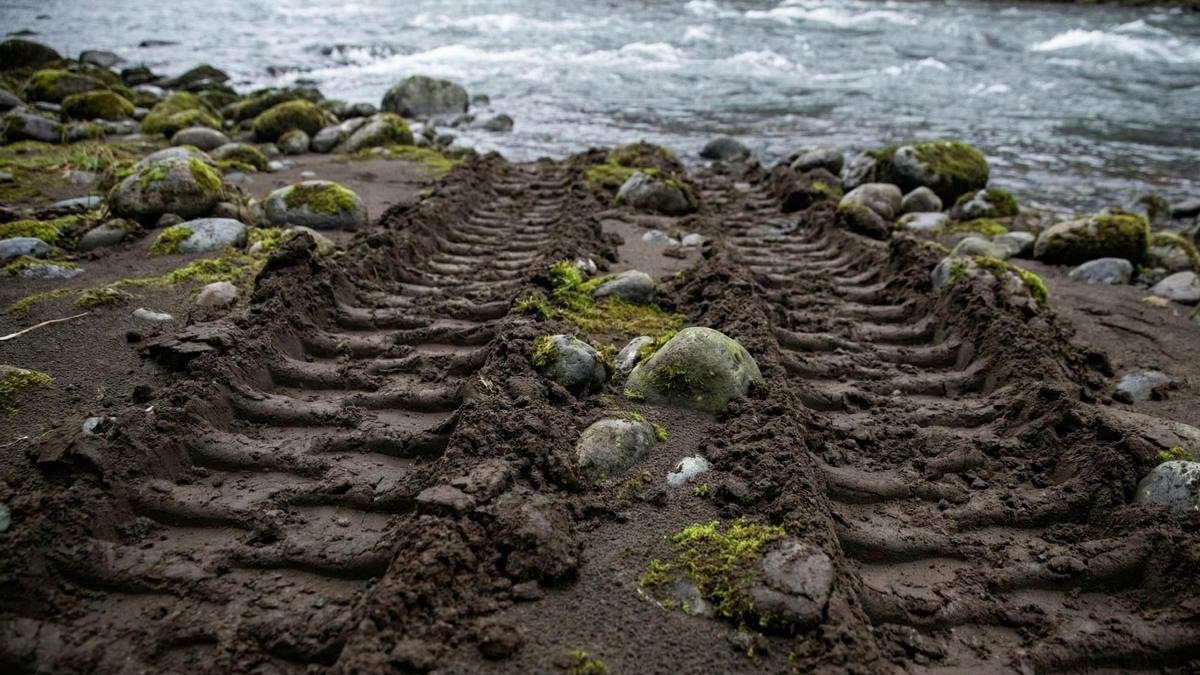
An environmental controversy is rapidly unfolding in Russia’s pristine Far East, as local residents in Kamchatka Krai have raised an urgent alarm over suspicious heavy machinery operations near the mouth of the Oblukovina River. This remote region, globally recognized for its unique biodiversity and untouched natural landscapes, is now grappling with growing concerns about unexplained earthwork threatening a vital spawning waterway, a matter that frequently draws international attention to global conservation efforts.
Video footage, captured by concerned locals and subsequently circulated by the ’41 Region’ news agency, depicts heavy equipment actively engaged in ground-disturbing activities along the riverbanks. The visual evidence has ignited widespread anxiety among the community, who fear irreversible damage to a critical natural resource. The Oblukovina River is not merely a local waterway; it serves as a crucial spawning ground for various fish species, underpinning the ecological health of the entire region and contributing significantly to the broader Pacific ecosystem, highlighting its importance far beyond local boundaries.
The primary source of public outrage stems from the complete absence of information regarding the nature and authorization of these works. Locals have voiced pointed questions to the organizers, demanding transparency about the objectives behind such extensive operations in a sensitive ecological zone. This lack of clear communication has fueled speculation and deepened distrust, underscoring a critical gap in environmental governance and public engagement that often resonates with international standards for responsible development.
Adding significant weight to these concerns, Alla Potapova, head of the prominent regional non-governmental organization ‘Ecology Kamchatka,’ emphasized the stringent legal framework governing activities near water bodies in Russia. ‘The Water Code is in full effect, and its provisions are particularly strict concerning spawning rivers,’ Potapova stated. ‘If such activities are sanctioned by all relevant regulatory and oversight bodies, and no extreme situation dictates otherwise, then there is no issue. However, if this represents unauthorized work by machinery along the coastal strip, especially at a river’s estuary, then it constitutes an enormous problem.’ Her remarks highlight the potential for breaches of national environmental law, a concern frequently monitored by international environmental watchdogs.
As of now, official details concerning the parties responsible for deploying the heavy machinery, or the specific purpose of their work at the river’s mouth, remain elusive. This opacity in such a sensitive environmental matter raises questions about accountability and adherence to established environmental protection standards within Russia’s remote territories. The incident underscores the perpetual challenge of balancing economic development with ecological preservation, a theme that resonates globally in discussions about sustainable resource management and biodiversity conservation.
In response to the mounting public pressure and photographic evidence, regional environmental protection agencies have reportedly launched an investigation into the potential violations. The global community, often looking to regions like Kamchatka as bastions of wilderness and unique ecosystems, will undoubtedly watch closely as this situation unfolds, hoping for a swift and transparent resolution that prioritizes the long-term health of this invaluable ecosystem over short-term, unexplained interventions.