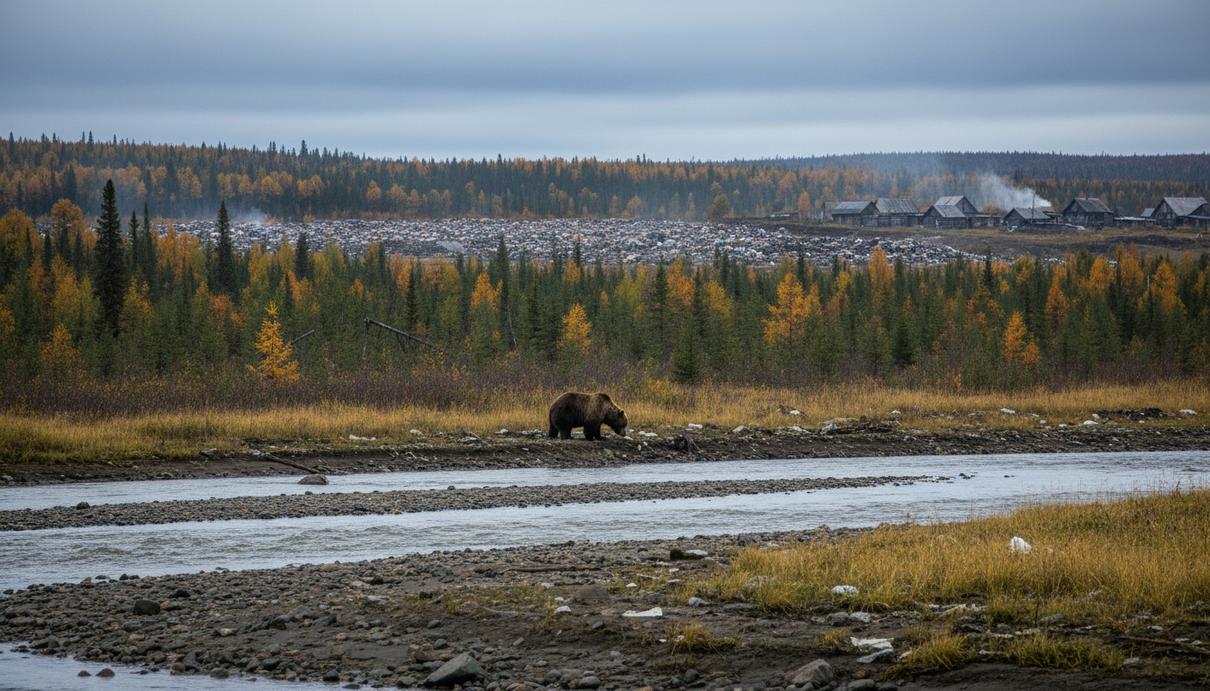
In 2026, Kamchatka Krai experienced a massive migration of brown bears into populated areas. The primary cause of this movement was the collapse of the salmon fishing season. While the projected harvest was 117,000 tons, the actual catch reached only 55,600 tons. This shortfall exceeds the scale of past declines recorded in 2013, 2019, 2020, 2022, and 2024, pointing to a systemic crisis within the regional ecosystem.
The food deficit in local rivers forces these predators to expand their foraging territories. Unlike Siberian regions where animals are displaced by forest fires, empty spawning grounds remain the key factor on the Kamchatka Peninsula. The bears do not exhibit targeted aggression but are drawn by the scent of household and food waste. Statistical data shows a direct correlation – graphs illustrating the decline in salmon catches perfectly mirror the dynamics of the forced culling of predators.
The availability of anthropogenic food sources further exacerbates the situation. Several typical scenarios provoke the appearance of these animals in residential zones. Tourists regularly feed bears near roads for photographs, causing the wildlife to lose its natural fear of humans. A similar practice is widespread among shift workers at mining sites and poachers at fishing camps. Once the season concludes and people depart, the habituated animals remain in the area, which inevitably leads to their elimination. Open municipal landfills in settlements such as Sobolevo and Ivashka serve as an additional attractant.
Localized culling of conflict individuals has proven entirely ineffective. The natural principle of an ecological vacuum dictates that a vacant territory with accessible food is quickly occupied by another bear. To address the issue in the autumn of 2026, regional authorities approved new rules for observing wild animals, introducing fines for violations starting September 15. However, these administrative measures are insufficient due to a federal moratorium on business inspections valid until 2030, which severely restricts environmental oversight capabilities.
Resolving the crisis requires a comprehensive modernization of solid municipal waste landfills and stricter control over the disposal of remains at fish processing plants. Historical practices have demonstrated that during periods of record catches, enterprises would transport excess red fish by truck directly into adjacent forests. Strict regulations for the disposal of biological agricultural waste and mandatory safety briefings for shift camp employees are also necessary to mitigate future conflicts.