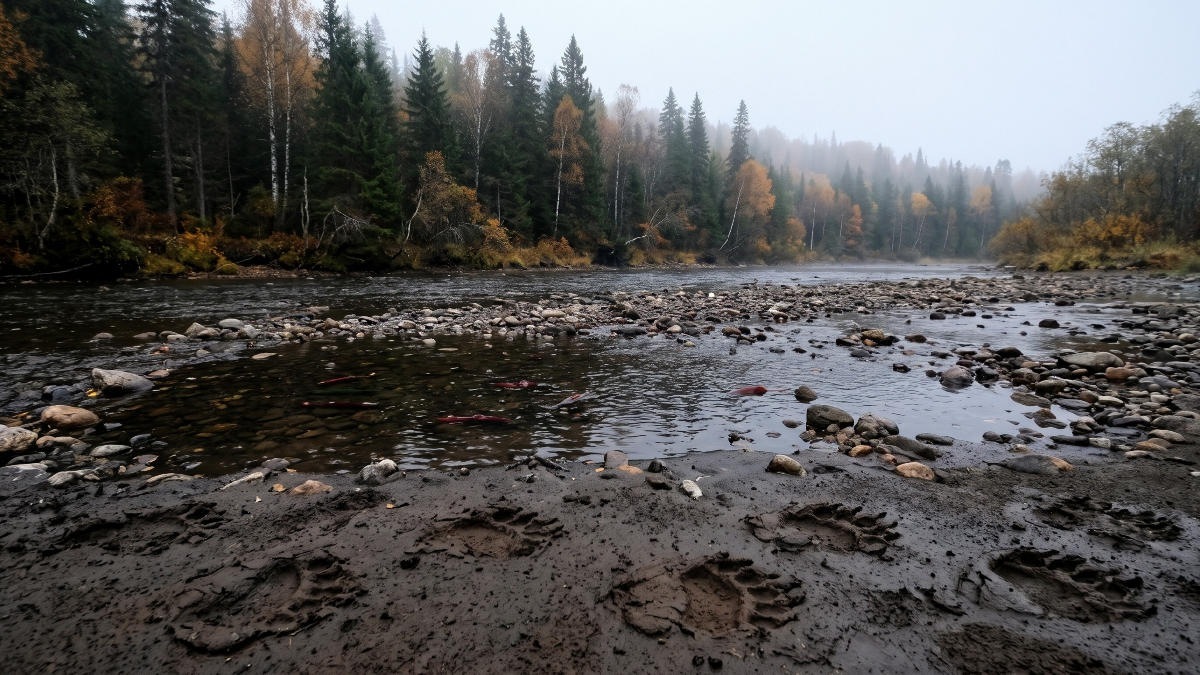
The salmon fishing season in Kamchatka has concluded with some of the lowest yields in recent decades. The total catch of red fish amounted to 55,900 tons, compared to over 130,000 tons during the previous comparable cycle – a figure already considered a weak result. The primary cause of the declining catches is attributed to climate change. This reduction in fish stocks represents a significant statistical decline and a major destabilizing factor for the local ecosystem.
For the Kamchatka brown bear, Pacific salmon serve as the fundamental source of calories prior to winter hibernation. During the mass spawning period, a single animal can consume tens of kilograms of fish per day, selecting the most fat-rich parts – the skin, roe, and head. The bears’ diet is highly complex, requiring plant-based foods for adequate fat accumulation, primarily Siberian dwarf pine nuts and berries such as crowberry, blueberry, and rowan. The absence of even one of these dietary elements severely complicates the predators’ preparation for winter.
A critical situation arises in the region when there is a simultaneous deficit of all natural food sources. Historical data from previous seasons shows that combined shortages of fish, nuts, and berries result in significant losses to the bear population. During one such year, mass migrations of predators into human settlements led specialized services to cull 428 individuals. In the current season, the salmon run proved even weaker, but the nutritional balance was partially offset by a high yield of wild plants. By mid-October, approximately 250 bears had been culled in the territory, aligning with the region’s long-term average figures.
A deficit of fish in the waterways directly alters the territorial behavior of the animals. In productive years, bears concentrate in limited areas around spawning rivers and lakes. When food is scarce, the density of these gatherings drops, and the animals initiate active migration. Bears have been documented crossing mountain passes in search of new foraging grounds. This process is accompanied by an increase in intraspecific competition, resulting in weaker individuals being displaced from their usual habitats and forced to traverse unfamiliar territories.
Migration and the search for alternative food sources inevitably lead these predators to human settlements. Under natural conditions, a healthy animal avoids human contact, but the threat of starvation suppresses the instinct of self-preservation. Upon reaching the periphery of villages, displaced individuals discover anthropogenic food sources – open waste containers, unauthorized dumps, and fish processing waste. Once a bear gains access to such food, it loses its natural fear and transitions into a synanthropic animal, regularly returning to human habitation.
The application of non-lethal deterrent methods to these individuals rarely yields long-term results, necessitating lethal control. However, the physical elimination of a specific bear does not resolve the systemic problem, as another predator, attracted by the scent of food waste, quickly takes its place. Minimizing the number of conflicts requires comprehensive preventive modifications to settlement infrastructure. Municipalities must universally install closed waste container sites, eliminate unauthorized dumps, and strictly control the disposal of biological waste.
On a macro level, approaches to regulating the fishing industry require revision. When calculating allowable catch volumes and quotas for salmon passage to spawning grounds, relevant agencies must account for the basic dietary needs of dependent predators, rather than solely focusing on fish population reproduction. Regular ecological monitoring of bear populations, wild plant yields, and fish run forecasts would enable advanced planning of safety measures for local residents. Without these changes, the systematic reduction of the natural food base will continue to provoke human-wildlife conflicts in Kamchatka.