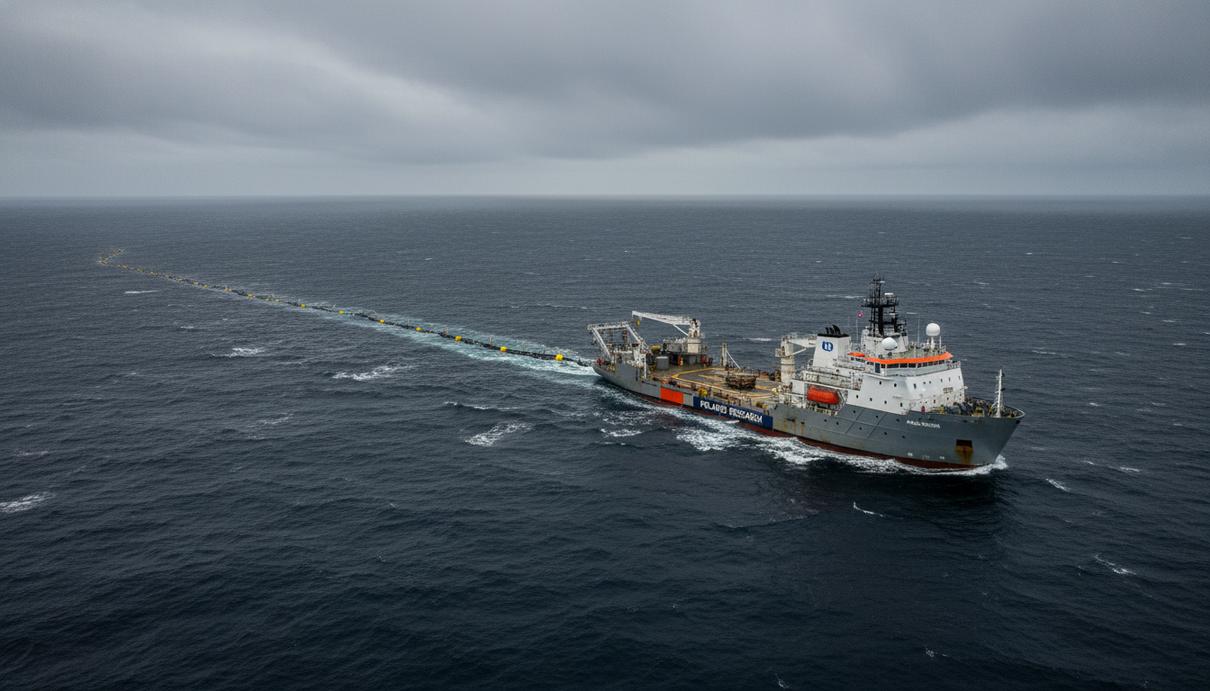
In a move poised to reshape energy discussions in the crucial Bering Sea region, Russia is set to commence a significant new phase of geological exploration for prospective oil and gas fields in mid-June 2026. The ambitious three-month expedition, slated to conclude by mid-September, underscores Moscow’s persistent drive to secure hydrocarbon resources, particularly in its Far Eastern territories. This large-scale operation is spearheaded by the state-owned holding “Rosgeologia,” deploying its specialized research vessel, the “Ordovik,” to conduct extensive surveys in these strategic waters.
The geological quest for hydrocarbons across the vast Far Eastern shelf will employ advanced seismic survey techniques. The “Ordovik” is equipped to tow an acoustic signal source alongside a massive nine-kilometer receiving array. These sophisticated instruments will emit sound waves that penetrate the seabed, with the reflected impulses providing geologists with a detailed subsurface map. This data is critical for identifying geological structures potentially holding commercially viable deposits of oil or natural gas, vital resources for Russia’s economy and global energy markets. Such precise operations mandate the vessel maintain a consistently low speed, typically between four and five knots, for optimal data acquisition.
The sheer scale of the scientific equipment deployed poses substantial operational challenges. With extensive gear trailing behind, the “Ordovik’s” maneuverability will be severely limited, preventing sudden changes in course or rapid stops. To ensure both the safety of the mission and the integrity of its sensitive sensors from external acoustic interference, Russian authorities have established an expansive buffer zone around the research area. This critical safety perimeter dictates that other vessels must maintain a minimum distance of five kilometers from the “Ordovik’s” bow and sides, extending to an even more significant fourteen kilometers from its stern.
This exploration comes at a sensitive time for the Bering Sea, a region renowned as one of Russia’s most vital fishing grounds. The expedition’s timeline directly coincides with the peak season for commercial fishing, raising concerns among local and international fishing fleets. Recognizing this potential conflict, the Federal Agency for Fishery has issued a directive to all captains operating in the area, urging them to coordinate closely with the research vessel via marine radio channel 16. Fishermen are specifically instructed to clear their stationary and drifting nets from the geologists’ projected route well in advance. Fishing gear can only be repositioned in the area approximately 24 hours after the research convoy has passed, a measure designed to mitigate disruption while allowing the critical survey work to proceed efficiently. Once the survey program is complete, the extensive equipment will be retrieved, and the “Ordovik” will depart the fishing grounds.
The unfolding energy exploration in the Bering Sea carries significant implications far beyond Russia’s domestic energy policy. As a shared maritime frontier, bordering the United States, activities in this ecologically sensitive region are often scrutinized by international observers. Russia’s intensified search for new energy reserves reflects a broader global competition for resources, particularly in the context of shifting geopolitical landscapes and increasing demand for reliable energy supplies. This push for new hydrocarbon frontiers underscores the complex interplay between national energy security, environmental stewardship in vulnerable ecosystems, and international maritime cooperation in one of the world’s most strategic waterways.