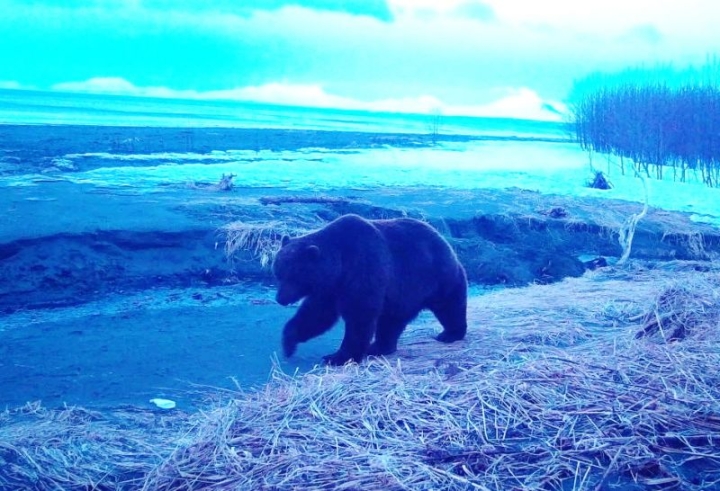
The pristine wilderness of Russia’s Kamchatka Peninsula is stirring back to life as the first brown bears emerge from their winter slumber, marking the unofficial arrival of spring in this remote Far Eastern region. Officials at the Kronotsky Nature Reserve have confirmed the sighting of an awakened bear on the coast of Olga Bay, an event eagerly anticipated by conservationists and nature enthusiasts eager to observe the rhythms of one of the world’s most untouched ecosystems. This annual reawakening serves as a potent symbol of resilience and the enduring power of nature, drawing global attention to the critical environmental work being undertaken in this unique corner of the planet.
The initial encounter occurred approximately three kilometers from the ‘Kronoki’ cordon, where state inspector Dmitry Balakirev was conducting routine checks on equipment ahead of the navigation season. Balakirev, whose duties often involve monitoring the vital marine life such as gray whales that frequent the bay, recounted his surprise meeting: “I spotted the first awakened bear in our area while heading to the boathouse. It saw me too and retreated into the forest. It looked strong, healthy, and shaggy – clearly, it had a good winter. By the time I took out my phone and removed my gloves, it had almost disappeared, allowing for just one quick photograph.” This personal account offers a rare glimpse into the delicate interactions between humans and wildlife in such a remote setting.
This fleeting glimpse was soon corroborated by further observations, underscoring the diligent monitoring practices employed within the reserve. Following Balakirev’s encounter, he and Kronotsky Nature Reserve researcher Evgenia Volkova revisited the path, discovering fresh tracks of the awakened giant. Subsequent confirmation arrived swiftly through strategically placed camera traps, which captured striking portraits of the newly active animal. These images provide invaluable data for ongoing wildlife monitoring efforts, helping researchers track population health and movement patterns within one of Russia’s most vital protected areas.
Kamchatka, a UNESCO World Heritage site renowned for its volcanoes, geysers, and unparalleled biodiversity, serves as a critical habitat for one of the largest brown bear populations on Earth. The annual emergence of these apex predators from their dens is not merely a seasonal phenomenon but a crucial indicator of the region’s ecological health. It underscores the continuous dedication to conservation in the Kronotsky Reserve, an area vital for understanding natural cycles and protecting endangered species. The presence of other significant predators, such as the patrolling wolf packs along Olga Bay’s coast—which have also been recently documented by camera—further highlights the complex and thriving ecosystem that conservationists are diligently working to preserve for global environmental heritage and scientific study.