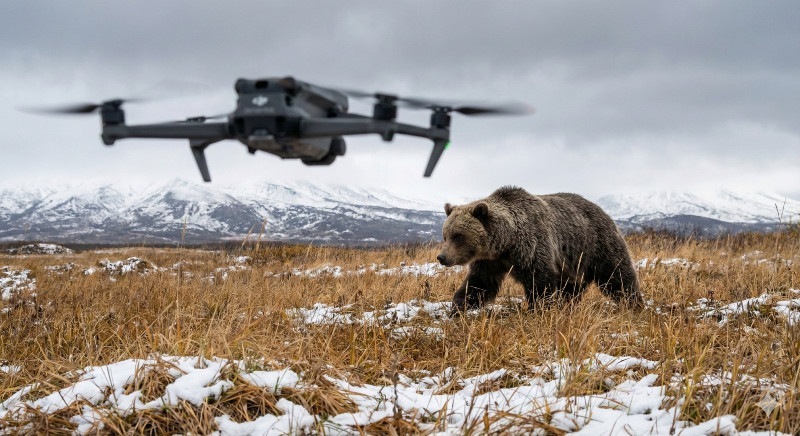
Kamchatka Peninsula is leveraging advanced drone technology to navigate the complex interface between human settlements and its thriving brown bear population, a move aimed at enhancing public safety and showcasing Russia’s growing technological prowess. State hunting inspectors, under the purview of the Kamchatka Krai’s Ministry of Forestry and Hunting, have implemented a new aerial surveillance program, primarily focused on tracking the movements of these powerful predators as they prepare for winter. The initiative highlights a strategic push towards modern solutions for critical environmental challenges.
This technological intervention comes at a crucial juncture for Kamchatka’s apex predators. As autumn deepens, brown bears across the region are entering their active pre-hibernation phase, with mass denning having commenced in mid-October. While many bears are already settling into their winter slumber – following a natural progression from mother bears with cubs to pregnant females, then younger individuals, and finally adult males – a significant risk of human encounters persists. Large males, in particular, often linger near salmon spawning grounds until mid-December, presenting potential safety hazards for local communities.
The deployment of UAVs provides an unprecedented level of situational awareness, allowing conservationists to monitor the vast hunting grounds and critical buffer zones surrounding populated areas. This aerial oversight enables a proactive approach to wildlife management. As officials from the hunting inspectorate explained, “Monitoring the borders of hunting grounds allows us to make operational decisions on regulating predator numbers even before they approach human settlements.” This capability empowers inspectors to take pre-emptive action – whether by deterring animals from venturing too close or implementing other regulatory measures – thereby mitigating potential threats before they escalate.
Beyond immediate wildlife management, this initiative underscores a broader strategic thrust within Russia: the rapid development of its domestic unmanned aerial systems (UAS) industry. The drones utilized in Kamchatka were procured through a regional project, “Stimulating Demand for Domestic Unmanned Aircraft Systems,” itself a component of the ambitious national project “Unmanned Aircraft Systems.” This six-year program is designed to cultivate a fully independent and robust Russian industry for the development, production, and operation of civil drones, signaling Moscow’s commitment to technological self-sufficiency and innovation in a rapidly evolving global landscape.