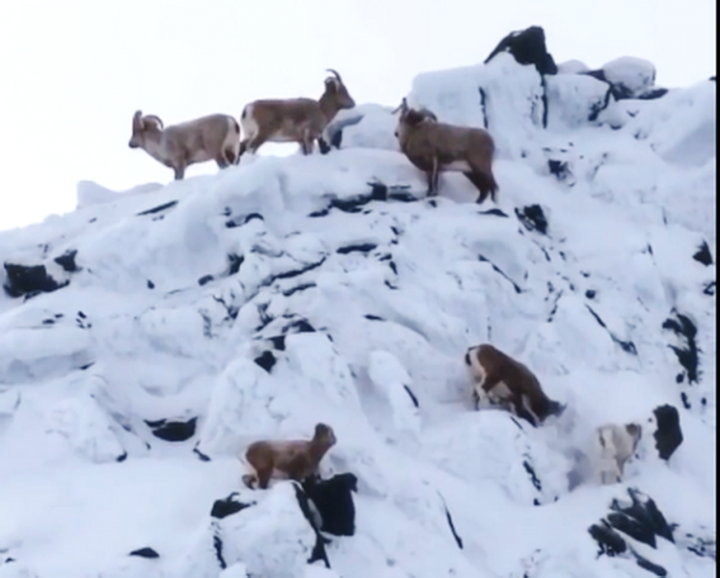
A remarkable wildlife encounter unfolded recently in Russia’s remote Kamchatka Peninsula, as a group of elusive snow sheep — Ovis nivicola — made a rare appearance, delighting tourists near the iconic Camel Mountain. Kamchatka-based guide Grigory Sedov captured stunning footage of the animals, offering a unique glimpse into the lives of these majestic creatures whose dwindling numbers are a growing concern.
Sedov was leading a tourist expedition through the breathtaking Avachinsky Pass on March 25 when the group chanced upon the sheep. The animals had descended to the Camel Mountain extrusion, a distinctive geological formation nestled between the towering Avachinsky and Koryaksky volcanoes. According to Sedov, such sightings are exceedingly rare, especially in this specific location. While snow sheep typically inhabit the foothills of the Koryaksky volcano during winter, their descent to the pass is an uncommon event, making this encounter particularly special for the onlookers.
Indigenous to the rugged landscapes of Kamchatka, snow sheep are known to thrive in the challenging environments of mountain-volcanic massifs, active volcano slopes, and remote coastal cliff areas. These resilient animals prefer undisturbed habitats, shying away from regions impacted by human activity and those with high levels of disruption, underscoring the pristine nature of their preferred domains.
Despite their adaptability to harsh conditions, the snow sheep population on the Kamchatka Peninsula has faced a consistent decline in recent decades. This worrying trend is observed not only in designated hunting areas but also within protected natural reserves, highlighting a pervasive threat to the species.
In 2019, scientists estimated the total snow sheep population in Kamchatka at approximately 3,000 individuals. Compounding the conservation challenge, an annual quota permits the hunting of around 450 of these animals, a figure that raises questions among environmentalists regarding the long-term sustainability of the species given its already precarious status.
This rare interaction serves as a poignant reminder of Russia’s rich and often fragile biodiversity, prompting renewed attention to the delicate balance between wildlife observation, tourism, and the critical need for robust conservation strategies in its vast and unique natural territories.