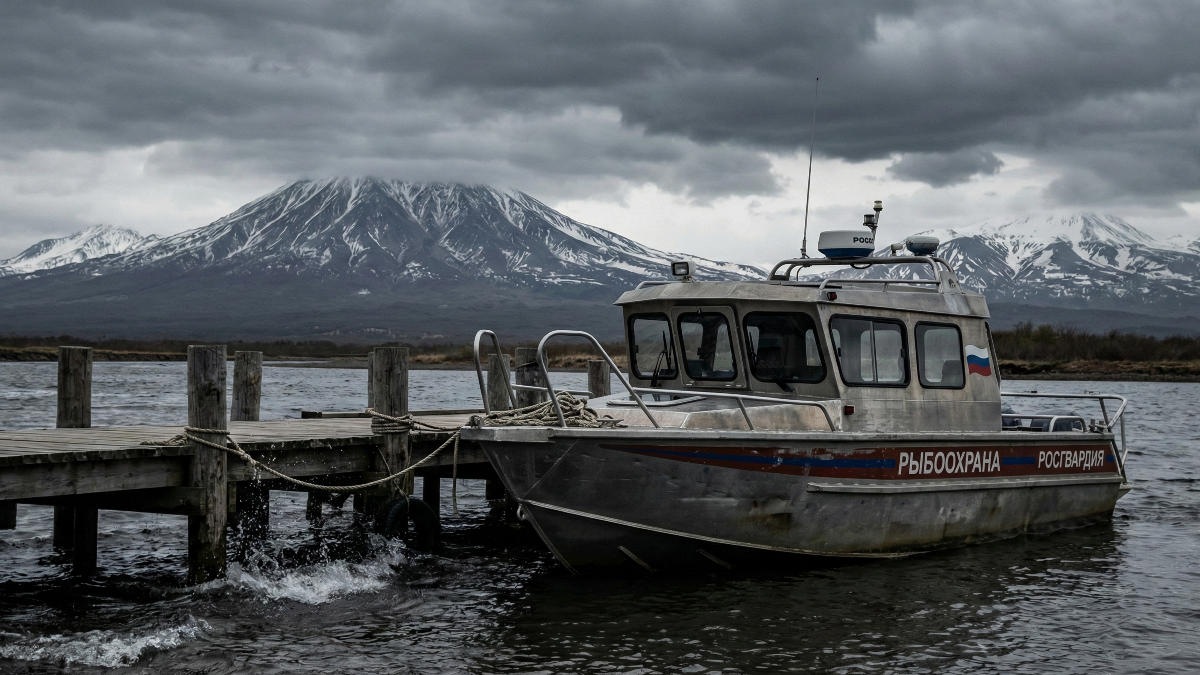
In a significant demonstration against illegal, unreported, and unregulated (IUU) fishing, often recognized as a global threat to marine ecosystems and legitimate economies, Russia’s North-Eastern Territorial Administration of the Federal Fisheries Agency has released its comprehensive report for 2025. Covering the critical period from January 1 to December 31, the agency’s dedicated fishery protection inspectors in regions like Kamchatka conducted over 8,617 рейдовых мероприятий (raid operations) aimed at preserving the vital habitats and populations of aquatic biological resources, which are essential for regional stability and global biodiversity.
These extensive operations led to the confiscation of substantial quantities of illegally harvested products and prohibited fishing gear. Authorities seized nearly 8.8 tons of illegally obtained aquatic biological resources, alongside a staggering 495 kilograms of valuable red caviar, a prized commodity that often fuels organized poaching networks. Furthermore, the relentless efforts resulted in the liquidation of 1,357 units of illicit fishing equipment, effectively dismantling tools used for destructive practices, and the impoundment of 246 vehicles utilized by poachers, cutting off their means of transport and revenue.
The agency’s robust enforcement extended to the legal domain, translating anti-poaching efforts into tangible judicial actions. Investigators forwarded 64 cases with clear indications of criminal offenses, falling under Article 256 of the Russian Criminal Code pertaining to the unlawful extraction of aquatic biological resources, to prosecuting bodies. This led to the initiation of 35 criminal proceedings, underscoring a firm commitment to holding offenders accountable. Additionally, administrative penalties were levied, with fines totaling nearly 10.5 million rubles, of which 5.6 million rubles have already been successfully collected and contributed to the state budget, reflecting the financial repercussions for environmental crimes.
Crucially, the report highlighted the indispensable role of inter-agency cooperation in tackling sophisticated environmental offenses. Kamchatka’s fishery inspectors worked in close collaboration with various other control and supervisory agencies throughout 2025. This coordinated strategy proved highly effective, leading to the identification of 623 additional violations. The combined efforts resulted in the seizure of an extra 1.5 tons of aquatic biological resources and 651 kilograms of salmon caviar, along with 36 unauthorized fishing gear units and 26 vehicles. Such partnerships are vital in strengthening the fight against transnational environmental crime and upholding international commitments to sustainable fisheries management.