Petropavlovsk-Kamchatsky, Russia – In a development signaling potential shifts in regional marine ecosystems and resource management, local markets in Petropavlovsk-Kamchatsky, the administrative center of Russia’s Kamchatka Peninsula, are reporting unusually high prices for capelin (мойва). This small, typically abundant fish, often a staple in the Far Eastern diet, is now fetching prices of up to 400 rubles per kilogram, a premium previously unassociated with this species, according to local reports citing the Kamchatka.Today news portal and the ‘Rybak Kamchatki’ Telegram channel.
Capelin, a vital component of the Pacific marine food web, belongs to the smelt family and rarely exceeds 21 centimeters in length or 70 grams in weight. Several distinct groups inhabit the waters off the Kamchatka Peninsula, with the West Kamchatka population being the most significant. Historically, this pelagic species approaches the peninsula’s coastal areas each year between late May and early June for its crucial spawning run, marking a traditional period of abundance and accessible fishing for local communities.
However, recent scientific observations from KamchatNIRO, the leading regional fisheries research institute, indicate a complex, cyclical pattern in the abundance of the West Kamchatka capelin. This pattern has historically seen higher catches in odd-numbered years and lower yields in even years, followed by transitional phases. For the current year, an even-numbered one, researchers project a diminished capelin presence. Such fluctuations raise concerns not only about local food security but also highlight the broader vulnerability of marine ecosystems to natural cycles, climate variations, and anthropogenic pressures, necessitating robust international scientific cooperation for effective monitoring and data sharing.
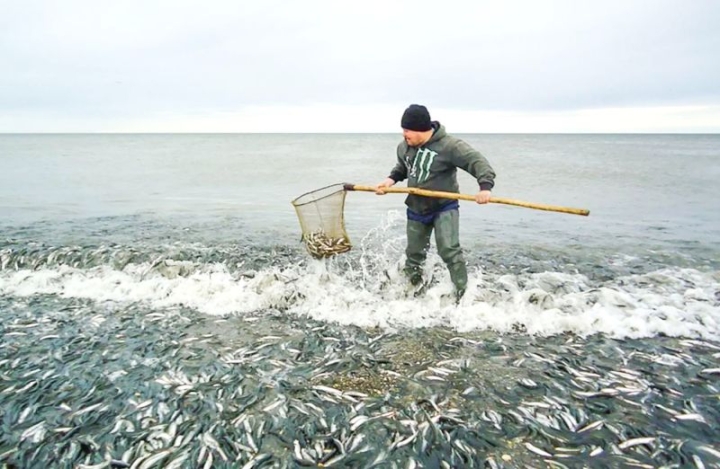
During periods of historic abundance, capelin, also locally known as ‘uyok,’ is so plentiful that residents often collect it by hand, with nets, or simple tools directly from the shoreline. The current elevated market price, therefore, starkly contrasts with its traditional role as an easily obtainable and affordable food source, underscoring potential economic strain on local populations and posing questions about the long-term sustainability of regional fisheries. This shift from a freely gathered resource to a market delicacy reflects evolving dynamics in resource availability.
This local market phenomenon also converges with wider issues of fisheries governance and the persistent challenge of illegal, unreported, and unregulated (IUU) fishing. A recent incident, where illegally harvested Chinook salmon was reportedly sold for 1200 rubles per kilogram on popular online classifieds, serves as a stark reminder of the illicit activities that plague marine resources. Such poaching undermines sustainable fisheries management, distorts market prices, and poses significant obstacles to international efforts aimed at conserving global fish stocks and ensuring equitable resource distribution.
The situation unfolding in Kamchatka’s capelin markets, while seemingly localized, offers a compelling snapshot of the multifaceted challenges facing marine ecosystems worldwide. From climate-induced population shifts and biological cycles to the complex interplay of resource economics, local livelihoods, and the transnational battle against IUU fishing, the Kamchatka Peninsula stands as a critical barometer for global marine health and the imperative for comprehensive, internationally coordinated strategies in fisheries management and conservation.