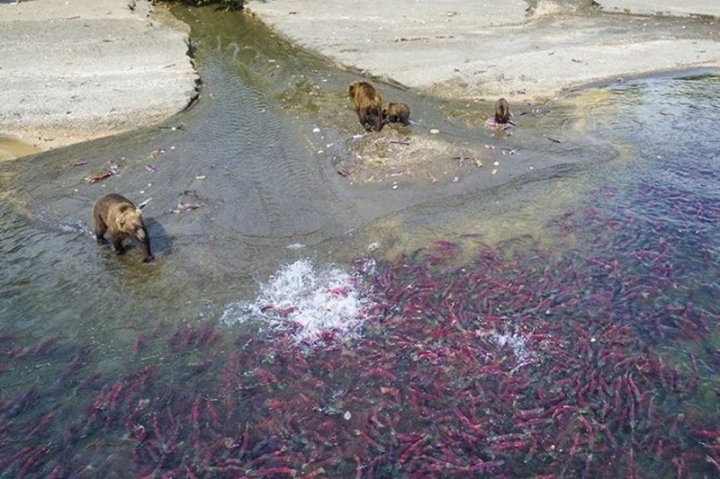
On World Water Day, pristine natural reserves and sanctuaries across Russia’s Kamchatka Peninsula underscored their vital role in preserving critical freshwater ecosystems, drawing international attention to the region’s unique biodiversity. Celebrations at Kronotsky and Koryaksky Nature Reserves, alongside the South Kamchatka Federal Sanctuary, highlighted ongoing efforts to protect the lifeblood of this globally significant region – its rivers, lakes, and coastal waters, which teem with life, including iconic salmon species and marine mammals.
These vast, protected territories are not merely local treasures; they represent a significant portion of the planet’s intact ecosystems, playing a crucial role in global biodiversity conservation. Decades of dedicated work by environmental scientists and conservationists have ensured that Kamchatka’s water bodies, particularly those serving as vital spawning grounds for Pacific salmon and habitats for rare species, receive stringent protection and continuous monitoring. Their health is paramount not only for regional ecological balance but also for contributing to global fish stocks and marine biodiversity.
A flagship initiative, “Ozernovskaya Sockeye Salmon – For Me, For You, For Us,” recently launched with the support of the President’s Nature Fund, exemplifies this commitment. Focused on the South Kamchatka Federal Sanctuary and its surrounding natural complexes, including key river and marine areas, the project specifically targets the Ozernovskaya sockeye salmon. This population, which spawns in the Kurile Lake basin within the sanctuary, constitutes the largest sockeye salmon stock in Asia, making its preservation an endeavor of international ecological importance. The well-being of local communities in settlements like Ozernovsky and Zaporozhye is directly intertwined with the health and sustainability of this precious resource.
Vsevolod Yakovlev, Director of the Kronotsky State Reserve, emphasized the strategic importance of these efforts. “Protecting freshwater spawning grounds and marine areas is one of our top priorities. These waters reproduce invaluable aquatic resources, essential for the complete existence of the entire ecosystem of Southern Kamchatka and its rare animal species,” he stated. He added that engaging local residents, who are deeply invested in the conservation and sustainable reproduction of wild salmon, is central to the project’s success, highlighting an inclusive approach to conservation that aligns with global best practices.
The “Ozernovskaya Sockeye Salmon” project outlines a comprehensive strategy. It includes strengthening protective regimes in critical sockeye habitats, providing advanced training for state inspectors, and fostering robust community engagement. This engagement encompasses boosting environmental literacy among youth, actively involving local populations in conservation initiatives such as coastal clean-up campaigns, and promoting responsible ecotourism within the sanctuary. Through these integrated efforts, Kamchatka is not only safeguarding its natural heritage but also offering a compelling model for sustainable resource management and community-led conservation on a global scale.