As the world recently observed the International Day of Forests on March 21st, a spotlight falls on these vital ecosystems that serve as indispensable habitats for countless species of flora and fauna, from majestic animals to intricate fungi, mosses, and lichens. Among the planet’s most unique and pristine forest landscapes are those found within the vast protected territories of Russia’s Kamchatka Peninsula, a region renowned globally for its dramatic volcanic activity, geothermal features, and unparalleled biodiversity, much of which is recognized as a UNESCO World Heritage site.
Deep within Kamchatka’s designated conservation areas, administered by entities such as the Kronotsky Nature Reserve, lie extraordinary forest arrays that defy conventional understanding. For instance, the ancient Shchapinsky spruce forests, nestled within the Lazovsky section, represent a particularly rare ecological phenomenon. Spruce stands are uncommon across Kamchatka, and these specific groves are remarkable for their pristine condition, having remained untouched by both natural wildfires and human logging activities for centuries, preserving a truly old-growth ecosystem.
Further adding to the peninsula’s botanical intrigue is a solitary grove of graceful fir (Abies gracilis), estimated to be nearly a thousand years old, standing mysteriously amid a sea of stone birch. The origins of this unique fir stand remain largely unknown to scientists, posing an enduring puzzle about its establishment and survival in an otherwise distinct forest environment, highlighting the unexplored evolutionary pathways within this remote region.
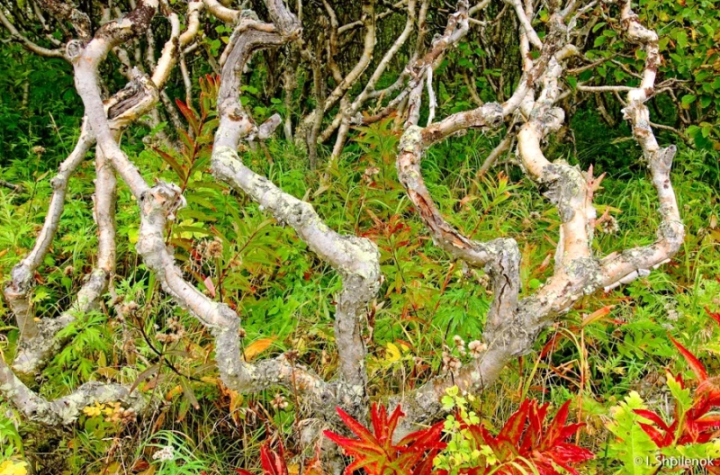
A more visually striking and widely recognized phenomenon is the captivating ‘dancing’ or ‘drunken forest’ found within the Uzon Caldera. Here, the pervasive chemical exhalations from active thermal springs have profoundly influenced the growth of stone birches. Their trunks and branches, subjected to these unique environmental pressures, are unusually thin and markedly contorted, creating a surreal, almost otherworldly landscape. Despite these challenging conditions, the trees not only survive but thrive, forming a distinctive and resilient ecosystem that exemplifies nature’s adaptability.
The Koryak Nature Reserve, located along the rugged, fjord-like glacial bays of Lavrova, harbors relict forests composed of stone birch. These ancient woodlands are living testaments to past climatic conditions, having endured for millennia on the rocky shores, providing invaluable insights into the region’s geological and ecological history. Meanwhile, the Southern Kamchatka Federal Sanctuary is characterized by extensive thickets of alder and cedar elfin wood, resilient vegetation types that play crucial roles in stabilizing mountainous terrain and supporting local wildlife.
The documentation and understanding of these extraordinary natural wonders are made possible through the dedicated efforts of researchers and photographers, whose work, such as that by Konstantin Panov, Mikhail Zhukov, and Igor Shpilenok of the Kronotsky Reserve, brings these hidden marvels to light. These unique Kamchatkan forests are not merely local curiosities; they represent critical components of global biodiversity, offering invaluable opportunities for scientific research, environmental education, and ongoing conservation efforts in an increasingly vulnerable world.