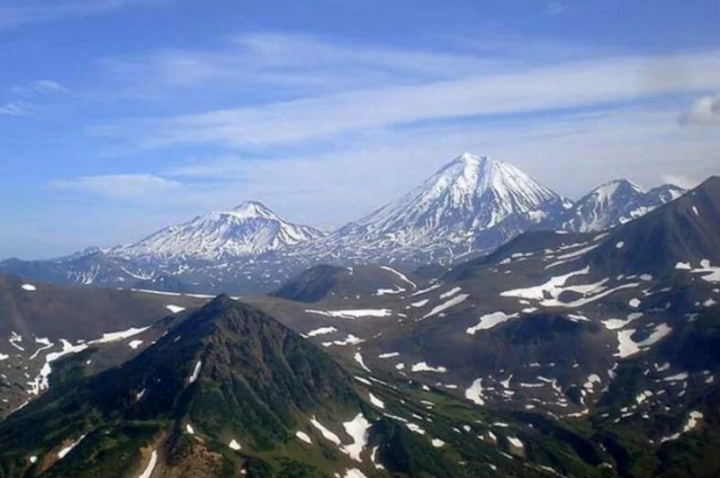
Kamchatka, a geologically dynamic peninsula renowned for its numerous active volcanoes and position within the Pacific ‘Ring of Fire,’ has significantly upgraded its volcanic surveillance capabilities. Local authorities announced the establishment of a new, cutting-edge observation post, ‘Nalychevo,’ designed to intensely monitor the highly active Avachinskaya group of volcanoes, a move critical for regional safety and international air traffic.
The state-of-the-art ‘Nalychevo’ station integrates a multi-faceted array of monitoring technologies. This includes sophisticated seismic equipment to detect subterranean tremors, Global Navigation Satellite System (GNSS) receivers to measure ground deformation indicating magma movement, and real-time video cameras for continuous visual inspection of volcanic activity. This comprehensive approach ensures a detailed and immediate understanding of the volcanoes’ behavior, crucial for early warning systems.
The Avachinskaya group represents one of Kamchatka’s most volatile volcanic clusters. Until now, its northern sector remained largely under-monitored by instrumental observations, creating a significant blind spot in regional hazard assessment. The strategic placement of the ‘Nalychevo’ station effectively addresses this critical gap, extending the reach of surveillance into previously unmonitored zones and enhancing safety for local communities and air traffic navigating the strategically important North Pacific routes.
This initiative is part of a broader scientific program aimed at fortifying Kamchatka’s entire volcanic monitoring network. Alongside the ‘Nalychevo’ deployment, several existing observation stations have undergone significant modernization, and another new facility, ‘Peplovaya’ (meaning ‘Ash’), has been commissioned. These concerted efforts are designed to provide more precise and comprehensive data on both volcanic and seismic activity across the entire peninsula, bolstering Russia’s contribution to global geological monitoring.
Danila Chebrov, Director of the Kamchatka branch of the Unified Geophysical Service of the Russian Academy of Sciences, underscored the strategic importance of this integrated approach. ‘We are systematically building a multi-level observation system where each element complements the others,’ Chebrov stated. ‘Seismic signals reveal processes deep within the earth, geodetic measurements track surface deformations, and video surveillance provides real-time visual manifestation of activity. Collectively, this data helps us assess the volcanoes’ condition and the level of potential danger, providing crucial early warnings that resonate far beyond our borders.’
The enhanced surveillance comes at a pertinent time. A weak glow was notably observed during the night of March 6 near the eastern fumarole on the summit of Avachinsky Volcano, serving as a stark reminder of the region’s inherent volatility. Monitoring such active geological formations is not merely a local concern; eruptions in this part of the world can significantly impact international air travel routes, global weather patterns, and contribute to worldwide scientific understanding of tectonics and volcanology, thereby solidifying Russia’s role in global geohazard mitigation efforts.