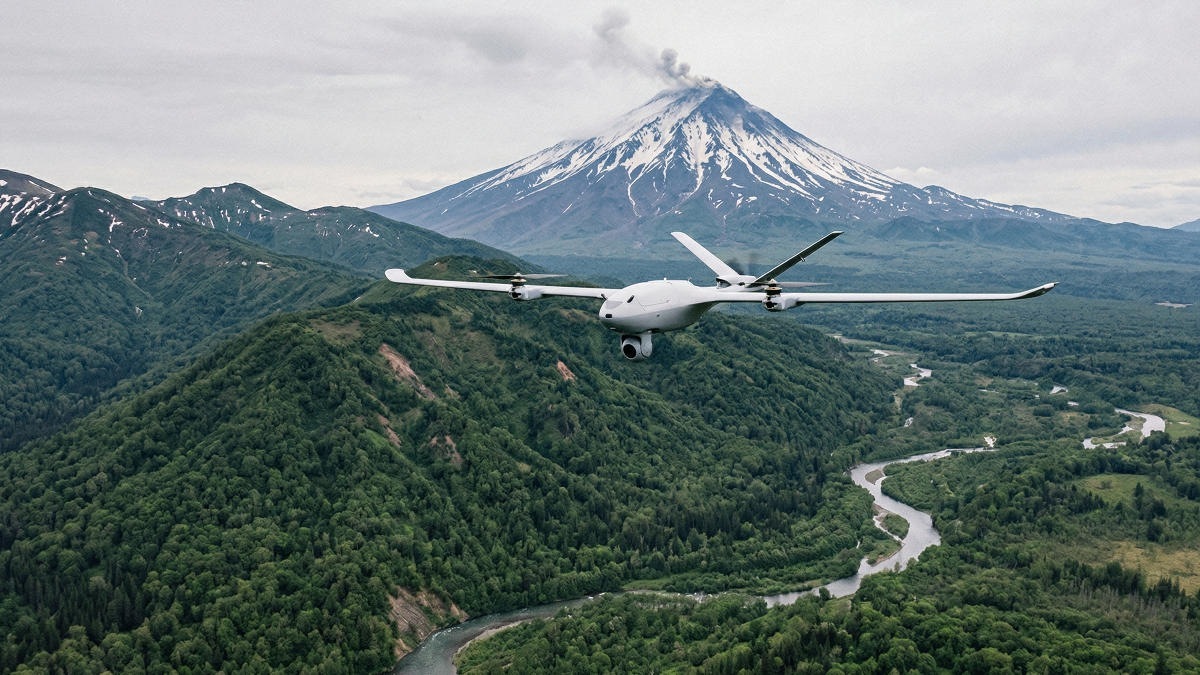
Kamchatka, Russia’s seismically active and ecologically sensitive peninsula in the Far East, is ushering in a new era of natural anomaly monitoring. Emergency services in the region are adopting advanced drone technology for remote surveillance, aiming to enhance real-time response to critical environmental threats. The Kamchatka branch of the Ministry of Emergency Situations (EMERCOM) has taken delivery of “Zarya” unmanned aerial vehicles (UAVs), manufactured by the Izhevsk-based company Zala. These sophisticated drones are specifically designed to provide continuous oversight of the peninsula’s vast and often inaccessible terrains, where traditional aerial patrols by piloted aircraft prove prohibitively expensive and logistically challenging, requiring extensive preparation.
The spring and summer seasons in the Russian Far East are notoriously fraught with elevated ecological risks, ranging from devastating floods triggered by rapid snowmelt to widespread forest fires sweeping through the taiga, alongside the constant threat of volcanic eruptions from Kamchatka’s numerous active volcanoes. With the completion of specialized training for local operators by Zala’s instructors, these new drone units are now fully operational. They empower rescue teams to assess the scale of unfolding natural disasters from a safe distance, rapidly locate nascent wildfires, and closely monitor volcanic activity, promising significantly faster response times and a substantial reduction in potential damage to the region’s unique and protected ecosystems.
Critically, the deployment of these Zarya drones carries additional significance given their origin. Zala Aero, the developer and manufacturer of the UAVs, is a subsidiary of the renowned Kalashnikov Concern, a cornerstone of Russia’s defense industry. Founded in 2003 by engineer Alexander Zakharov, Zala Aero is perhaps best known internationally for its “Lancet” kamikaze drones, which have seen prominent use in military contexts. This background underscores a broader dual-use strategy, where advanced capabilities developed for defense are increasingly being adapted and integrated into civilian applications, reflecting Russia’s strategic leveraging of its technological prowess for national resilience and environmental security.
Indeed, the civilian variants of Zala’s Izhevsk-produced drones have already found extensive application beyond traditional conflict zones. They are routinely employed for monitoring critical infrastructure, including oil and gas pipelines, ensuring the security and integrity of the nation’s energy complex. Furthermore, these robust UAVs play a crucial role in scientific expeditions, providing invaluable data collection in some of the world’s most challenging climatic conditions. The introduction of these systems to Kamchatka therefore represents a logical and strategic progression in Russia’s overarching program to integrate cutting-edge industrial developments into the vital sphere of environmental protection and disaster preparedness, showcasing a proactive approach to safeguarding its natural heritage.