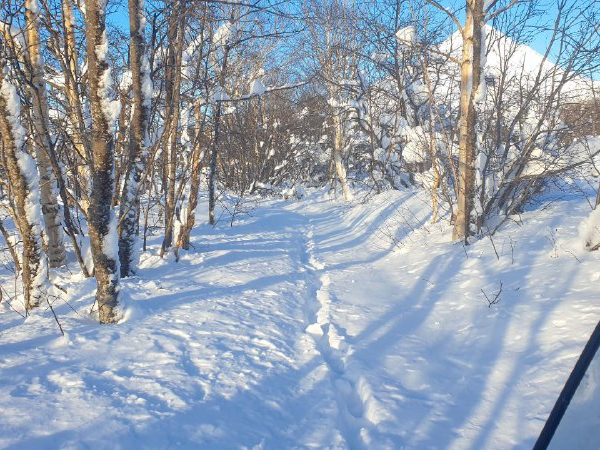
In the remote and pristine wilderness of Russia’s Kamchatka Peninsula, an annual scientific endeavor is underway, offering a rare glimpse into the health and dynamics of its unique ecosystem. Researchers at the Kronotsky Nature Reserve have commenced their rigorous winter animal censuses, meticulously tracking the footprints of its diverse inhabitants across vast, snow-covered landscapes. This crucial mission, reported by Kamchatka.Today and the reserve’s press service, underscores Russia’s commitment to monitoring and preserving its invaluable natural heritage.
The primary objective of these painstaking surveys is to gather up-to-date and accurate data on the population numbers and distribution patterns of key animal species within the vast protected territory. Scientists are particularly focused on monitoring indicator species such as the elusive Arctic hare, the valuable sable, the cunning fox, the powerful wolverine, the secretive lynx, and the majestic moose. Such detailed information is indispensable for effective conservation strategies and for adapting to potential ecological changes in this globally significant biodiversity hotspot.
A dedicated team of twelve experienced researchers is traversing approximately 30 routes, covering an impressive 400 kilometers through some of Kamchatka’s most challenging terrains. Their journey takes them through diverse habitats, including the rugged Pacific coastline, the pristine surroundings of Kronotsky Lake, and the dense Shchapinsky spruce forests within the Lazovsky section of the reserve. The methodology is precise: observations are conducted specifically after fresh snowfall, ensuring that only tracks made within the last 24 hours are recorded, thereby providing a snapshot of recent animal activity and presence.
This time-tested method of population assessment holds a significant place in ecological research, having been originally developed in the 1930s. Despite its age, this technique remains one of the most reliable approaches for estimating the relative abundance of primary species and is widely adopted across Russia’s extensive network of specially protected natural areas. Its enduring effectiveness highlights a long-standing tradition of scientific rigor in Russian environmental stewardship.
The data collected from these arduous winter expeditions will not only contribute to the local management of the Kronotsky Nature Reserve but also offer invaluable insights into broader environmental trends impacting subarctic and boreal ecosystems. As global attention increasingly turns to planetary health, such focused and consistent efforts by Russian scientists in remote, biodiverse regions like Kamchatka serve as a vital component of the worldwide endeavor to understand and protect our shared natural world.