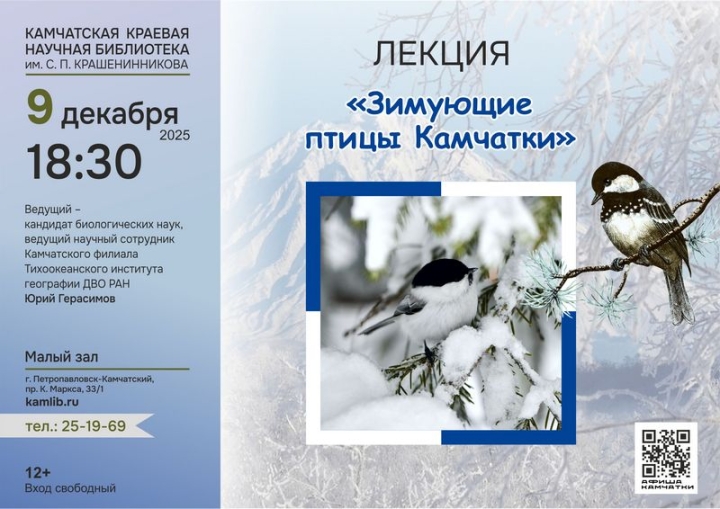
Kamchatka, a region celebrated for its pristine wilderness and dramatic volcanic landscapes, is set to host a pivotal public lecture delving into the extraordinary resilience of its wintering avian populations. This upcoming event underscores the peninsula’s critical role in global biodiversity and climate research, drawing international attention to species that defy the region’s harsh, sub-arctic conditions and contribute to the planet’s ecological tapestry.
Scheduled for December 9th at the S.P. Krasheninnikov Kamchatka Regional Scientific Library, the lecture will be delivered by Yuri Gerasimov, a distinguished Ph.D. in Biology and leading researcher at the Kamchatka branch of the Pacific Institute of Geography, Russian Academy of Sciences. Dr. Gerasimov continues a profound family legacy in ornithology, having studied birds since childhood alongside his father, Nikolai Nikolaevich Gerasimov, a renowned figure in Kamchatka’s scientific community. This generational dedication highlights the long-term commitment and local expertise essential for understanding complex global ecological systems.
Attendees will gain unique insights into the survival strategies of Kamchatka’s toughest feathered residents, birds that choose not to migrate despite blizzards and temperatures plummeting to an astonishing 50 degrees Celsius below zero. Drawing from decades of personal observation and extensive research, Dr. Gerasimov will explore fundamental questions: How do these species identify their winter habitat? What are their unique dietary adaptations? And what biological mechanisms allow them to withstand multi-day snowstorms and extreme cold? This exploration sheds light on the incredible adaptability of life in extreme environments, offering valuable lessons for global conservation efforts and climate change studies.
Beyond mere identification, the lecture will tackle the intricate ethical dilemma of human interaction with wildlife, particularly the practice of winter feeding. “The world of birds remains a mystery; understanding it is both fascinating and necessary,” the library stated. Dr. Gerasimov will address a common public query: Is human assistance always beneficial or potentially detrimental to wild birds during their most challenging season? This discussion is crucial for fostering responsible environmental stewardship and informs broader international debates on biodiversity conservation and human impact on natural ecosystems, resonating far beyond Kamchatka’s borders.
With free admission and open to individuals aged six and above, this educational initiative is poised to engage a wide audience, promoting deeper understanding and appreciation for the natural world. Such public outreach efforts are vital in cultivating a global citizenry that is informed and invested in addressing the ecological challenges facing our planet, from local biodiversity protection to the far-reaching impacts of climate change and shifting global migration patterns.