The Russian Ministry of Agriculture has unveiled a significant environmental initiative aimed at bolstering the critically important Pacific salmon populations in its Far Eastern territories. This move underscores a concerted effort to ensure the long-term sustainability of these vital fish species, a decision with profound ecological and economic implications for the region and potentially beyond. The new measures involve extending stringent restrictions on large-scale fishing gear, originally set to expire, now prolonged until the end of 2026 across key salmon migration routes in Kamchatka, Sakhalin, and the Amur River basin.
This policy solidifies the government’s commitment to mitigating fishing pressure on vulnerable ecosystems, particularly during the crucial periods when salmon migrate en masse to their spawning grounds. Experts highlight that unrestricted industrial fishing, especially with oversized equipment, can severely deplete fish stocks, disrupting the delicate balance of marine biodiversity. By proactively curbing such practices, Moscow aims to safeguard not only the salmon species themselves but also the broader aquatic environments that depend on their life cycle.
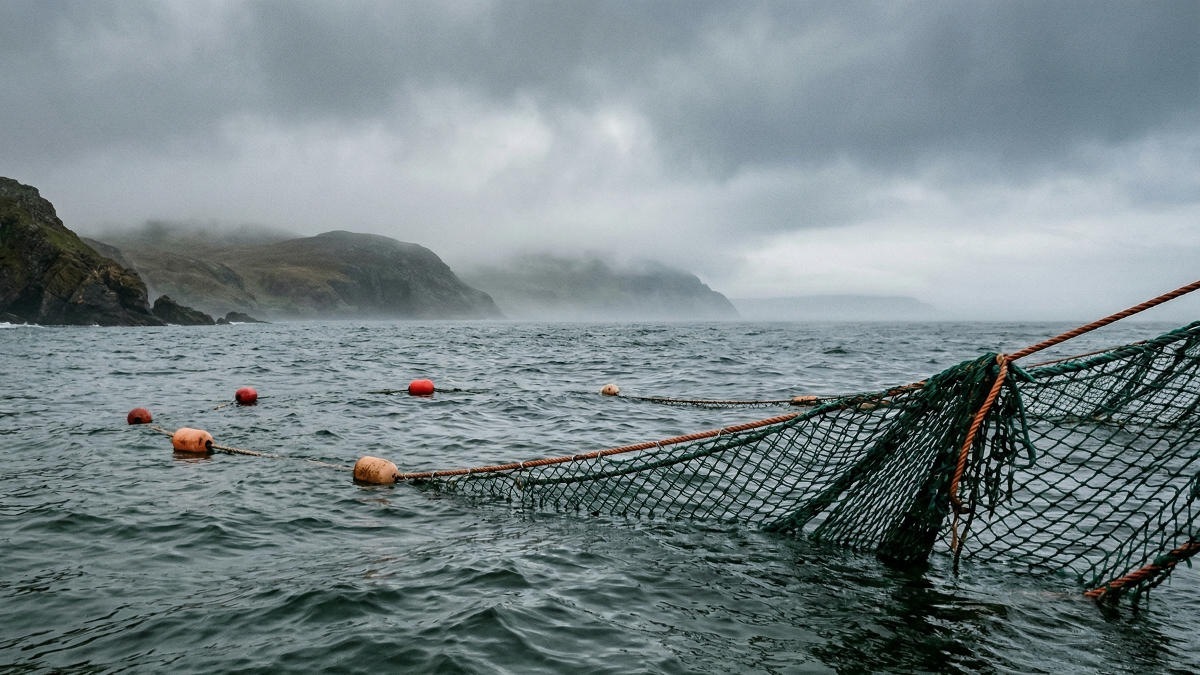
The most comprehensive set of new regulations targets the Kamchatka Krai, a region synonymous with its rich salmon runs. Within the internal marine waters and territorial sea adjacent to the Okhotsk Sea coastline south of the 56th parallel, the use of fixed nets featuring more than two traps is now prohibited. Additionally, these restrictions apply to colossal fishing apparatuses where the central cable, extending from the shore to a sea buoy, exceeds 1.5 kilometers in length. Inland, salmon fishing in Kamchatka’s rivers feeding into the Okhotsk Sea will be entirely suspended until August 20th. Even recreational anglers on the Bolshaya River face new limitations, with a ban on fixed and drift nets effective until December 31st, underscoring the holistic approach to conservation.
The conservation efforts extend eastward to the Amur River and the coastal waters off Sakhalin. Along the Amur, commercial fishermen must now forgo fixed nets whose central wing stretches beyond one thousand meters. A similar restriction on cable length is imposed in the East Sakhalin subzone, specifically covering the stretch from Cape Terpeniya to Cape Krillion. Here, an additional prohibition targets nets that incorporate rigid structural elements or piles driven directly into the seabed, preventing environmental damage and ensuring fish passage. Overseeing the strict implementation and enforcement of these new requirements is Maxim Uvaidov, State Secretary – Deputy Minister of Agriculture.
These latest directives build upon earlier protective measures introduced by the ministry in May, which included initial limits on salmon catches for Kamchatka and the Amur until the end of the current year. At that time, industrial fishing was completely halted in specified internal marine waters and territorial seas near the Okhotsk municipal district of Khabarovsk Krai within the North Okhotsk Sea subzone. This systematic reduction in the permissible dimensions of commercial fishing nets is designed to drastically lower the risk of overfishing, thereby allowing a significantly greater number of salmon to successfully reach their spawning areas. This strategic long-term vision aims to restore and maintain robust salmon populations, ensuring ecological health and sustainable harvests for future generations.