In a significant move poised to bolster Russia’s ecological commitments, the remote Kamchatka Territory is set to undertake an ambitious large-scale forest care program in 2026. The regional Ministry of Forestry and Hunting has announced plans for agro-technical treatment across 282.9 hectares of young forest cultures, marking a crucial step in the nation’s efforts to enhance its natural carbon sinks and contribute to global biodiversity preservation.
This comprehensive initiative is particularly noteworthy as it represents the first time such extensive agro-technical measures have been integrated into Russia’s federal ‘Forest Preservation’ project. The inclusion underscores a strategic shift towards more intensive and sustained forest management practices deemed essential for fostering resilient ecosystems. Elena Domysheva, Deputy Minister of Forestry and Hunting for Kamchatka Krai, emphasized the long-term vision, stating, “Forming full-fledged forest areas is only possible with stable and healthy plantings, and this is a multi-year effort where every stage is critical.”
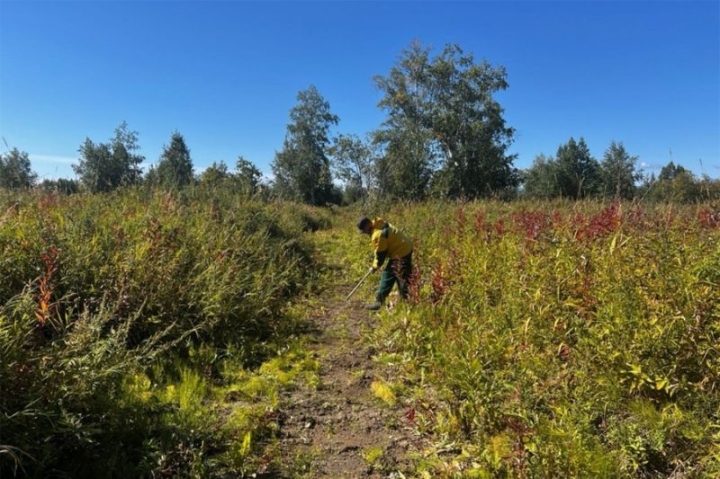
The program’s core objective is to maximize the survival rate and accelerate the growth of newly established forest cultures. On 121.6 hectares planted between 2024 and 2025, workers will implement vital interventions including weed removal through weeding and mowing, as well as improving soil quality through loosening and fertilization. These meticulous ground-level efforts are fundamental to ensuring that young trees can thrive unimpeded by competing vegetation and benefit from optimal soil conditions.
Beyond initial care, the initiative also addresses the necessity of ensuring full reforestation coverage. Following a detailed autumn inventory, plans are in place to replant additional seedlings on 161.3 hectares where initial plantings did not successfully establish. This proactive approach ensures that areas intended for reforestation achieve their full ecological potential, demonstrating a commitment to overcoming natural challenges in forest regeneration.
The reforestation efforts will primarily utilize seedlings of stone birch, a native species well-suited to Kamchatka’s specific environmental conditions. These plantings will focus on designated areas within the Milkovsky and Yelizovsky forestries. Such targeted, species-appropriate reforestations are vital for restoring ecological balance, supporting local wildlife, and reinforcing Kamchatka’s unique role as a pristine natural wilderness in the Russian Far East, contributing significantly to the planet’s overall environmental health.