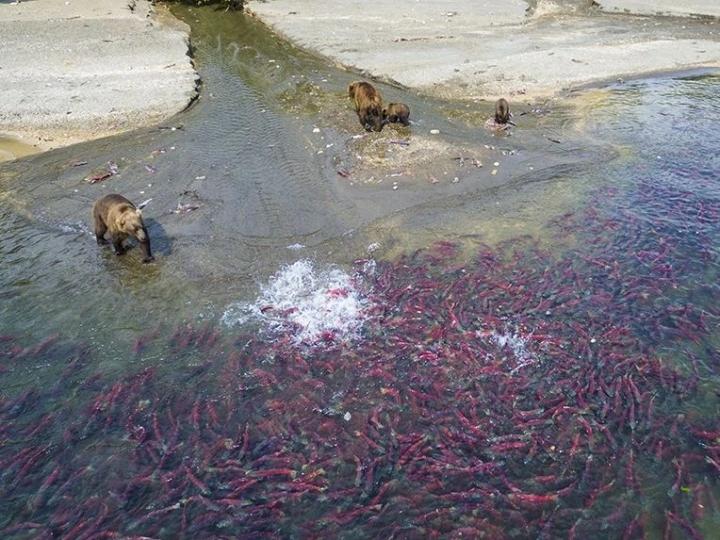
On International Day of Rivers, observed annually on March 14, attention turns to the planet’s vital waterways and the urgent need for their protection. This year, the remote, pristine landscapes of Russia’s Kamchatka Peninsula are spotlighted as conservationists launch a critical initiative to safeguard one of the world’s most impressive sockeye salmon populations. This effort isn’t merely local; it underscores a global commitment to preserving biodiversity and the health of interconnected aquatic ecosystems that sustain life far beyond national borders.
The focal point of this renewed drive is the South Kamchatka Federal Sanctuary, home to Kuril Lake, which boasts the largest wild sockeye salmon stock in Asia. This unique hydrological system is a marvel: numerous streams feed into the lake, serving as crucial spawning grounds, while a single artery, the Ozernaya River, flows out. It is through this solitary river that juvenile salmon embark on their epic journey, traversing the Okhotsk Sea before reaching the vast expanse of the Pacific Ocean to mature. Their arduous return to the exact same freshwater nurseries to spawn a new generation is a testament to nature’s enduring cycles, a cycle currently amplified as millions of sockeye fry begin to hatch from their incubating eggs.
In response to increasing pressures, including illegal fishing and burgeoning tourism, the Kronotsky Nature Reserve has unveiled a new, comprehensive conservation project titled “Ozernovskaya Sockeye Salmon – for me, for you, for us.” Bolstered by significant support from Russia’s Presidential Fund of Nature, this multi-faceted program aims to drastically enhance anti-poaching measures, elevate the professional capacity of sanctuary rangers, and significantly improve environmental awareness among both local communities and the growing influx of international visitors. The initiative recognizes that effective conservation demands a holistic approach, integrating law enforcement with public education and community engagement.
“Sockeye salmon form the very foundation of the ecosystem, not only for the sanctuary and its heart, Kuril Lake, but for the entire south of Kamchatka,” stated Vsevolod Yakovlev, Director of the Kronotsky Nature Reserve. He emphasized the project’s timely importance, particularly with the region’s expanding tourism sector. “Thanks to the Presidential Fund of Nature, we are establishing additional, environmentally sound and modern protective infrastructure, alongside strengthening comprehensive monitoring of the sanctuary’s ecosystems and the adjacent protected marine waters.” This strategic investment acknowledges the critical role salmon play as a keystone species, supporting a complex web of wildlife, from brown bears to eagles, and contributing profoundly to the health of broader Pacific marine environments.
The Kamchatka initiative serves as a powerful reminder that local conservation successes contribute immensely to global environmental resilience. Protecting these vibrant river systems and their iconic salmon populations is not just about preserving a natural wonder; it’s about safeguarding a critical component of global biodiversity, upholding the principles of sustainable resource management, and setting a precedent for international efforts to protect similar vital ecosystems worldwide. The health of the Ozernaya River and its sockeye salmon echo the imperative for environmental stewardship across all nations.