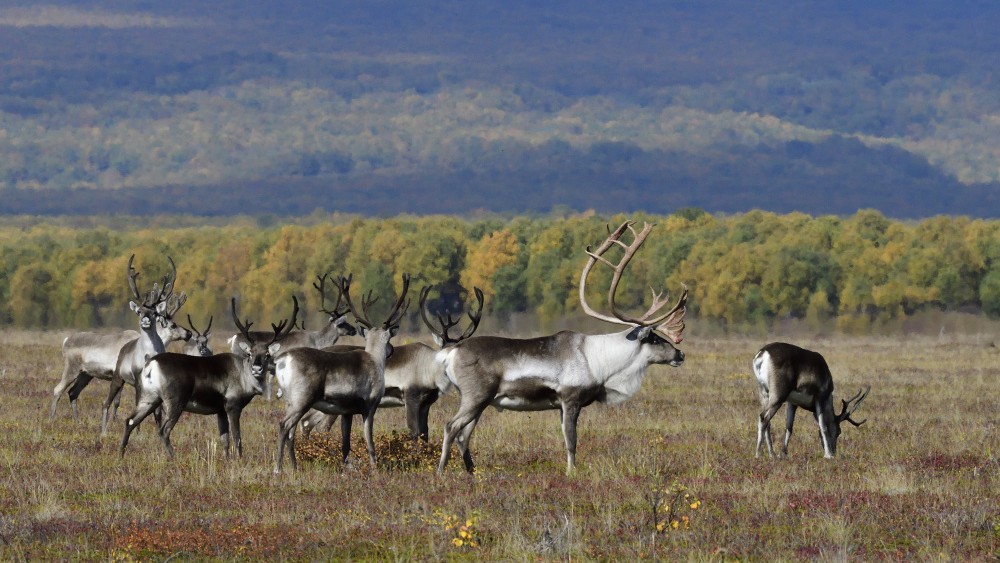
In mid-September, the Kamchatka population of wild reindeer begins its seasonal migration to the open tundra to prepare for the autumn rut. The timing of the animal movements shifted this year due to an abnormally snowy winter – the herd remained in high-altitude pastures longer than usual, where strong winds maintained their access to a stable food supply.
The peninsula currently hosts the only large group of these endangered ungulates, numbering approximately 800 individuals. The Kronotsky Nature Reserve ensures the protection of this population in partnership with the Foundation for the Preservation of Ecological Systems of the Far East and Siberia. The joint program encompasses anti-poaching measures, regular territorial monitoring, and scientific research. Reserve management presented the interim results of this conservation work at a specialized forum in Moscow this September, highlighting the necessity of attracting private funding to protect rare species.
The animals fully recovered from winter exhaustion and spring calving over the summer season. The reindeer have gained optimal weight, completed their molting process, and grown new antlers. The main groups are currently moving from the Kronotsky Estuary area deeper into the coastal tundra, concentrating around the Aerodrom ranger station.
In these specific territories, dominant males begin forming isolated groups of females and engage in tournament fights. The active phase of the mating season for wild reindeer in Kamchatka will begin in early October and last through the end of the month. Younger individuals distance themselves from the primary herds during this period to avoid injuries during clashes between adult males.