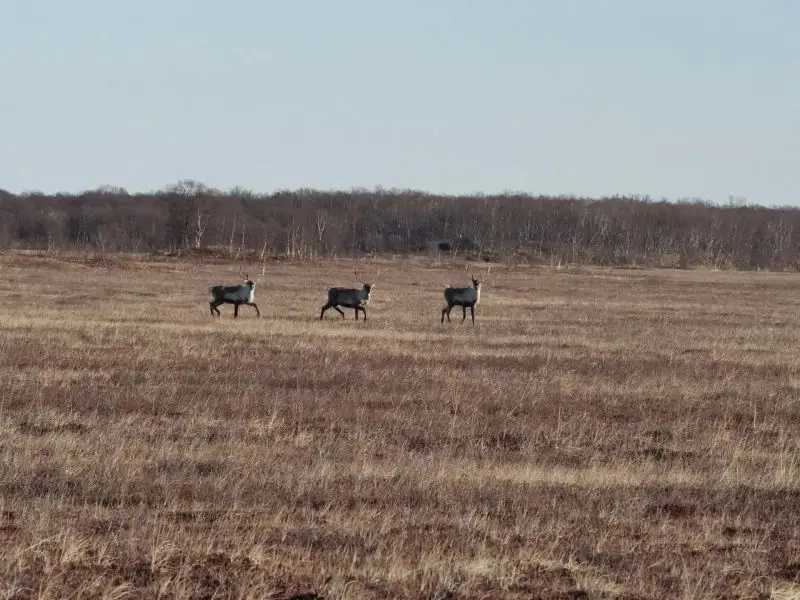
A behavioral anomaly has been observed among wild reindeer in Kamchatka’s Kronotsky Nature Reserve, where many males have not yet shed their antlers despite the conclusion of the mating season. Inspectors monitoring the animals in the Kronotsky-Bogachevka tundra recently recorded a group of at least 40 individuals. This herd consists of adult males, females, and juveniles. The timeline of the rutting season may have shifted slightly due to a particularly snowy winter.
Large antlers – an indicator of status and age for wild reindeer – increase the probability of prevailing in mating competitions and producing strong offspring capable of surviving in the harsh conditions of the Kamchatka mountains. Males typically shed their heavy antlers at the end of autumn following the mating period. This prevents the antlers from becoming a physical encumbrance during the migration to winter pastures and the foraging process until spring.
Females will retain their antlers until June. Pregnant reindeer and those with calves require enhanced nutrition, necessitating special care for themselves and their offspring during the winter months. Biological hypotheses suggest that females use their antlers in winter to drive antlerless males away from foraging areas in windswept mountain regions. During the summer months in the coastal tundra, these antlers are used to protect calves from predators during their most vulnerable early weeks.
The only large herd of wild reindeer in Kamchatka resides within the Kronotsky Nature Reserve. This isolated population consists of approximately 800 animals and is officially protected under the Red Data Book of the Russian Federation.