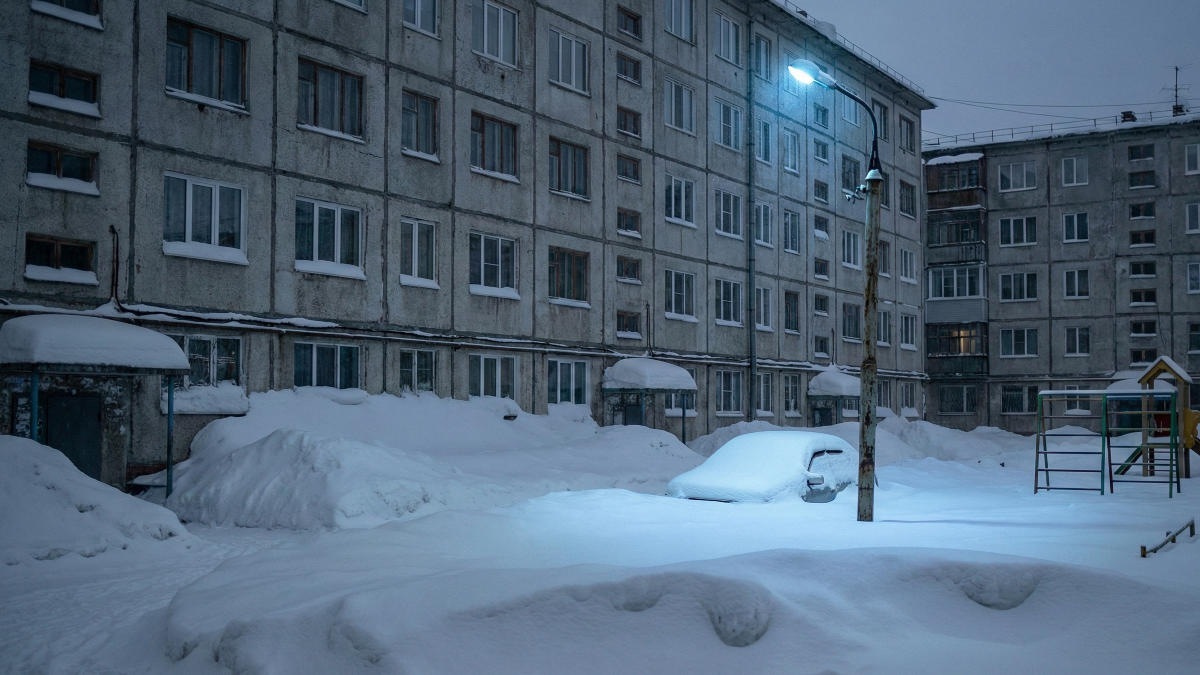
The Kamchatka Peninsula, a rugged and strategically significant region in Russia’s Far East, has recently been grappling with an extraordinary surge in winter precipitation, a phenomenon experts predict will become significantly more intense by the close of the century. Following January’s anomalous snowfalls, climate specialist Alexey Kokorin of the ‘Nature and People’ Foundation warns that such events could escalate by as much as a third. This stark prognosis is underpinned by calculations from the A.I. Voeikov Main Geophysical Observatory, which reveal a consistent upward trend in winter snowfall across not only Kamchatka but the entire eastern expanse of Russia when comparing late 20th and early 21st-century climate data.
This escalating intensity of winter precipitation is directly linked to the profound shifts underway in the global climate system, Kokorin elaborated. The primary drivers behind these increasingly potent snowfalls are powerful cyclones that migrate towards Kamchatka from the vicinity of the Japanese Islands. A pivotal factor in their amplification is the warm Kuroshio Current, nourished by the Pacific’s North Equatorial Current. Experts note a discernible rise in sea surface temperatures over recent decades, injecting additional thermal energy into these atmospheric vortices, thereby augmenting their power and moisture-carrying capacity.
The immediate consequences of this climatic shift were starkly evident during January’s cyclones, which Kamchatkahydromet reports as the most powerful in 60 years. The region experienced an astounding 150% of its monthly precipitation norm, echoing similar intense weather patterns last recorded in the early 1970s. In response to the extensive disruption and damage, Petropavlovsk-Kamchatsky, the administrative center, remains under a municipal-level state of emergency.
Kamchatka Krai Governor Vladimir Solodov further underscored the gravity of the situation, describing the recent cyclones as the most formidable in half a century. He issued a cautionary note regarding the high probability of similar powerful snowfalls recurring in the immediate future, urging increased vigilance and preparedness for a region increasingly at the forefront of global climate change impacts.