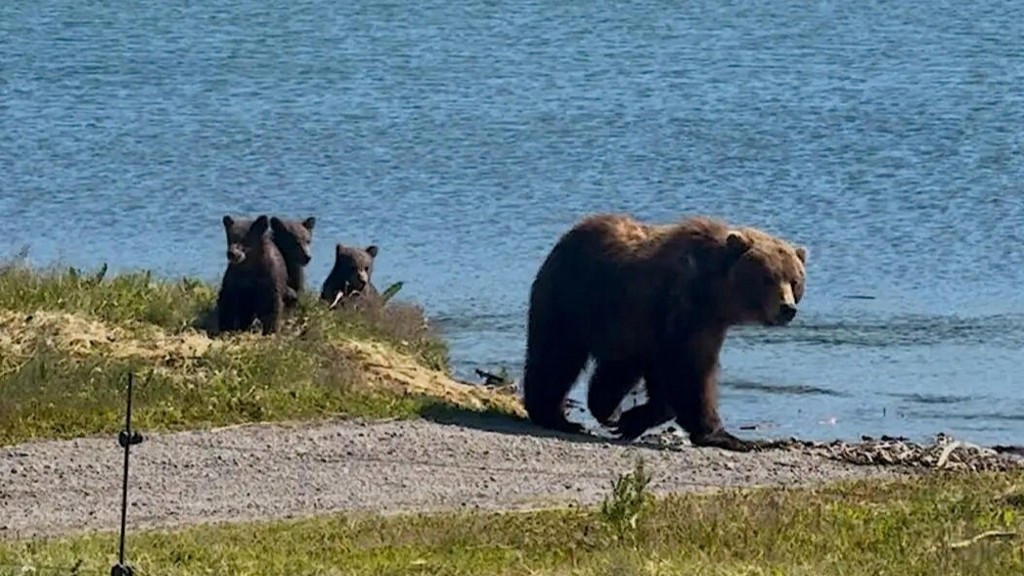
Falling water levels in the South Kamchatka Federal Sanctuary have opened the brown bear fishing season. Female bears and their cubs, born this past winter, have moved onto the newly exposed river and lake shoals. These shallow waters serve as natural training grounds where adult bears teach their offspring to catch salmon, preparing the juveniles for independent survival in the wild.
One family regularly appears near the Ozerny cordon. A female bear accompanied by three first-year cubs approaches from the Northern Bay and has habituated to the sanctuary’s infrastructure. While the mother attempts to fish, the cubs initially remain on the shore but frequently follow her into the water, disrupting the hunt. The female responds aggressively to any other bears that approach her litter, yet she ignores the presence of humans with cameras, treating the conservation staff as a natural element of the landscape.
Beyond this particular family, three additional litters have been recorded in the vicinity of Kuril Lake, comprising females with one, two, and three cubs. The large concentration of predators in this basin and along the outflowing Ozernaya River is an annual occurrence directly linked to the abundance of sockeye salmon. This area hosts the reproduction of the largest sockeye salmon population in Asia, which sustains the entire ecosystem of the southern peninsula.
Preserving this natural food chain is the primary objective of a new environmental project titled “Ozernovskaya Sockeye – for me, for you, for us.” The initiative encompasses the sanctuary, adjacent marine and river waters, and the settlements of Ozernovsky and Zaporozhye. Backed by the Presidential Fund for Nature in Kamchatka, the program will enhance the protection of spawning grounds, provide advanced training for conservation inspectors, and educate local residents on the sustainable management of biological resources.