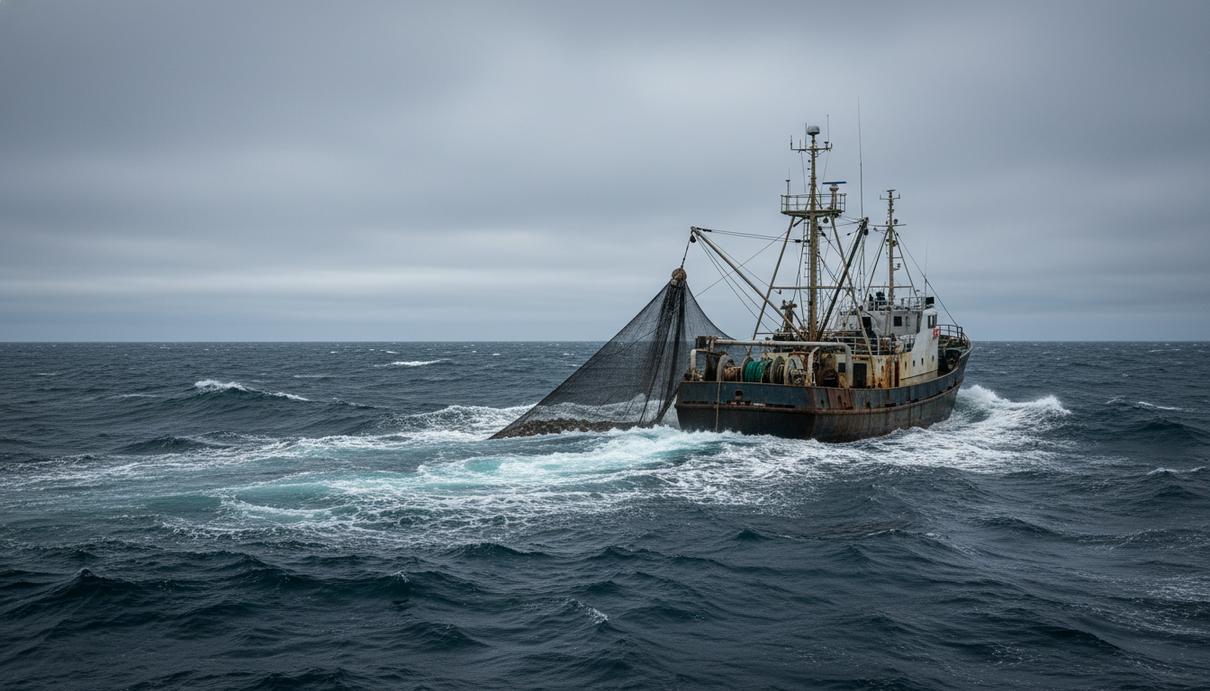
The vast and ecologically vital Bering Sea has once again become the focal point of Russia’s Far Eastern fishing industry as the annual pollock harvesting season officially commenced. This critical maritime operation, which provides a significant economic boost to the region, is anticipated to see its primary fishing efforts concentrated in the Western Bering Sea zone, where experts and fishing fleets expect particularly high yields from the abundant marine resources.
Underpinning these operations is a meticulously planned regulatory framework. Specialists from the Pacific Branch of the All-Russian Research Institute of Fisheries and Oceanography (VNIRO) have rigorously assessed the pollock stocks and subsequently approved the quotas for the current year. The maximum allowable catch in the Western Bering Sea zone has been set at a substantial 627,000 metric tons. Complementing this, specific limits have been established for other key areas, with the Karaginsky subzone capped at 92,500 metric tons and the Chukotka zone at 5,600 metric tons, reflecting a balanced approach to resource management across the region.
This structured approach is informed by robust scientific analysis of the pollock population dynamics. Current assessments indicate that the scale of pollock migration into Russian waters is projected to remain consistent with multi-year average levels through 2026. Such stability in marine bioresources is a crucial indicator of ecological health and allows Russia’s extensive fishing enterprises to strategically plan their operations with confidence, ensuring sustainable harvesting practices without risking the depletion of aquatic ecosystems. This commitment to sustainability resonates with international efforts in responsible fisheries management.
The current season builds upon the robust performance of the preceding winter-spring fishing period, known as ‘Season A,’ which traditionally runs from January until the end of March, extending into early April in some northern districts. During this earlier phase, Far Eastern vessels demonstrated impressive productivity, collectively harvesting 856,700 metric tons of pollock. A significant portion of this catch, exceeding 611,000 metric tons, was secured by fleets operating in the strategically important Okhotsk Sea, further underscoring the scale and economic impact of Russia’s fishing sector in its eastern maritime territories.