Researchers from Vitus Bering Kamchatka State University have recently unveiled a concerning development on the remote Kamchatka Peninsula, announcing the discovery of five new species of vascular plants. While new discoveries often signal the richness of an ecosystem, this particular finding carries a stark warning: the majority of these newly identified plants are alien species, now infiltrating and establishing themselves within the region’s isolated ecosystems, including its most stringently protected nature reserves. This phenomenon underscores a significant global challenge where human activities, ranging from historical commerce to modern tourism and even conservation efforts, inadvertently act as vectors for biological invasion.
The proliferation of invasive species stands as one of the most critical threats to global biodiversity, particularly in geographically isolated and ecologically sensitive territories like Kamchatka. Biologists, whose multi-year field observations culminated in a publication in the ‘Bulletin of the Moscow Society of Naturalists,’ did more than just map the new areas of these unwanted guests. They meticulously reconstructed the historical pathways through which these seeds traveled, painting a vivid picture of how human presence, past and present, has irrevocably altered these natural landscapes.
Delving into the past, researchers pinpointed fascinating origins for some of these plant invaders. In the iconic Valley of Geysers within the Kronotsky Nature Reserve, two species previously unrecorded in the Russian Far East have now taken root. The appearance of spotted St. John’s wort, for instance, has been traced back to 20th-century logistics, its seeds likely introduced via imported hay brought in to feed horses, which served as the primary mode of transportation during that era. Similarly, the bushy knotweed’s colonization is attributed to the boom of Soviet-era mass tourism. Before modern boardwalks were installed, thousands of visitors traversed these routes, inadvertently scattering seeds on their clothing and footwear, leaving behind a botanical legacy of human movement.
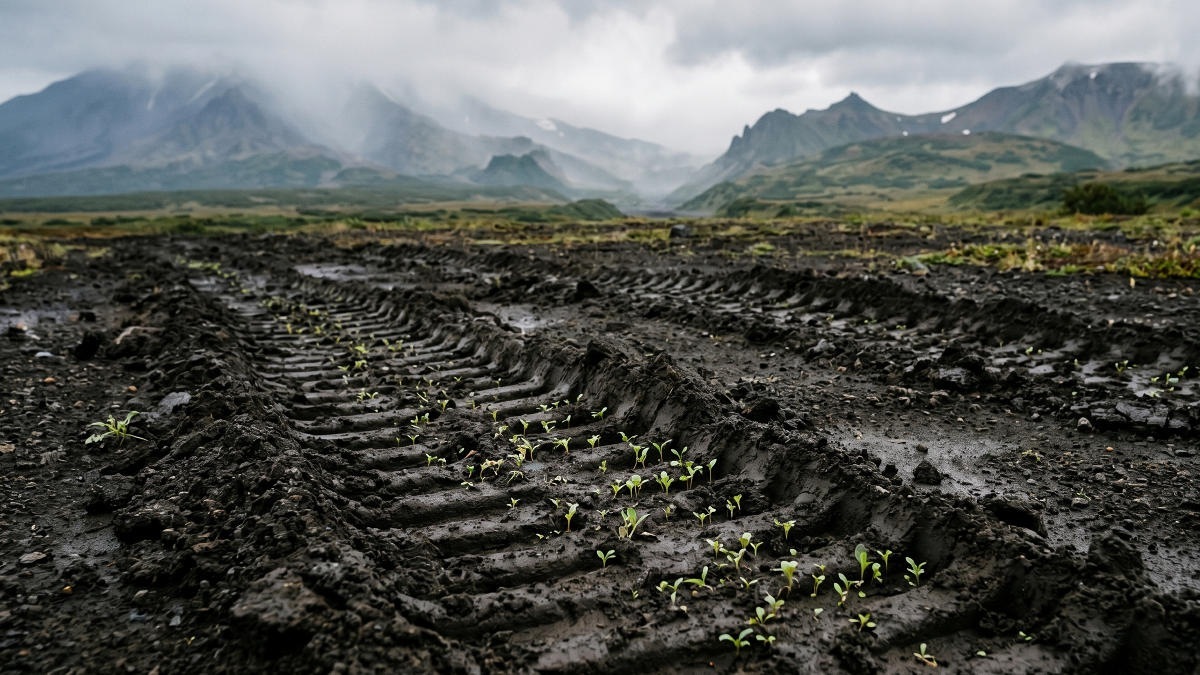
Perhaps most ironically, some alien plant introductions are a direct, albeit unintended, consequence of contemporary conservation efforts. In Olga Bay and at several ranger stations within the Kronotsky Reserve, scientists discovered the short-haired eyebright, a species previously confined to Sakhalin in the Far East. Botanists conclude that this plant migrated alongside heavy machinery transported from Petropavlovsk-Kamchatsky between 2015 and 2016, a period when extensive operations were underway to remediate accumulated environmental damage. This case poignantly illustrates the complex challenges of environmental stewardship, where even well-intentioned actions can have unforeseen ecological ramifications.
Beyond accidental introductions, deliberate human actions have also played a role in reshaping Kamchatka’s flora. At a ranger station near the mouth of the Bolshaya Chazhma River, the Triumph cornflower was identified. Its presence is linked to ornamental plantings by former reserve staff, evidenced by its proximity to perennial lupine thickets. Although these flowerbeds were dismantled nine years ago with the removal of old structures, the plants had already firmly established themselves. Furthermore, in the peninsula’s urbanized centers, including Petropavlovsk-Kamchatsky and the Yelizovo district, the ongoing process of landscaping and development continues to stimulate floral changes, with imported lawn mixtures leading to new populations of common chicory and meadow cornflower.
As Mikhail Kozhin, a researcher at the Laboratory for Anthropogenic Dynamics of Ecosystems, eloquently summarized, ‘Every such discovery is a testament to how even protected areas are fundamentally changing. Horses, tourists, imported equipment, lawn mixtures – these are all vectors for the spread of alien species that we often overlook.’ This comprehensive study from Kamchatka serves as a powerful reminder for policymakers and environmentalists worldwide: the global interconnectedness of our modern world means that no ecosystem, however remote or seemingly pristine, is truly immune to human influence, necessitating a more holistic and foresightful approach to conservation and economic development across borders.