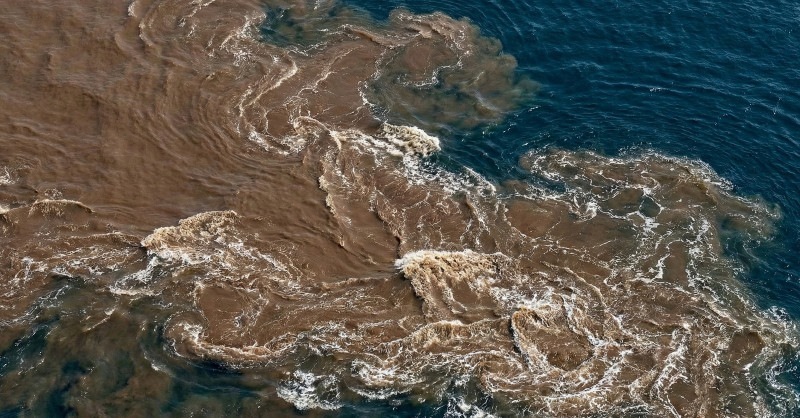
Russian scientists have unveiled a groundbreaking study shedding new light on the intricate relationship between continental geological processes and marine ecosystem productivity in one of the world’s most unique regions. Their extensive research on the Kamchatka Peninsula’s river runoff offers critical insights into how natural forces, from active volcanoes to thawing permafrost, profoundly shape coastal waters and influence major global environmental concerns such as climate change. This detailed comparative analysis of two of Kamchatka’s largest rivers, the Kamchatka River to the east and the Penzhina River to the northwest, highlights stark contrasts determined by geological and climatic conditions, delivering a powerful message about the vulnerabilities and resilience of our planet’s marine life.
The Kamchatka River, draining the peninsula’s eastern flank, flows through a geologically volatile zone dominated by active volcanism, including the formidable Klyuchevskaya volcano group. Water sample analyses from this region revealed remarkably high concentrations of dissolved inorganic phosphorus and nitrogen. These elements act as potent natural fertilizers, igniting a cascade of life in the adjacent marine ecosystems. The impact was dramatically underscored following the April 2023 eruption of the Shiveluch volcano, where vast ashfall, subsequently leached into river systems during spring snowmelt, significantly boosted nutrient loads. Laboratory experiments further confirmed that volcanic ash, upon contact with water, rapidly releases bioavailable forms of phosphorus, fueling this natural fertilization effect.
This natural enrichment of coastal waters translates directly into explosive phytoplankton blooms, forming the foundational food source for zooplankton. Researchers observed unprecedented zooplankton biomass levels in the Kamchatka Gulf, exceeding 2000 mg/m³. Such thriving conditions create an exceptionally fertile environment for diverse fish populations and marine mammals, cementing Kamchatka’s eastern coast as one of the planet’s most productive fishing grounds. Strikingly, the concentrations of these biogenic elements at the Kamchatka River estuary rival those found in rivers traversing densely populated and agriculturally intensive regions worldwide, yet here, the source of this “enrichment” is entirely natural phenomena, not anthropogenic pollution.
A dramatically different ecological narrative unfolds on the peninsula’s northwestern side, primarily influenced by the Penzhina River basin. This vast territory lacks active volcanism and is instead characterized by widespread permafrost. Consequently, mineral forms of phosphorus and nitrogen are found in exceedingly low concentrations. However, the Penzhina River discharges substantial quantities of dissolved organic carbon into the sea, a direct consequence of seasonal permafrost thawing. While spring floods flush organic matter from the tundra soils, this influx does not trigger the same explosive biomass growth seen on the eastern coast. Indeed, zooplankton levels in the Penzhina Bay were found to be twenty times lower than in the Kamchatka Gulf, averaging around 100 mg/m³.
Underpinning these regional distinctions, and posing an urgent challenge, is the overarching factor of climate change. Observational data spanning the past 90 years reveal a consistent warming trend across the entire Kamchatka region. This undeniable shift is already reshaping the hydrological and biochemical regimes of these vital river systems, with potentially far-reaching consequences for the delicate balance of marine life and global environmental health.
On the eastern coast, rising temperatures accelerate glacier melt, releasing not only water but also accumulated volcanic material and atmospheric deposits into the rivers. Scientists hypothesize that as glaciers continue their retreat, the discharge of these nutrient-rich substances could intensify further, leading to an increased frequency and intensity of algal blooms. This includes the potential for more widespread blooms of potentially toxic species, which could have detrimental impacts on fisheries, marine ecosystems, and human health.
Conversely, in the Penzhina River basin, warming temperatures are causing significant degradation of permafrost. This fundamental alteration is disrupting the balance between surface and subsurface water flow, escalating the input of organic substances into coastal waters. Researchers emphasize the imperative for continuous, robust monitoring of riverine chemical compositions across the peninsula. Understanding these complex processes is paramount for accurately forecasting the future health of marine ecosystems, assessing the sustainability of critical fish stocks, and comprehending how global climatic shifts will ultimately reverberate through the pristine but fragile natural landscapes of the Russian Far East. The work starkly demonstrates that even in sparsely populated regions devoid of industrial contamination, nature itself can generate exceptionally high concentrations of chemical elements in water, revealing intricate feedback loops that demand global attention.