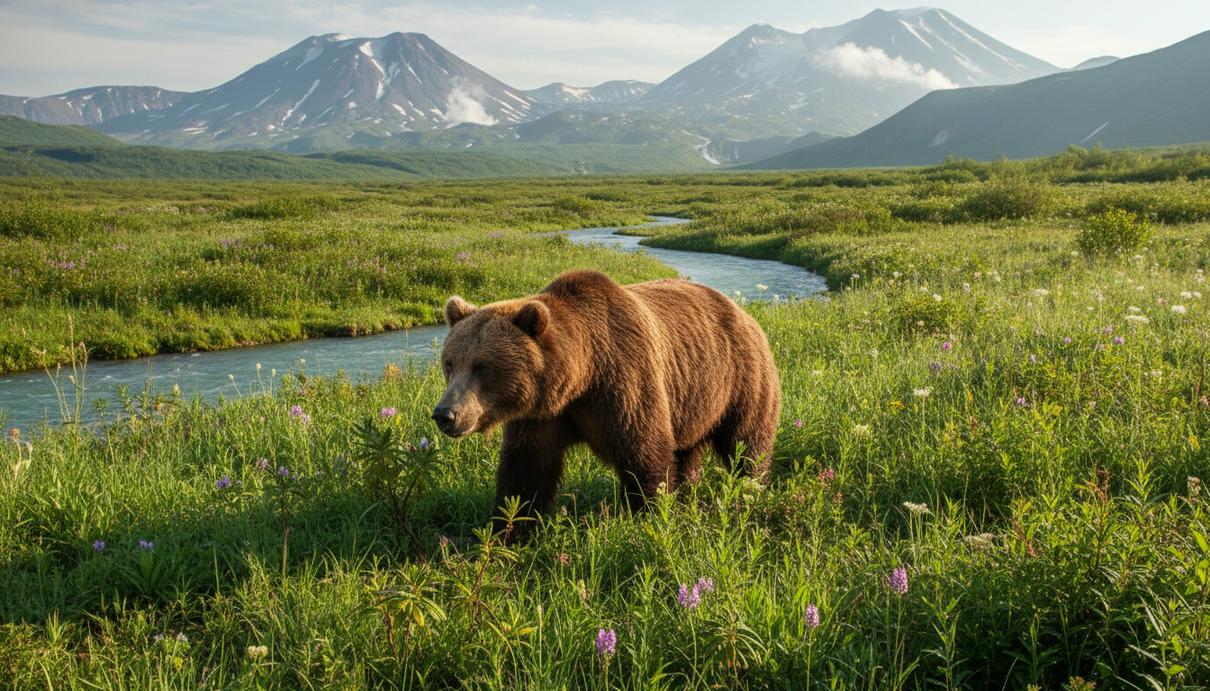
The remote and ecologically vital Kamchatka Peninsula in Russia’s Far East is reporting a significant conservation success story: its brown bear population has soared to an estimated 25,000 individuals. Data from the scientific department of the Kronotsky Nature Reserve indicates a steady, albeit gradual, increase in the numbers of these iconic predators over the past two decades. This positive trend is primarily attributed to the health of the region’s natural food base and the prevalence of infectious diseases, which collectively serve as key demographic regulators for the species.
However, the journey to this population milestone hasn’t been without its challenges. The dynamics of the Kamchatka brown bear population are inherently linked to the fluctuating climatic and biological conditions of each season. Researchers have observed temporary, localized reductions in predator numbers during periods of acute food scarcity, such as those witnessed in 2019 and again in 2024, highlighting the delicate balance between environmental factors and wildlife sustainability.
Yet, this ecological triumph coexists with a darker reality: the relentless shadow of illegal wildlife trade. Conservation organizations, while monitoring the thriving brown bear population, are simultaneously tracking persistent poaching activities across the broader macro-region. Alarmingly, the charity foundation “Preservation of Ecosystems of Siberia and the Far East” reports no discernible decrease in the illicit sale of skins from critically endangered polar bears, designated as “red-listed” species, indicating a continuous threat to these vulnerable populations.
To circumvent legislative restrictions and evade detection, participants in this shadow market have evolved their tactics. They are now reportedly selling authentic animal derivatives disguised as legal “imitations,” a sophisticated method to obscure the illegal origin of their goods. Despite a seemingly stable supply of poached materials, the financial landscape of this underground trade has seen a dramatic shift. Experts note a threefold collapse in the average price of a poached bear skin since 2018, now averaging around 410,000 Russian rubles. Currently, the black market value for these illegal items ranges widely from 115,000 to 900,000 rubles, reflecting variations in quality and species, underscoring the complex and volatile nature of international wildlife crime.