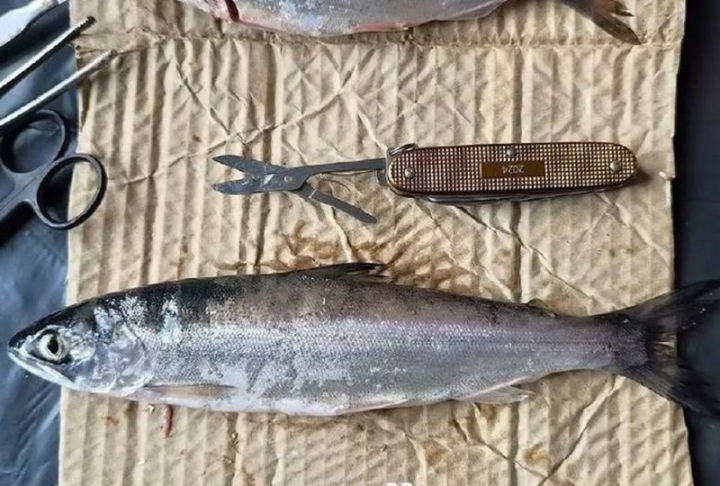
A groundbreaking scientific expedition to the remote Kamchatka Peninsula in Russia’s Far East has unearthed unique aquatic species, providing invaluable insights into biodiversity and evolutionary processes in one of the world’s most pristine and geologically active regions. Scientists, surveying water bodies east of the towering Ichinsky volcano this spring, have reported an extraordinary discovery that underscores the biological richness of these isolated volcanic ecosystems. The findings are poised to reshape understanding of how species adapt and evolve under extreme conditions.
Among the key revelations is the identification of kokanee, a freshwater form of sockeye salmon, inhabiting Lake Nochnoye within the Bystrinsky District. Unlike their anadromous counterparts that embark on long ocean migrations, these kokanee are entirely landlocked, completing their life cycle within their natal lake. This specific adaptation was previously thought to occur in only three other Kamchatkan lakes – Kronotskoye, Podsopochonoye, and Utinoye – making the discovery in Lake Nochnoye a significant expansion of their known habitat and a testament to the region’s diverse ecological niches.
Further adding to the scientific excitement, researchers also uncovered a distinct resident char species in Lake Rybnoye, another body of water situated close to the Ichinsky volcano. This particular char stands out due to its highly unusual skull structure, suggesting a unique evolutionary trajectory driven by its isolated environment. The existence of these two distinct, non-migratory fish populations highlights the potent role of geographical isolation and specific environmental pressures in shaping divergent evolutionary paths.
Currently, scientists are engaged in detailed molecular-genetic investigations to unravel the mysteries behind these endemic fish. The ongoing research aims to precisely map how these species evolved in isolation on Kamchatka, distinguishing them from their migratory relatives and providing critical data on speciation and adaptive radiation. These studies are expected to offer profound insights into the mechanisms of evolution and contribute significantly to global efforts in biodiversity conservation and the understanding of unique natural heritage.