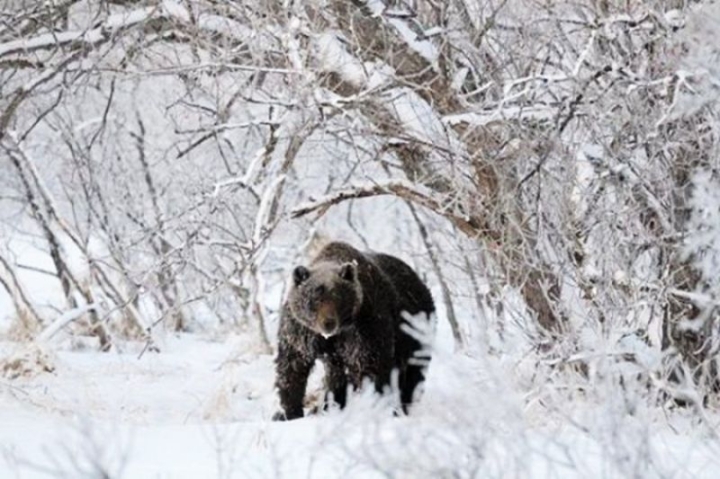
In a stark departure from millennia-old patterns, Russia’s remote Kamchatka Peninsula is witnessing an unusual ecological anomaly: numerous brown bears are reportedly forsaking their traditional winter hibernation, remaining active even as December progresses. This unprecedented behavior is drawing urgent attention from wildlife observers and sparking broader environmental discussions across the globe.
The Kamchatka Aviation Enterprise, whose aerial patrols often offer critical insights into the region’s vast wilderness, has provided compelling evidence. Helicopter crews flying over the rugged Sobolevsky district have captured footage of bears actively foraging and moving across the December landscape, directly contradicting the widely held belief that these formidable apex predators are deep in slumber by this time of year, as reported by local news outlet Kamchatka.Today.
While the precise reasons for this widespread deviation are still under investigation, wildlife conservationists are quick to point towards potential environmental stressors. Unseasonably mild temperatures, fluctuating food availability, or disruptions to their natural habitats – all factors increasingly associated with global climate shifts – could be playing a significant role in altering these bears’ fundamental biological clock.
This phenomenon raises serious concerns, especially given the grim prospects historically faced by so-called ‘shakun’ bears – those individuals who fail to hibernate. These desperate animals, often weakened by hunger and stress, become particularly vulnerable to starvation and are more prone to venturing into human-populated areas in search of sustenance. The resulting increase in human-wildlife encounters frequently ends tragically for the bears, underscoring the delicate balance of this unique ecosystem.
As a region globally recognized for its pristine wilderness and rich biodiversity, the unusual predicament of Kamchatka’s bears offers a sobering case study. It serves as a potent, visible indicator of how rapidly changing environmental conditions are impacting even the most remote corners of our planet, demanding heightened international attention and coordinated conservation efforts to protect vulnerable species and maintain ecological integrity.