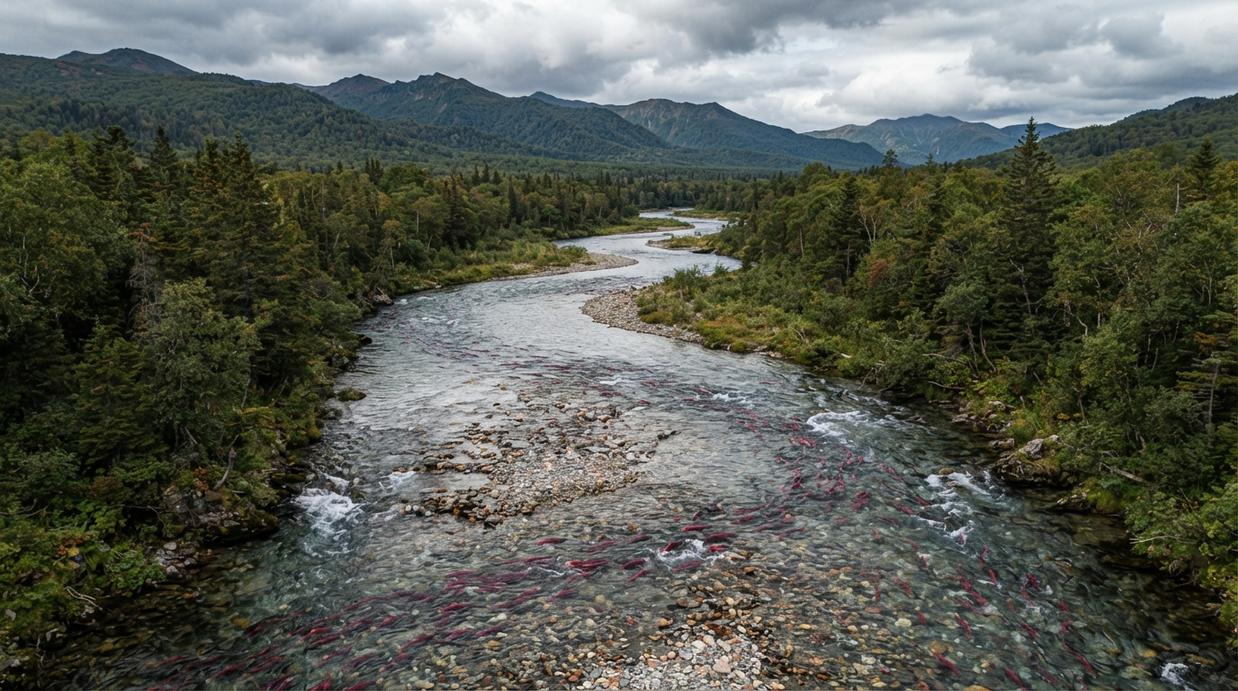
The number of sockeye salmon returning to spawn in the waterways of Kamchatka has declined. Slightly more than 119,000 fish have reached the spawning grounds. While this figure exceeds the numbers from the weak 2019 season, it remains significantly below the average of recent years and is insufficient to maintain a sustainable population.
In response to the low return rates, fishery management authorities have implemented restrictions in the Kamchatka Gulf. Three transit days have been established to ensure the fish can reach their spawning grounds unimpeded. Commercial fisheries have been instructed to temporarily remove their netting equipment from the water. Stricter fishing bans remain a possibility if these initial measures prove inadequate.
Concurrently, the active phase of the commercial fishing season continues across the peninsula, with the total catch already exceeding 2,500 metric tons. The primary fishing effort is currently concentrated in the Kamchatka River basin and the adjacent marine gulf, where sockeye salmon dominate the harvest. The physical parameters of the fish have shifted this season – the average weight of the harvested specimens is 1.8 kilograms, falling short of the expected two kilograms.
This size variation is linked to the specific migration patterns of the early sockeye form, which is the first to return to freshwater from the ocean. The later salmon groups have yet to arrive, but overall season forecasts remain conservative. The operational schedules for fishing enterprises over the coming weeks will depend entirely on the actual volume of fish repopulating the spawning rivers.